
| Reviews & Columns |
|
Reviews DVD TV on DVD Blu-ray 4K UHD International DVDs In Theaters Reviews by Studio Video Games Features Collector Series DVDs Easter Egg Database Interviews DVD Talk Radio Feature Articles Columns Anime Talk DVD Savant Horror DVDs The M.O.D. Squad Art House HD Talk Silent DVD
|
 DVD Talk Forum |
|
|
| Resources |
|
DVD Price Search Customer Service #'s RCE Info Links |
|
Columns
  


 
|
|
|
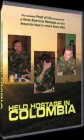
Held Hostage in Colombia
With the murder of Nicholas Berg in Iraq all over the news it's becoming clear to many people for the first time that there are commercial contractors in dangerous locations around the world doing civilian work. These guys aren't envoys or ambassadors and they're not active soldiers or officers. They're regular people who accept extremely high-risk jobs at extraordinary pay scales. They accept the risks as trade-off for the added reward. Even though they know that their lives are in jeopardy going in, however, what sometimes happens to them still goes beyond the conduct of civilization.
The short documentary Held Hostage in Colombia is a look at the ongoing fate of Thomas Howes, Marc Gonsalves and Keith Stansell, three US contractors hired by a subsidiary of mega-corp Northrop Grumman to fly high-risk missions over the drug-producing nations of South America. This needle-in-a-continent strategy comes courtesy of the fabulous War on Drugs, a "war" that we've never stood a chance of winning. With no realistic goals or methods the only product is the vast expenditure of federal funds and the dooming of foot soldiers like the men featured here.
The ordeal began in the Summer of 2003 when a small plane carrying four Americans and one Colombian scouting out cocaine-producing territories crashed right in the middle the Revolutionary Armed Forces of Colombia (FARC), a rebel group waging guerilla warfare on the government. After executing one American and the Colombian the rebels took the survivors as hostages hoping to exchange them for members of their own organization being held prisoner by the Colombian government.
Trying to understand the intricacies of this socio-political dynamic in such a short piece is impossible, but it's clear that the FARC rebels, funded with drug money, have an agenda, resources and, most importantly, time. They sit and wait for either the US or Colombia to acknowledge their desire to negotiate a release. The US, however, doesn't negotiate for hostages and the Colombian government seems tough to pin down. In the meantime, the Northrop Grumman subsidiary that employed the hostages has been sold and is taking no responsibility to trying to contact them.
The film is based around a "proof of life" interview Colombian journalist Jorge Enrique Botero managed to secure with the captives, something that seems exceedingly rare. During the interview, which the hostages didn't know about in advance, the disorienting nature of being held hostage becomes crystal clear. The men ask what the date is and for news of the world. They talk about their families and what they left at home. They talk about the conditions of their daily lives and the boredom. One of the film's most haunting moments comes when they learn of the deaths of some colleagues who were sent to rescue them.
It's hard to watch these grown men, tough as nails by any measure, completely break down sobbing like this. There is no candy-coating here. When the hostages implore would-be rescuers to abandon any covert efforts since they would surely result in their own deaths the viewer really gets a glimpse into the messy reality of this situation. There will be no Hollywood ending for this story.
In fact, the ending hasn't been written yet. The hostages are not released in the documentary (in fact, that was never even an option) and they still sit in their prison camp today. This is a glimpse into the misery of our global reality, with no solution in sight. What should you feel when watching a piece like this? Just despair, I guess.
VIDEO:
The video is cheaply shot and ranges from grainy and atmospheric to blurry and indistinct. Of course, this is not demo material but the full-frame video is fine for the content.
AUDIO:
The audio is also raw but fine. Voices are mostly clear. It's basic raw location camcorder audio.
EXTRAS:
The DVD includes a good selection of supplemental material, which is especially useful since the main feature is so short. A commentary track by Victoria Bruce and Karin Hayes, the two stateside filmmakers, helps understand the situation in a little more detail and is quite informative. There's also a behind the scenes piece showing Bruce and Hayes trying to secure various interviews for the piece. The trouble they have locating and, in some cases, convincing the hostages families to go on camera is compelling, especially considering how difficult the subject matter is. There are also additional interviews with the family members, academics, politicians and the hostages. Perhaps a longer film could have been fashioned with this material but at least having it on the disc is worthwhile. A photo gallery showing more details of the FARC camp and the hostages is included as well.
FINAL THOUGHTS:
This is tough stuff, made even more gripping by the fact that there's been no resolution to date. What the subjects of the film are going through is a real-life dilemma with no end in sight. The film can't answer the question of what to do in a situation like this. If it could, perhaps there would be some sense that the hostages might be coming home. Instead, with everyone looking out for their own interests, what we're left with is a portrait of three men left all alone.
|



| Popular Reviews |
| Sponsored Links |
|
|
| Sponsored Links |
|
|
| Release List | Reviews | Shop | Newsletter | Forum | DVD Giveaways | Blu-Ray | Advertise |
|
Copyright 2024 DVDTalk.com All Rights Reserved. Legal Info, Privacy Policy, Terms of Use,
Manage Preferences,
Your Privacy Choices 
| |||||||