
| Reviews & Columns |
|
Reviews DVD TV on DVD Blu-ray 4K UHD International DVDs In Theaters Reviews by Studio Video Games Features Collector Series DVDs Easter Egg Database Interviews DVD Talk Radio Feature Articles Columns Anime Talk DVD Savant Horror DVDs The M.O.D. Squad Art House HD Talk Silent DVD
|
 DVD Talk Forum |
|
|
| Resources |
|
DVD Price Search Customer Service #'s RCE Info Links |
|
Columns


 
|
|
|
Silver Stallion, The
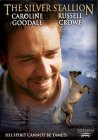
It's inevitable: whenever an actor hits the big time, his pre-fame movies will undergo a bit of a renaissance. How else to explain the issue on DVD of a minor film like 1993's The Silver Stallion, except to capitalize on Russell Crowe's appearance among the cast? With a giant head-shot on the cover, as well as top billing in the credits, Crowe is clearly the draw here... never mind that he's a fairly minor element in the film itself.
Basically, The Silver Stallion is a bit of fluff that's sure to please horse-crazy teenage girls, and cause a lot of rolling eyeballs in just about everyone else. Set in the Australian outback, the film follows the life of an exceptional "brumby" (wild horse) who happens to be born with strength, speed, and a stunning silvery coat: hence the title of the film. Well, actually the coat color of the stallion in question is pale gold (similar to several other horses in the film; I'm not quite sure what's so special about his color in particular) and is called not silver, but "creamy" by the characters in the film, so I'm a bit lost as to where the "silver" comes from. But if you're thinking about things like this instead of oohing and aahing over the gorgeous horses in the film (Russell Crowe is clearly in the second rank here), then you're most likely not part of the target audience.
Incidentally, if you have a hard time stomaching anthropomorphized animals, this is definitely not the film for you. The level of silliness here detracts from the genuine majesty of the animals; for instance, it's hard to take things seriously at all when not only do the horses have names, but they're names that they give each other. Really: the mother horse names her baby when he's born. No kidding.
There's really not a whole lot to the film. Stallion grows up, stallion experiences life as a wild horse, stallion strives to evade capture by The Man (Russell Crowe; yes, that's how he's billed in the credits). Clearly, we are intended to feel that the brumbies should be allowed to run wild and gloriously free, and The Man is the opponent, representing horse slavery, or at least dull, domesticated servitude. The shots of the horse herds running over the plains are certainly very pretty, but of course, it's hard for this reviewer not to recall that horses are a very recent European introduction to Australia: a competing exotic species that could be considered a pest just as the equally non-native rabbits are. But I suspect that there's less opportunity for truly spectacular shots of herds of wild rabbits leaping in stunning beauty over the open plains, so they get the short end of the viewer-sympathy stick here. (Although I shouldn't speak too soon: I suspect that fans of The Silver Stallion probably adore Watership Down as well...) In any case, it's interesting to realize that the wild horse herds of Australia have clearly managed to acquire a considerable amount of glamor and mystique, despite their short history on the continent.
The best part of The Silver Stallion is the footage of the wild horses in their natural state; we get to see some interesting behavior, including winter foraging and a fight for dominance between two stallions. Viewers who aren't horse fans will probably fidget and wonder "where's the plot?" during the horse scenes; horse-loving viewers will probably feel inclined to fast-forward through the frame story to get to the horse footage once again.
The acting, taken as a whole, is pretty awful. The story of the silver stallion is presented in a frame narrative of a mother (Caroline Goodall) writing a story for her horse-crazy daughter, who's clearly the designated stand-in for all the adolescent girl viewers. Both the older and younger actresses deliver stilted and hokey performances. Russell Crowe appears in a fair number of scenes, but has minimal dialogue; it seems pretty clear that his performance was motivated mainly by a paycheck, and there's no hint of future stardom here.
The DVD
Video
Here's the big question: is the 1.33:1 aspect ratio of The Silver Stallion on this DVD its correct aspect ratio, or has it been pan-and-scanned? The DVD case is self-contradictory, claiming both "Formatted from its original version to fit your screen" and "Presented in the original 1.33:1 format," and I wasn't able to track down any facts about its theatrical aspect ratio. So what's the verdict? From the look of the DVD, I'm going to venture the theory that it's a pan-and-scan version of an original 1.66:1 widescreen film: most of the time, there's no obvious zooming and panning, but in the horse scenes, it's often clear that we're only seeing part of the intended image. Needless to say, this doesn't do much for the film.
The quality of the rest of the image is adequate. The picture is fairly soft, offering adequate clarity in close-up shots, but lacking detail in medium- to long-distance shots, and a scattering of print flaws appears in the image as well.
Audio
The Dolby 2.0 soundtrack is nothing to write home about, coming in a bit under standard. It's flat-sounding, with dialogue often a bit muffled.
Extras
There are no special features on this DVD.
Final thoughts
The Silver Stallion apparently won a number of film festival awards, most likely on the strength of lovely cinematography of wild horses in Australia. Too bad that footage didn't get made into an interesting documentary instead of a fluffy movie that will only appeal to horse-crazy teenage girls. The fact that it appears to have been pan-and-scanned detracts from the only good aspect of the film, the horse footage. If you're interested in this movie because it supposedly stars Russell Crowe, go ahead and skip it; if you are looking primarily for a movie that shows the beauty of the Australian brumby and willing to put up with the accompanying silly fluff, The Silver Stallion may be worth a rental.
|



| Popular Reviews |
| Sponsored Links |
|
|
| Sponsored Links |
|
|
| Release List | Reviews | Shop | Newsletter | Forum | DVD Giveaways | Blu-Ray | Advertise |
|
Copyright 2024 DVDTalk.com All Rights Reserved. Legal Info, Privacy Policy, Terms of Use,
Manage Preferences,
Your Privacy Choices 
| |||||||