
| Reviews & Columns |
|
Reviews DVD TV on DVD Blu-ray 4K UHD International DVDs In Theaters Reviews by Studio Video Games Features Collector Series DVDs Easter Egg Database Interviews DVD Talk Radio Feature Articles Columns Anime Talk DVD Savant Horror DVDs The M.O.D. Squad Art House HD Talk Silent DVD
|
 DVD Talk Forum |
|
|
| Resources |
|
DVD Price Search Customer Service #'s RCE Info Links |
|
Columns
  


 
|
|
|
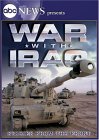
ABC News Presents War with Iraq - Stories from the Front
This two-disc set compiles four hours of the 2003 Irag war onto two discs. It's really about the embedding process wherein journalists and cameramen cover the war by following and living with individual fighting units. It's a worthwhile practice that gives the public what they want, which is lots of first-hand pictures, sometimes live. The combat experience is thus directly to the viewing public. As shown by the very interesting accounts on this disc, the journalists can't help but identify with their fellow soldiers, as they share with them most of the hardships and the same risks. An embedded newsman on the front lines basically substitutes the "local color" of war experience for meaningful journalism. For the first time a war became a kind of entertainment for the viewers back home. The Army seems to prefer this kind of coverage to reporters asking them difficult questions back at headquarters.
But the accoounts presented on this disc set are impressive and fair. Our soldiers are indeed committed men and women doing a difficult job at no small risk to their own lives. The Army, Air Force, Marines and Navy are each represented by at least one docu., and the show overall is a great resource for explaining what it's like to go to war in the 21st century.
Each segment is hosted by a particular television journalist, starting off with the very well known Ted Koppel accompanying an Army unit. This time around in Iraq there were no tank battles in the desert but there was plenty of action. As one soldier puts it, just the crazy driving in the dark in a convoy of thousands of vehicles was scary enough.
Each segment focuses on individual officers and men and the conditions under which they fought: heat and cold and miserable sandstorms that sting any exposed skin and fill every crevice with dust as fine as talcum powder. There's relatively little fighting on camera and no coverage of corpses and other gory details. Nobody ever seems to get a clear view of the enemy, and most of the danger time is spent navigating minefields and getting by exploding ammunition dumps. The most important pack item for combat in Iraq appears to be baby wipes, those lanolin tissues that soldiers and reporters clean themselves with for weeks when there's no access to any kind of hygiene.
The shows are politically fair. Koppel and others express some misgivings about the whole embedding concept, with especially harsh words for the lack of planning for the post-victory period. One reporter talks about the five weeks of bliss after Baghdad fell, when the Iraqi public was largely grateful to their liberators. But from then on it's all downhill. One soldier-engineer expresses it clearly: "If we don't get their power and water back on right away, we're going to lose control."
Some journalists talk about Army "guides" who try to make suggestions about their coverage, and we see one young newsman having to tell one of them to butt out of his business. But the reporters all affirm that there was little or no Army interference with reportage from the front. The only truly frustrated newsman is on an aircraft carrier. He can report that there are aircraft taking off and that's about it: Where they are, when they're flying, where they're flying and even what kinds of planes are flying are all classified.
A female journalist (Stephanie Gosk) is with a portable patriot missile unit that moves up to be part of the "tip of the spear," a familiar proud statement of many interviewees. But the group doesn't go into action because the Iraqis never attack with SCUD missiles. We see preparations for many a hurried anti-gas defense, with the soldiers donning full biological warfare outfits. Those fears also never materialize. Curiously, one soldier describes coming upon a factory that may be making nerve gas weapons, and he (and we) are surprised when nothing is made of it in the news. Perhaps it didn't turn out to be a real WMD plant.
A very young Matt Frucci is the journalist-host in the final segment on board a cruise missile ship. It anchors in the ocean and helps start the hostilities by lobbing cruise missiles on long trips across Saudi Arabia and into the Iraqi capitol. The sailors take digital pictures of the launches (each costing a million dollars) and then go below decks to see the destruction live on CNN and ABC television.
By wisely sticking to the soldierly experience the shows avoid the bigger issues of the war that have so thoroughly divided our country. One soldier opines that the military itself is divided 50-50 over whether we should have gone to war. One Marine episode shows a battalion leaving home with tearful farewells. Some wounded soldiers are seen and discussed, and one top sergeant's death becomes a main theme of one episode. President Bush is seen in most of the episodes giving his 48-hour get-out-of-Baghdad-Pilgrim demand, and isn't discussed further. The aircraft carrier episode ends with him making a personal appearance (to cheers), but the show makes no comment on it.
The episodes appear to have been assembled by different teams of producers and editors. A post-assignment interview with the journalist provides the backbone of each segment; these shows are really about reporting from the frontlines and don't try to give an overall picture. They provide a number of first-person perspectives, of soldiers and journalists who certainly aren't privvy to the big picture of the fighting.
Koch Vision and ABC's DVD of War With Iraq: Stories from the Front is a nicely mastered set of shows, professionally assembled. Although the main menu has big network-styled graphics and martial music, the individual shows do without the promotional hype. Peter Jennings provides an introduction to each disc. The stereo audio is very good.
On a scale of Excellent, Good, Fair, and Poor,
War With Iraq: Stories from the Front rates:
Movie: Excellent
Video: Excellent
Sound: Excellent
Supplements: none
Packaging: Two discs in slimline Keep case
Reviewed: June 26, 2004
| |
|



| Popular Reviews |
| Sponsored Links |
|
|
| Sponsored Links |
|
|
| Release List | Reviews | Shop | Newsletter | Forum | DVD Giveaways | Blu-Ray | Advertise |
|
Copyright 2024 DVDTalk.com All Rights Reserved. Legal Info, Privacy Policy, Terms of Use,
Manage Preferences,
Your Privacy Choices 
| |||||||