
| Reviews & Columns |
|
Reviews DVD TV on DVD Blu-ray 4K UHD International DVDs In Theaters Reviews by Studio Video Games Features Collector Series DVDs Easter Egg Database Interviews DVD Talk Radio Feature Articles Columns Anime Talk DVD Savant Horror DVDs The M.O.D. Squad Art House HD Talk Silent DVD
|
 DVD Talk Forum |
|
|
| Resources |
|
DVD Price Search Customer Service #'s RCE Info Links |
|
Columns


 
|
|
|
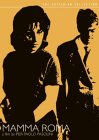
Mamma Roma
When Pier Paolo Pasolini turned filmmaker in the early 1960s, he was already a famous novelist, poet and screenwriter. His knowledge of Italian street argot contributed to films like Fellini's Nights of Cabiria. That celebrity continued into directing, with the raw and earthy Accatone and Mamma Roma finding favor with film critics. Mamma Roma is his second film, an unusual story of the streets that goes against Pasolini's "all non-actors" rule by starring Anna Magnani.
Mamma Roma plays like neorealism gone sour. Our heroine is a soft-hearted woman with a rough past who must suffer for trying to do the right thing by her ignorant, country-raised son, Ettore. She relocates him to one of those oppressive and treeless mass housing areas with high-rise apartments surrounded by vacant scrub lots. Ettore is quickly seduced into the aimless life of the local layabouts, and meets sordidly with a young mother who gives herself to the local boys out of boredom - or is it divine generosity?
Mamma Roma has attained the first footing out of the gutter by becoming a respectable licensed street vendor. Her seller's voice attracts customers when she's happy, but those moments become fewer as she fails to lead her son in a good direction. He leaves the school she's set him up in and continues to commit petty crimes like stealing from hospital patients. Using her old connections on the street, Mamma Roma blackmails a restaurant owner into giving Ettore a job, which he leaves after a while. She buys him a motorcycle, which Ettore takes without a word of thanks.
Mamma Roma becomes more interesting in the context of religious and political criticism. Pasolini was an intellectual Marxist and a vocal critic of public policy; the film seeks to illustrate the futility of the underclass trying to achieve humble bourgeois status. When the good idea of education fails with Ettore, Mamma Roma tries to buy his happiness with consumer goods. That only breaks down what few values he has. The only man in her life is an ex-pimp married to another who considers her just a means to make money, another revenue-generating possession. The only thing keeping Mamma Roma from pure misery is Pasolini's compassion for his female heroine.
Pasolini makes of his "Mother Rome" a clear symbol of a profane Madonna. She's a woman of the streets with no husband, and with Ettore's exact paternity unclear there's a hint of a parallel to the virgin birth. In the sticks Ettore could stay ignorant and unsophisticated, but once he hits the corrupt city he's a gone goose. The only bits of real happiness are when mother and son dance or ride together on the motorcycle; theirs is the only relationship that with moments above worldly realities.
Ettore's final end is a figurative crucifixion, spelled out twice in the extras as modeled after a famous painting. The overall impression of Mamma Roma is a gritty and dirty little story with stylistic overtones of religious and political symbolism. Even the titles show this; a fly crawls on one of the title cards.
Pasolini's entry into films has been credited to his knowledge of regional dialects and the details of street jargon. This has to be taken for granted by non-Italians who won't be able to appreciate the film's controversial but positive reception in 1962, when the Italian film industry was at its peak. This street realism is Pasolini's main strength. He casts his show mostly with non-actors and has the luxury of dubbing improved voices over the young men who only need to look good on camera.
The Criterion DVD of Mamma Roma is beautifully mastered in enhanced widescreen, so clearly that we can see fine distinctions in the lighting of cameraman Tonino Delli Colli. The film becomes more understandable via the fine selection of extras, which include three short interviews conducted just last year. Tonino Delli Colli talks about Pasolini's efforts to degrade the image for Accatone and his problems with Anna Magnani's attempts to beautify herself for the camera. The gracious Bernardo Bertolucci expresses his admiration for the director. An hour-long Italian television show gives us a broader look at Pasolini that only makes him more mysterious and remote; it discusses the films at length but only gives hints of Pasolini's politics. The director made a political lifestyle stance out of his homosexuality and dedicated some of his final films to the expression of positive sex (The Decameron). By contrast, his final film Salo: Or the 120 Days of Sodom is an almost inexplicably oppressive vision of fascist perversion that mixes sex and degradation with torture and atrocities that are difficult to watch.
Much more accessible is the half-hour Ricotta, a chapter from the multi-director movie RoGoPaG made right after Mamma Roma and included on this disc in an equally high-quality enhanced transfer. It's an amusing bit of irreverence that seems tame now but actually got Pasolini convicted of an "offense against the state religion." Scrappily shot, the film tells the tale of a starving movie extra playing one of the thieves crucified along with Christ in a biblical film. The crassness of the movie crew around the sacred icons of crosses and crowns of thorns makes for too-easy satire, and Pasolini uses Orson Welles (dubbed) as a mouthpiece for his own Marxist viewpoints criticizing the Italian masses as ignorant and pigheaded. However, it is a perfect antidote for this year's Mad Max-directed The Passion of Christ, which chooses to brutalize the audience with a Salo-like concentration on sadistic detail.
The extra spends his time being foiled in his attempts to get anything to eat, which leads to a predictably sad ending. The film has its cute moments but in general seems an academic exercise less sophisticated (and less cold-bloodedly intellectual) than Luis Buñuel's mordant religious criticism in Nazarín, Viridiana and Simon del desierto. The difference is that Pasolini seems to be a conflicted Christian in his loving recreations (in color inserts) of a religious painting. He later filmed The Gospel According to St. Matthew, a beautiful story of the Christ that confounded his critics and totally outclassed the same year's mega-production The Greatest Story Ever Told.
On a scale of Excellent, Good, Fair, and Poor, Mamma Roma rates:
Movie: Very Good
Video: Excellent
Sound: Excellent
Supplements: Interviews with Tonino Delli Colli, Enzo Siciliano and Bernardo Bertolucci; Pier Paolo Pasolini (1995), a 55-minute career documentary by filmmaker Ivo Barnabo Micheli, La ricotta (1963) Pasolini's 35-minute segment from RoGoPaG; Poster Gallery; essay by novelist and cultural critic Gary Indiana, Trailer
Packaging: Keep case
Reviewed: June 18, 2004
| |
|



| Popular Reviews |
| Sponsored Links |
|
|
| Sponsored Links |
|
|
| Release List | Reviews | Shop | Newsletter | Forum | DVD Giveaways | Blu-Ray | Advertise |
|
Copyright 2024 DVDTalk.com All Rights Reserved. Legal Info, Privacy Policy, Terms of Use,
Manage Preferences,
Your Privacy Choices 
| |||||||