
| Reviews & Columns |
|
Reviews DVD TV on DVD Blu-ray 4K UHD International DVDs In Theaters Reviews by Studio Video Games Features Collector Series DVDs Easter Egg Database Interviews DVD Talk Radio Feature Articles Columns Anime Talk DVD Savant Horror DVDs The M.O.D. Squad Art House HD Talk Silent DVD
|
 DVD Talk Forum |
|
|
| Resources |
|
DVD Price Search Customer Service #'s RCE Info Links |
|
Columns
  



|
|
|
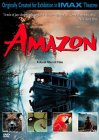
Amazon (IMAX) (2-Disc WMVHD Edition)
The jungle of the Amazon basin is an amazing fount of diversity and natural splendor, with the mighty Amazon river winding its way through a variety of ecological zones and providing a habitat for thousands of species, many still unknown to science. The short film Amazon takes viewers deep into this mysterious world, but with a different focus than the typical nature documentary.
Amazon focuses on the human face of the rainforest, showing how it is the home to many diverse groups of people. The film's narrative follows two healers who have come to the Amazon area in search of new medicinal plants: one is a shaman from the high Andes, and the other is an ethnobotanist from the United States, but though they come from very different traditions, each is concerned with finding new ways to cure disease and ease pain.
As we follow the path of the two narrators, we get to see the amazing diversity of the rainforest, and come to appreciate the incredible medicinal wealth that the jungle represents, with potentially revolutionary cures and treatments in the plants and fungi that the native tribes use every day. Viewers will come away from Amazon with a sense of how important it is to preserve and protect the rainforest, for a variety of reasons.
As befits an IMAX film, the cinematography is excellent, with many captivating shots of the flora and fauna of the Amazon, as well as the obligatory (but still beautiful) shots of the camera skimming over the top of the trees and over a waterfall. In addition to the more scenic shots, the film also takes an "up close and personal" approach to filming the native tribes who are visited along the way, so that we get a glimpse into the homes and everyday lives of the people who live deep in the rainforest.
The DVD
Amazon is a two-disc set, packaged in a single-wide keepcase. The first DVD has the program and special features, and the second disc has the program in high-definition format.
Video
The image quality for Amazon is quite good, providing an enjoyable viewing experience to match the lush images of the film. It's not perfect, as there's some clearly visible edge enhancement and a touch of grain here and there, but overall it looks quite nice.
What's really nice is that viewers can choose an anamorphically-enhanced widescreen option (at the 1.85:1 aspect ratio) as well as the 4:3 format typically associated with IMAX films. My first question was whether the widescreen option offers more image than the 4:3 version, or whether it was a matted version of the 4:3 image. I'm pleased to report that the former is true. The widescreen image contains all the same visual information as the 4:3 image, plus additional material on each side. Given that the framing looks correct for both, I'd say that Amazon was filmed with both the widescreen and 4:3 aspect ratios in mind, so both are "correct."
So which is better, the widescreen or the 4:3 image? If you have a widescreen TV, the widescreen image wins hands down. The whole point of an IMAX presentation is to "wow" the viewer: to present a visually overwhelming experience through a super-large-screen showing of the film. Since an eight-foot screen is hardly the norm in anybody's home, the question is how well the "wow" factor translates into home viewing. The widescreen version takes full advantage of the wider field of view to capture the stunning vistas that the film provides: it'll actually make you feel dizzy in some of the aerial shots, for instance, whereas the 4:3 image won't have that effect.
On the other hand, if you have a 4:3 TV, then the screen-filling 4:3 image will most likely be more impressive... though the widescreen version remains a very attractive option since it "opens up" the image with more visual information and, to my eye, a more attractive framing. In any case, viewers have good options no matter what shape their TV is.
Audio
The soundtrack for Amazon is excellent: in addition to a generally pleasing richness and depth to the sound overall, the surround channels are used very well on a number of occasions to create a true sense of being immersed in the jungle. The music (which hovers just on the edge of copying the theme to The Mission) is integrated well into the soundtrack, rising and falling exactly as appropriate to the scene being shown. The various voice-over narrators are always clear and easy to understand, with a pleasing natural quality to their voices. The winner of the three audio tracks here is the DTS 5.1, but there's also a good-quality Dolby 5.1 and a Dolby 2.0 soundtrack available.
Extras
Not much by way of special features is presented on the first disc: just a short "MFF History" featurette that is a rather muddled series of clips about the making of a variety of other IMAX films, and a set of trailers for other IMAX films.
The second disc of the set has the complete feature in a high-definition transfer. As there are currently no high-definition DVD players, this version of the film is intended to be played on a PC running the Windows XP operating system.
Final thoughts
Amazon is a solid IMAX film, offering an interesting perspective on the topic and beautiful cinematography to go with it. At 39 minutes, it's obviously not an in-depth documentary, but it provides a nicely done introduction to the Amazon peoples and the idea of ethnobotany. While the inclusion of the second DVD with its high-definition transfer strikes me as a bit gimmicky (how many people are going to watch this on their computer?), it is certainly nice to see an anamorphic widescreen transfer here. The DVD overall merits a "highly recommended."
|



| Popular Reviews |
| Sponsored Links |
|
|
| Sponsored Links |
|
|
| Release List | Reviews | Shop | Newsletter | Forum | DVD Giveaways | Blu-Ray | Advertise |
|
Copyright 2024 DVDTalk.com All Rights Reserved. Legal Info, Privacy Policy, Terms of Use,
Manage Preferences,
Your Privacy Choices 
| |||||||