
| Reviews & Columns |
|
Reviews DVD TV on DVD Blu-ray 4K UHD International DVDs In Theaters Reviews by Studio Video Games Features Collector Series DVDs Easter Egg Database Interviews DVD Talk Radio Feature Articles Columns Anime Talk DVD Savant Horror DVDs The M.O.D. Squad Art House HD Talk Silent DVD
|
 DVD Talk Forum |
|
|
| Resources |
|
DVD Price Search Customer Service #'s RCE Info Links |
|
Columns
  


 
|
|
|
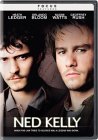
Ned Kelly (2003)
Haven't we had about enough of simplistic "good guy vs. bad guy" films? Wouldn't it be nice to have a film with some complexity, one that renders life in all its realistic shades of gray? Yes, it would be nice... just don't expect the 2003 rendition of Ned Kelly to be that film. Based on the story of the real-life 19th century Australian outlaw, the film carefully sidesteps any potential ethical complexity or realistic character depth in favor of a simplistic story of "innocent man persecuted by corrupt cops."
Ned Kelly is painted as a 19th-century Robin Hood, in fact an outback saint. As the film opens, he's sent to jail for a crime that we're shown he didn't commit: no ambiguity there. When he gets back, he's painstakingly depicted as trying to walk the straight and narrow and lift his family out of poverty by good old hard work, and he only resorts to theft to regain the property that the police have wrongfully seized from his family. Not too bad so far? Well, the film is so careful to place him on a pedestal that he's shown as not even being present in the scuffle that leads the police to denounce him. Oh, and good old Ned never, ever shoots first, he gives his enemies plenty of time to surrender, and when he actually is forced to shoot a man, he's moved to tears and tries to save him. When he and his gang start robbing banks as a way of fighting back against the police, he distributes the money among the other down-trodden farmers.
The black-and-white approach to the story isn't an automatic kiss of death; if the story had been told almost as a fable or morality play, the clear-cut lines of right and wrong could have made it workable as an almost abstract playing out of classic conflicts. However, Ned Kelly opts for realism in all other aspects of the film, except here in the characters' behavior.
If the situation were given more depth, the fundamental theme would still be same: the problem of an overwhelming and inappropriate response by the corrupt authorities to a minor crime. Even if Ned were a horse thief and petty criminal, that wouldn't excuse throwing his mother in jail, or torturing his friends, and it would raise some interesting issues about the nature of a system in which individuals felt they had no chance at succeeding in by legal means. As it is, though, there's no room for complexity or thoughtfulness in this film. It's the oppressed Kelly gang against the evil police. Ho hum.
Ned Kelly is a rather self-conscious film, I think; it's trying too hard to create an epic, and it shows. The film makes rather too much of the conventional high points in the story, such as Kelly's dramatic declaration of war against the police, which is rather less effective than the film seems to think it is, and it neglects the mundane details of making sure the film flows well and maintains the viewers' interest. What is there to make this film worth watching? The plot is sketchy at best, the historical setting isn't depicted in enough detail to be worthwhile in its own right, the characters are, as noted, one-dimensional, and the pacing is slow. This isn't a film that you'll actively hate, but it's certainly one that will leave you wondering why you bothered.
The DVD
Video
Ned Kelly appears in a reasonably attractive anamorphic widescreen transfer, at the film's original aspect ratio of 2.35:1. Colors look natural, and the print is clean, with no flaws appearing in the image, though edge enhancement does appear in many scenes. Contrast tends to be a bit on the heavy side, with less detail apparent in darker scenes than I'd like, and overall the image is a bit on the soft side.
Audio
Ned Kelly has both a DTS 5.1 and a Dolby 5.1 soundtrack, though you'll have to go to the "Languages" section in the main menu if you want to select the DTS option: the default is the Dolby 5.1 track, and it's not possible to switch on the fly. In fact, unless you read the fine print on the back of the case, you'll never know that there's a DTS track offered here. The DTS is the better soundtrack of the two, offering superior handling of sound effects like gunshots and passing trains, but not by a huge margin; the overall sound quality is about the same as the 5.1 track. Dialogue is clear and balanced well with the music, but there's not a particularly immersive feel to the sound.
Extras
Like the film itself, the selection of bonus materials for Ned Kelly looks better on the surface than it turns out to be. "Ned Kelly in Popular Culture" is a 13-minute featurette that serves as a glorified promotional piece for the film; we get some archival images of the real Kelly gang, and an overview of earlier film versions of the Kelly story, but there's not a whole lot of substance here. "The Real Kelly Gang" is just a set of still photographs of the Kelly brothers. The "Artist to Feature Comparison" is a small set of artists' sketches of sets and costumes matched up with still photos of the final film version. The "Poster Campaign" offers images of the posters used to promote the film. Lastly, we get theatrical and teaser trailers for the film.
Final thoughts
The 2003 version of Ned Kelly is better than the 1970 version, but mainly by being bland rather than actively dreadful. Fans of Heath Ledger (in the title role) as well as Orlando Bloom and Geoffrey Rush (in supporting roles) may find the film moderately interesting. I wouldn't bother to seek out this film, but I'll give it a "rent it" to guide those viewers who are definitely interested in seeing it.
|



| Popular Reviews |
| Sponsored Links |
|
|
| Sponsored Links |
|
|
| Release List | Reviews | Shop | Newsletter | Forum | DVD Giveaways | Blu-Ray | Advertise |
|
Copyright 2024 DVDTalk.com All Rights Reserved. Legal Info, Privacy Policy, Terms of Use,
Manage Preferences,
Your Privacy Choices 
| |||||||