
| Reviews & Columns |
|
Reviews DVD TV on DVD Blu-ray 4K UHD International DVDs In Theaters Reviews by Studio Video Games Features Collector Series DVDs Easter Egg Database Interviews DVD Talk Radio Feature Articles Columns Anime Talk DVD Savant Horror DVDs The M.O.D. Squad Art House HD Talk Silent DVD
|
 DVD Talk Forum |
|
|
| Resources |
|
DVD Price Search Customer Service #'s RCE Info Links |
|
Columns
  


 
|
|
|
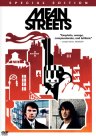
Mean Streets (Special Edition)

NOTE: The Martin Scorsese Collection boxed set can be found HERE. It contains Mean Streets, GoodFellas, Alice Doesn't Live Here Anymore, After Hours and Who's That Knocking At My Door.
So. Mean Streets. It's almost hard to really look at Mean Streets on its own terms any more. Everything about it, the characters, the situations, the camera work, the dialog, the atmosphere, has been appropriated hundreds, probably thousands, of times during the course of the past three decades of film history. Without exaggeration, you could make an argument for Mean Streets being the most influential film of the last fifty years. It's not just the countless blatant imitators who sometimes added to the legacy and sometimes merely cribbed its style (films are varied as Boyz N The Hood, Laws of Gravity, Gravesend, Menace II Society, Federal Hill, and La Haine are all practically remakes) but the way it shaped the character dynamics and pacing of nearly all modern filmmaking. An entire generation of filmmakers has owed their careers to Martin Scorsese, of course, but specifically to this little film. Spike Lee, David Fincher, Kevin Smith, Quentin Tarantino, Peter Jackson, Wes Anderson, Darren Aronofsky, Guy Ritchie and Abel Ferrara all have drawn from the inventiveness (or creative influence peddling) in Scorsese's gritty street opera. Goodfellas may be what's bringing buyers to the new Scorsese boxed set, but it's Mean Streets that anchors the films they'll find within.
But what will first-time viewers make of this off-kilter masterpiece? Certainly they'll feel deja vu all over again as scene after scene rings familiar thanks to the knock-offs they've been watching their whole lives. It's hard to say how Mean Streets, with all its quaint sets and locations, rough edges and editing experiments will play to a DVD generation. I suspect that at the very least those who love Goodfellas (not to mention Reservoir Dogs and Fight Club) will groove on the fast-paced dialog and attitude of the film. It's like watching influences play out in real time. But there's so much more that makes Mean Streets special.
Mean Streets is essentially the story of a low-level hood named Charlie. Charlie wants very much to combine his need for personal salvation based on a lifetime of Catholic ritual and intense family obligation with his own desire to succeed by moving up the ranks through his Little Italy turf. Charlie is hobbled in the latter but assisted in the former by his friendship with Johnny Boy, a boisterously irresponsible childhood friend with a growing list of enemies. By helping Johnny get straight with his responsibilities Charlie hopes he can alleviate some of the Catholic guilt that forces him to hold his fingers over an open flame, testing himself but punishing himself as well.
That's it. That's the plot. What makes Charlie's quest so all-encompassing is that his court of play isn't in the church. As he ponders in the opening voice over: "You don't make up for your sins in church. You do it in the streets... The rest is bullshit and you know it." And Charlie's streets are filled with opportunities for salvation. But they're also filled with distractions, which often pull Charlie (and the film) away from this central goal. That's where the random-access kinetic energy of Mean Streets combines with the unsupervised chaos of the minds and lives of the characters. Charlie and Johnny surround themselves with other reckless fellas and their lives are never more than a shot of whisky away from a bar brawl, a pool hall brawl or a street brawl.
At this point I should state that, in addition to Scorsese's willingness to experiment and play around with expectations and conventions, there are two other aspects of the film that distinguish it from the pack: The two lead performances. As Charlie and Johnny, the young actors Harvey Keitel and Robert De Niro tear up the screen like mad. While the film was a minor release, in retrospect they must have been leading the next massive attack on acting since Brando brought Method naturalism to the screen in the 1950's. The combination of fearless energy and the lack of self-consciousness in both actors propels the film - and acting in general - into another era.
De Niro has the showier role of the two, creating a livewire, manic human being with no scruples and no common sense but who still can be charming at times. To think that Mean Streets came out in the same year as Bang the Drum Slowly, where De Niro played a quiet, suffering baseball player is just incredible. That year kicked off an incredible run for the actor that included quite a few of the most memorable performances ever committed to screen: Travis Bickle, Jake LaMotta, the young Vito Corleone, Rupert Pupkin. It's an unparalleled achievement in acting, such consistency. (Which makes his excruciatingly long slide into self-parody of the past decade so much more painful.) But to look at all those performances knowing the madness that is De Niro as Johnny Boy makes them that much richer: When De Niro cools his rage in The Godfather Part II or when he glowers total anger in Taxi Driver or when he stands tall and brave in The Deerhunter his characters define themselves in as different terms from Johnny Boy's complete foolishness as possible. He attacks this role with total abandon. There are times when the camera frenetically follows him down the street. It seems totally unscripted as he confronts random passers-by and shakes them to the ground. He's so frighteningly unhinged, his anger and his laughter are almost interchangable at times.
Keitel, on the other hand, tackles perhaps a more difficult role. Charlie is the calm center of the film. He's far more rational than anyone else. But the film doesn't suggest that he's truly got it all under control. Keitel plays him as a guy who wants to have it all under control, a subtle distinction. He wants to come off as reasonable, understanding, sensible, responsible, mature. But he's barely keeping it together. While we never really get a definitive reason for his agita (Scorsese knows better than to saddle Charlie with some lame backstory) we just know that he's searching. The search for salvation is a theme that Scorsese has stuck to throughout his wildly varied career with almost insane stubbornness. From the jazz clubs of New York, New York and the bloody boxing rings of Raging Bull to the mountains of Tibet in Kundun and murky swamps of Cape Fear, the filmmaker has viewed his protagonists' struggles through some need of redemption. All that was in the future, however, when Keitel was playing Charlie, and the young actor takes a few minimalist strokes (a technique he's thankfully maintained even in such wild performances as in Bad Lieutenant) to sketch out the lifetime of confusion and soul-searching that Scorsese demands. It's almost not even there: While containing plenty of collar-grabbing intensity the performance is incredibly subtle. There are even moments when you see Charlie trying out an asshole personality, maybe sick of always trying to be the one patching everything up for everyone else. But when he's peeking out from behind his hands at a nude woman, or childishly play-fighting with Johnny Boy, or doing a nearly imperceptible double-take at the sight of a woman removing her wig, Keitel imbues Charlie with tremendous depth and realness.
Where did Scorsese get this need to put the Catholic guilt whammy on his characters so early on? (He was only 30 when he made the film.) True, it could have been one part tough guy posturing. Absorbing films like Force of Evil and Pickup on South Street, it must have been tempting to heap grizzled world-weariness on his own characters, even if they were relative babes-in-the-woods along with their director. But he never pretends that the salvation that Charlie seeks is the real thing. Jake LaMotta has real sins he needs to make right and Travis Bickle is working off his interpretation of the very real suffering he sees on the streets. Even Fast Eddie in Scorsese's work-for-hire The Color of Money longs to prove himself still worthy in a way that his cocky younger self in The Hustler was too confident to bother with. (Goodfellas' Henry Hill, one of the most unrepentant anti-heros of any legitimate movie, couldn't give a fuck about redemption unless it means escaping jail time.) But what does Charlie want? He doesn't really know and it's very possible that Scorsese, not too terribly long after debating whether or not to enter the priesthood himself, didn't know either. Mean Streets is a search, but an unfocused one. In that way it's a search that the audience can share in. Lord knows how many kids discovered the film on TV or on VHS only to say "Hmmm... I wanna make movies like that!" It's a touchstone partly for that reason. It doesn't pretend to have the answers and the ending, far more open than I recalled from my last laserdisc viewing a few years back, doesn't nail down the future either. Even if you've never eaten sausage and peppers it still feels like it's sort of your story on some level.
As Charlie stumbles through his confusion he also stumbles through the confusion of the era and, by extension, our era as well. The film doesn't make a grand statement about society (Other than Taxi Driver and the good parts of Gangs of New York it's tough to think of a Scorsese film that does) but ends up touching on real issues anyway. Mean Streets is a personal film, but it can be personal for a broad range of viewers. Scorsese doesn't focus his urban drama on with the racial weirdness of the city in the Seventies. It's not what the film is about. But he does let you know that it's unavoidable all the same. An early scene where Charlie watches a stripper gyrate to a Rolling Stones tune features his voice-over thoughts: "She's black. You can see that. But there's not much of a difference, is there?" But then he uneasily asks again, even in his own mind, "Well... is there?" You tell us, Charlie. When he's contemplating a black girl he's a tourist and he knows it. But he's unsure if it's ok. The film offers no answer except that ultimately Charlie is too chicken to find out.
The misery of the Viet Nam war and the changing social construction of the city all encroach on Charlie's Little Italy world. That there are constantly fights breaking out in the film, not just among the main characters but on the edges of the screen where the extras sit around drinking and playing cards, speaks to the uneasiness. It's funny each time another set of fists starts flying, but there's a reason for it. Charlie's not the only guy who realizes that shit's going down. He just may be the only one eloquent enough to internalize it.
But the fights and the arguments don't all just serve thematic purposes. The film, to me, is fiercely funny. True, it's a gallows humor, and not just in the ba-da-bing style of The Sopranos. Much of it is funny in its absurdity. The way a couple of the guys "sell" some firecrackers to a couple of marks from Riverdale with the line "You know where this stuff comes from? It comes from Maryland. You know what that means? It means it's good." Some of it has been celebrated over time (the "What's a mook?" scene is legendary) but none of it is sharper than the scene early on when Charlie drags Johnny into the back room of their hangout to find out why he's still behind on paying off his debts. Johnny weaves such a ridiculous story that it makes your head spin. With De Niro running verbal laps around the room and Keitel not buying any of it, the scene deserves a space in the hall of fame. This is the real deal Abbott and Costello: Every bullshitter you've ever known wrapped in one.
Some of the things Scorsese tries don't quite work, but they still lend the film an air of unpredictability. There are some edits here and there that really stand out and a scene with some big cats in a cage (as well as a couple of religious references) feel like just a touch too much symbolism for a film that gets it's themes from the gut and under the skin.
If there's any one aspect that doesn't quite gel it's (unfortunately, predictably) the female character. Amy Robinson plays Theresa, Charlie's love interest who's apparently so important to his life that she doesn't show up until a full hour into the movie. Neither the performance nor the character can match the strength of the other leads and some scenes with her suffer for it. This is hardly a fatal flaw but one that clearly was not unnoticed by the actress herself (Mean Streets is her only film performance. Afterwards she became a successful producer, including Scorsese's After Hours.) Female characters have never been a strong point of Scorsese's and it takes a particularly powerful performance to overcome that, whether it's Cathy Moriarty's natural instincts in Raging Bull or Sharon Stone's engaging hystrionics in the otherwise lackluster Casino. Robinson doesn't have the stuff, however and this weirdly abrasive character doesn't reach anywhere near the depth of Charlie or Johnny.
But in the end this is a film about two guys, brothers at heart. Charlie's little dramas over just how loyal to be to his friend, portrayed through a loose series of incidents and situations, may add up to one of the most lasting personal sketches in film history. When he culled everyday tales from his neighborhood to make a film, Martin Scorsese couldn't possibly have known the impact they would have. But it's impossible to imagine the last thirty years of movies without them.
VIDEO:
The anamorphic video is very nice. Remastered for this release, the print is clean and in terrific shape. The images are usually crisp and lively, with even the darkest scenes looking far better than on earlier releases. There is a good bit of grain, however, and the darkest scenes are still very dark. But that's the look of the film. It won't have the same look as a recent blockbuster, nor should it. But this is an excellent presentation.
AUDIO:
The Dolby Digital 2.0 Mono is trickier. I remember always finding the sound harsh and dissonant before (theatrically, on VHS and on laser) and this is no exception. Some dialog is a little tough to hear. The sound mix was clearly done on the cheap (music sometimes cuts off abruptly, voices are uneven) but much of that adds to the overall feel of the film. Still the increased clarity in the DVD audio accentuates some flaws. English, French and Spanish subtitles are available.
EXTRAS:
The list of extras is short but sweet. The main extra here (of course) is Scorsese's commentary track, which he shares at times with Robinson. While the commentary doesn't fill up the entire film, it's still tremendously interesting. Right from the start Scorsese discusses how the film doesn't really feel to him like a film in retrospect, but rather a summary of his life to that point. He discusses the community he came from and his influences. It's mostly an autobiography of a track, rather than a scene by scene. Robinson, recorded separately, brings an interesting additional perspective to the track but it would have been nice if more of the cast could have contributed. All told, it's a somewhat short track but still quite worthwhile.
Another nice feature is the seven minute "Back on the Block," a documentary on the film from the time of its release. While it's a promotional piece it doesn't feel as puffy as today's electronic press kits. It's almost as gritty as the film and gives the viewer a chance to glimpse Scorsese's home life and the friends who inspired the characters. It's also a nice way to get a feel for some of the locations from the film.
An anamorphic trailer is also included.
FINAL THOUGHTS:
Obviously Mean Streets is a very meaningful film for me. I don't know how a new generation of moviegoers, raised on images that owe their existence to it, will feel about it. I'd love to read feedback from viewers seeing this film for the first time. But there's no doubt that Mean Streets is the real deal. It's the godfather of every El Mariachi-Blair Witch Project-Clerks indie production to reach for the brass ring. A tiny film on a shoestring budget that introduced the world to three major talents and a new style is not something to ignore. The fact that Mean Streets is still so fantastic, after all these years, shows that they were definitely on to something.
|



| Popular Reviews |
| Sponsored Links |
|
|
| Sponsored Links |
|
|
| Release List | Reviews | Shop | Newsletter | Forum | DVD Giveaways | Blu-Ray | Advertise |
|
Copyright 2024 DVDTalk.com All Rights Reserved. Legal Info, Privacy Policy, Terms of Use,
Manage Preferences,
Your Privacy Choices 
| |||||||