
| Reviews & Columns |
|
Reviews DVD TV on DVD Blu-ray 4K UHD International DVDs In Theaters Reviews by Studio Video Games Features Collector Series DVDs Easter Egg Database Interviews DVD Talk Radio Feature Articles Columns Anime Talk DVD Savant Horror DVDs The M.O.D. Squad Art House HD Talk Silent DVD
|
 DVD Talk Forum |
|
|
| Resources |
|
DVD Price Search Customer Service #'s RCE Info Links |
|
Columns


|
|
|
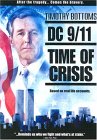
DC 9/11 - Time of Crisis
Political filmmaking is tough these days since the political climate has become so intense in recent years. Films lend themselves best to exposés or behind-the-curtain peeks at how those wielding the power manipulate the world. Films like All the President's Men, The Parallax View, and Bulworth take what we know about politicians and how they operate and try to expand on that. Showtime's DC 9/11 - Time of Crisis wants to open up our view of George W. Bush by detailing his efforts during the terrorist attacks on New York and Washington DC and in the days following. Instead, however, this excruciatingly boring film does nothing more than suck up to a sitting president with fake-sounding patriotism.
Written by Lionel Chetwynd (who has a long list of political and biblical TV movies under his belt) and directed by Brian Trenchard-Smith (who's directed a couple of Leprechaun sequels as well as the sequel to the weird Christian armaggeddon epic The Omega Code), DC 9/11 uses the nation's worst day as a cynical backdrop for much Bush worship and rah-rah pro-administration drumbeating. The film gives us Bush's journeys on Air Force One that day as if they were of some sort of epic nature. The Secret Service wants him in a secure location but this president wants to get back to the White House, dammit! There is an element of Harrison Ford's fictitious president in this dubious rendering, all bravery and bluster, always with a script-worthy perfect statement ready to go.
The part of the president in DC 9/11 is played by Timothy Bottoms who, fittingly, also played Bush in That's My Bush!, Trey Parker and Matt Stone's evisceratingly sarcastic White House sitcom that portrayed the then-newly anointed president as a bumbling moron. That's My Bush! was pulled from the air not long before 9/11, which was good timing since it would have been canceled regardless. But Bottoms returns to the role with a new mission: To create an image of the man as a saintly born leader. There is barely any hesitation in Bottoms' performance and his W knows exactly the right thing to do at any given moment. He's shown deeply contemplating the path the nation must take in response but the enormity of the situation is immediately apparent to him: From the get-go he commands his advisers that the nation needs to develop a new doctrine in dealing with terrorism. The filmmakers want us to think the film shows Bush maturing and growing into the roll of leader but the film puts him on a pedestal almost from the start.
The problem with this sort of open-wound filmmaking is that history has had no chance to fully write the books in time for this rush job. There are plenty of moments in the film where viewers may shake their heads in disbelief at the way things are portrayed. Bush is shown advising his cabinet that no one should start thinking about Iraq until after Afghanistan is squared away. That's clearly either based on stubborn partisanship or ignorance of the facts.
Having actors mimic their subjects so closely leads the film to feel even more shallow than it needs to be. Bottoms, with the right makeup, can be a dead-ringer for Bush. But he doesn't seem to be reinterpreting the man in any way. This is like political karaoke, with actors re-enacting all your favorite propaganda hits. There is no real insight here. I'm thinking of Oliver Stone's tasking Anthony Hopkins with the job of portraying Richard Nixon: Little attempt was made to turn him into a Nixon clone but the actor was able to embody his subject and bring life and specificity to what was an interpretive portrayal. The goal in DC 9/11 was apparently to just imitate.
Many of the actors actually do a fine job of mimicking their characters. John Cunningham does a startling Rumsfeld impression and Penny Johnson Jerald manages to invoke Condoleezza Rice quite well. Also, Mary Gordon Murray at times looks so much like Laura Bush it's a little scary and Scott Alan Smith does a good job with Ari Fleischer. Lawrence Pressman is much less effective as Dick Cheney (all head-tilts and smirks, actually much like the real Cheney). My favorite bit of casting is Star Trek legend George Takai as Secretary of Transportation Norm Mineta. I kept waiting for him to intone that he had ordered the hijacked planes sent off into the neutral zone.
Perhaps the only actor attempting to internalize his character without becoming a Madame Tussaud's likeness is David Fonteno as Colin Powell. Perhaps because he makes the least effort to look like his subject, Forteno seems to do the most actual acting (versus copying.) His Powell is, of course, the conscience of the cabinet and there are moments when he actually makes you think that more may be at stake than just Bush getting to look extra butch.
The film also has an annoying habit of trying to strike as many recognizable poses as possible. For example, a big deal is made out of the famous photo op on Air Force One while Bush was on the phone. This sort of uselessly referential moment is simply for show: "Look, this is the moment you guys remember from the commemorative photo packet you got when you donated to my re-election fund!"
That's the level at which this film operates. There's no insight and no analysis. It shows factual events in a straight-forward manner and it extrapolates private moments with official input from those who have an interest in being portrayed well. There are very few unhinged moments (the only one that springs to mind is the look of disbelief on Bush's face when he's informed that the CIA and FBI have no way of networking their intelligence systems) and very little in the way of reasonable dissent. One conference scene pits Powell and Wolfowitz as two different voices on Bush's shoulders, arguing different approaches across a table. Still, the film makes no case that Bush actually considered Powell's position seriously and the film's smirky references to France and Germany get tiresome. (Remember, we're talking about Afghanistan here, not Iraq.)
Ultimately that's the single biggest problem with the film. Since its creators seem to think that history is best viewed with knee-jerk immediacy, they allow themselves zero perspective. A film just on the events of September 11th itself would be one thing, but this film pretends to understand the response and it doesn't. If anything, it makes the case against Bush pretty well with his constant exclamations that the mission is to get Osama Bin Laden and al Qaeda. The film ends with his September 20th address where he committed his presidency to finding Bin Laden and punishing him (while conveniently leaving out the part about the Axis of Evil). It even makes a big point of saying that Iraq and other endeavors will have to wait until these initial goals are met. It doesn't show Bush, in 2002, saying that he doesn't think about the still-free Bin Laden much any more and that his priorities now lie elsewhere. And it doesn't show General Tommy Franks being pulled from his planning of the Afghanistan war so he can devise a course of action on Iraq. The film undertandably leaves out the standard text-based follow-ups at the end for obvious reasons: Because detailing anything that happens after the closing credits would reveal the lie.
Political filmmaking has the opportunity to be a filter that cuts out the bull and leaves the viewer with a thoughtful look at what's really going on. DC 9/11 is all bull. The only moments of any kind of emotional impact come during the president's visit to New York. When a firefighter tells Bush "Get those motherfuckers, George! Kill them all!" it's a surprisingly blunt and honest statement after an hour of watching Bush petting his dogs. And a short scene when the mother of a dead Port Authority Police Officer gives the president her son's badge transcends the shoddy writing and acting of the moment and reveals a real sadness that the rest of the film lacks. I don't care to watch Condi crying while watching the news or Laura and George cuddling in their White House bed. This is nonsense and this foolish movie treats it like it matters.
VIDEO:
The non-anamorphic video is ok, although I can't figure out why it's not enhanced for widescreen televisions. Either way, it looks reasonably sharp, with some darker interiors losing detail. The colors are mostly bright and fleshtones look natural. The mixture of news footage and original footage, however, doesn't work nearly as well as the filmmakers would like to think. Often using grainy shots of the back of the real Bush's head intercut with shots of Bottoms in character, the look is extremely uneven. This ludicrous technique may have saved some money on sets but it makes the film jarring to watch.
AUDIO:
The Dolby Digital 5.1 soundtrack is fine. The voices are clear and the music sounds good. It's a simple mix but effective use of surrounds when multiple people are talking helps. There is also an Dolby Stereo track that sounds fine as well, if less distinct, and a Spanish mono track. (No French or German tracks?)
EXTRAS:
The main special feature is a commentary track with the writer, the director and star Timothy Bottoms. This is a pretty boring track with the participants constantly patting themselves on the back for how accurate the film is. It's especially funny to hear writer Chetwynd espousing advice for wannabe screenwriters when his own work here is so laughable. This track would have been better served if the participants had gone into an in-depth overview of all the social and political issues that the subject matter suggests but, like the movie itself, they have nothing to say on any of this.
There is also a very short promotional clip for the film that is pretty much the most disgusting thing I've seen in a while. It goes something like this: Deep-Voiced Narrator - "The events of September 11th are something we will never forget. And now you too can relive them in Showtime's awesome new movie DC 9/11!" Whatever.
There are bios and trailers for other Showtime productions.
FINAL THOUGHTS:
This film is aimed, I suppose, at the Bush supporters who feel they need to be "reminded" of why we're at war with terror. I don't know what kind of American needs to be reminded a mere three years after the worst homeland attack in our history but maybe my proximity to the attack has left me biased. Either way, this misguided film adds nothing to our understanding of the events and, if anything, clouds what really happened. Readers will undoubtedly write in to tell me that Fahrenheit 9/11 is full of lies and blah blah blah. That doesn't excuse the simple-minded, thoughtless rah-rah mindset on display here. If you're looking to be reminded of what happened at the World Trade Center I suggest you watch 9/11 or In Memoriam. There's no reason, however, to watch this film. This 9/11 is a joke.
|



| Popular Reviews |
| Sponsored Links |
|
|
| Sponsored Links |
|
|
| Release List | Reviews | Shop | Newsletter | Forum | DVD Giveaways | Blu-Ray | Advertise |
|
Copyright 2024 DVDTalk.com All Rights Reserved. Legal Info, Privacy Policy, Terms of Use,
Manage Preferences,
Your Privacy Choices 
| |||||||