
| Reviews & Columns |
|
Reviews DVD TV on DVD Blu-ray 4K UHD International DVDs In Theaters Reviews by Studio Video Games Features Collector Series DVDs Easter Egg Database Interviews DVD Talk Radio Feature Articles Columns Anime Talk DVD Savant Horror DVDs The M.O.D. Squad Art House HD Talk Silent DVD
|
 DVD Talk Forum |
|
|
| Resources |
|
DVD Price Search Customer Service #'s RCE Info Links |
|
Columns


|
|
|
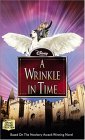
Wrinkle in Time, A
The 2003 television adaptation of Madeleine L'Engle's award-winning children's book A Wrinkle in Time is sure to bring out passionate reactions from fans of the book: some excited to see their beloved book brought to the screen at last, others horrified at the way the adaptation was made.
I enjoyed A Wrinkle in Time as a child, but it wasn't one of my favorites, so I was able to bring a fairly objective perspective to the table as I watched the television version. In truth it's not bad, taking L'Engle's distinctive story and bringing its main elements to life in a reasonably entertaining way. I'm not one to quibble over cosmetic changes, such as having actors who don't look exactly like the way the characters are described in the book, but I do think that the adaptation of A Wrinkle in Time makes a number of missteps that result in a less engaging story.
The main plot structure is the same. We meet six-year-old Charles Wallace, who is extremely intelligent but generally assumed to be strange or retarded because he'll only speak in front of his family; his sister Meg; and their mother, a brilliant scientist. Apart from the fact that their father (another scientist) is missing, life is relatively normal, until a strange being who calls herself Mrs. Whatsit blows in, summoning Meg, Charles Wallace, and their neighbor Calvin on a a strange quest across space and time to rescue their father and fight against an evil force.
Young David Dorfman pulls off a very difficult acting job here, managing to be convincing as Charles Wallace, who has to be lovable, obviously intelligent, and later demonic and creepy. The other actors are merely passable; Meg and Calvin seem like they could have been transplanted from any other after-school special. Meg in particular is a bit of a shame, since she's fairly bland throughout, and the final scenes in which Mrs. Whatsit praises her end up feeling rather unconvincing.
Probably the worst offender in A Wrinkle in Time is its CGI. Mrs. Whatsit's centaur form is frankly hideous: it looks like it was made out of plastic, left too long in the sun until it started to melt, and then was hastily reformed into an approximation of the right shape. Considering that this is supposed to be an awe-inspiring and beautiful creature, the deformed-looking shape is bad enough, but it's also extremely fake-looking, not even remotely looking like it belongs in the same frame as the live actors.
The scenes in Camazotz, where the characters go to rescue their father from the clutches of IT, are handled reasonably well, capturing the creepy and oppressive feel of this part of the book. I'm not as convinced by the portrayal of IT itself, though: the filmmakers have opted to go for a more elaborate CGI version of IT rather than the stark yet disturbing image from the book. The result is that a fairly memorable scene in the book ends up feeling fairly ordinary. On the bright side, though, some of the more abstract effects, like the tesseract, are handled quite well.
Apparently originally conceived of as a four-hour miniseries, A Wrinkle in Time was cut down to a shorter running time for its television release; sources claim that the final version was a three-hour cut. I'm assuming that this three hours included commercials, because what ends up on the DVD (presented as a single movie) runs a total of 128 minutes: barely over two hours.
The DVD
Video
When I saw the sometimes rather cramped-looking framing of A Wrinkle in Time, I had my suspicions that 1.33:1 might not be the original aspect ratio, and (unfortunately) it turns out I was right. The original 1.78:1 widescreen ratio has been pan-and-scanned here. What was Disney thinking? That since it was made for TV anyway it didn't merit a proper transfer? In any case, it's very disappointing, especially since many of the scenes in the film would have looked much more impressive with a wider image.
Apart from missing a substantial part of the image, A Wrinkle in Time looks merely average. The colors are handled well, looking bright and natural, but contrast is a bit on the heavy side, and the image is rather soft overall. There's a fair amount of edge enhancement, and some grain is apparent in the darker shots.
Audio
The Dolby 5.1 sound of A Wrinkle in Time does a nice job of presenting clear, clean-sounding dialogue and special effects. The overall sound is well balanced, with a decent sense of immersion in the film.
Extras
Of most interest to fans of the book (and film) will be a ten-minute interview with Madeleine L'Engle; it's an interesting piece in which she discusses various topics such as the ideas behind the book. An 11-minute featurette called "The Actors: Working the Wrinkle" is a fairly generic "let's talk about how much we loved doing this movie" piece. About 17 minutes of deleted scenes are also included: the five scenes can be watched separately or with a "play all" feature. Incidentally, the deleted scenes appear in anamorphic widescreen, adding a nice touch of insult to injury for the film's pan-and-scan presentation.
Final thoughts
If A Wrinkle in Time is one of your favorite books of all time, it's probably best that you stay away from this television adaptation, as it will undoubtedly give you a headache. If you're not passionately attached to the book, or haven't read it, though, the 2003 television version offers a decently entertaining story, one that's likely to appeal to both younger viewers and their parents. Ordinarily I'd give this film a "recommended" but considering that the DVD release offers only a pan-and-scan version of the film, without the option of watching it in its original widescreen presentation, I can only suggest that you rent it.
|



| Popular Reviews |
| Sponsored Links |
|
|
| Sponsored Links |
|
|
| Release List | Reviews | Shop | Newsletter | Forum | DVD Giveaways | Blu-Ray | Advertise |
|
Copyright 2024 DVDTalk.com All Rights Reserved. Legal Info, Privacy Policy, Terms of Use,
Manage Preferences,
Your Privacy Choices 
| |||||||