
| Reviews & Columns |
|
Reviews DVD TV on DVD Blu-ray 4K UHD International DVDs In Theaters Reviews by Studio Video Games Features Collector Series DVDs Easter Egg Database Interviews DVD Talk Radio Feature Articles Columns Anime Talk DVD Savant Horror DVDs The M.O.D. Squad Art House HD Talk Silent DVD
|
 DVD Talk Forum |
|
|
| Resources |
|
DVD Price Search Customer Service #'s RCE Info Links |
|
Columns

 
|
|
|
SlapHappy Volume 3
Series Overview:
Most people have at least heard of the three big silent comedians. Charlie Chaplin is a household name even today, and Buster Keaton and Harold Lloyd are well remembered by even casual silent film buffs. In the 1910's and 20's however, there were literally thousands of comedy shorts made staring comedians who are all but forgotten today. How many people know of the work of Lloyd Hamilton, Andy Clyde or Larry Semon? To learn more about these comics, and many others that history has passed over, you need only turn to SlapHappy.
SlapHappy is an exhaustive 30 episode series that searches out the forgotten comics and studios of the silent era and gives them a moment in the spotlight again. More than just a documentary though, these shows present extended clips from silent shorts in addition to background information about the stars. This lets you see for yourself how funny and creative many of these forgotten silent clowns were. It also gives you the background on these forgotten stars; how they got their start, who they worked with, how popular they were, and often why their star faded.
One of the things I really like about this series is the fact that there is only sparse narration. The narrator gives the background of the comic who is on the screen, sets up the piece, and then falls silent. This lets the viewer concentrate on the comedy on screen, instead of having to process a lot of information. There is even an option to view the shows without any narration at all.
Though this series is very informative, the strength of this show is the rare clips that they've chosen to fill out the half hour. Some of the clips only last a few seconds, but the majority of them are minutes long, some going on for five minutes or more. This really gives viewers the chance to see how gags were set up and executed, as well as how the comics progressed on to the next gag. By cutting out the plot points of the shorts, as well as the minor gags, SlapHappy is able to present the funniest parts of the shorts as well as being able to give a good overview of an artist's work through several shorts.
Another great strength of the show is that there isn't a laugh track. This show gives the viewer credit for knowing what's funny and what isn't.
Each volume of The SlapHappy Collection presents three half hour episodes. Overall, this is a very informative and funny show, and the DVDs look great. Where else can you get more laughs than a feature length movie and learn something at the same time?
Volume Three:
The three episodes on volume three are:
The Al Christie Studio: In the 1920's there were dozens of production companies churning out two reel comedies. in 1916, he started his own production company, soon it was #3 in the biz
His studio created more gentle comedies, instead of the Mack Sennett slapstick-fests, they specialized in more situational comedy. Christie shorts are more likely to involve cases of mistaken identity and misunderstandings instead of hectic chases and outlandish gags.
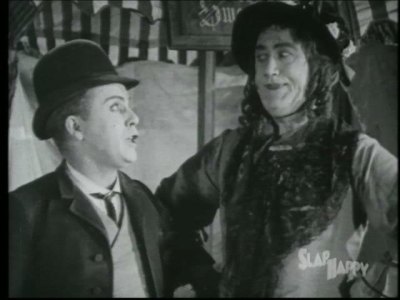
Christie even entered the world of features in 1924 with Hold Your Breath, and though he made a few more longer works, the shorts were his bread and butter.
In 1929, Christie cancelled all of his actors contracts. With the coming of sound he considered all of them obsolete. But with the coming of the depression Christie fell on hard times and his company was bankrupt within a couple of years.
Supporting Comics: Of course these silent comedies wouldn't be nearly as funny if it wasn't for the comedian's foils. Often very talented themselves, these second bananas had to have good timing, be able to take a fall, and most of all, make the star look good. Ironically, many of these supporting characters had longer careers than the stars that they worked with. This episode looks at several of these unsung heroes of silent comedies.
One of the most recognizable supporting comics is 6' 4" Eric Campbell. He was the man who would give little Charlie Chaplin such a hard time in his early Mutual Shorts. The large and burly man was the perfect foil for the small and wiry Chaplin. Unfortunately he died in a car accident at the age of 38.
Big Joe Roberts played the heavy in many of Buster Keaton's pictures. He resembled Eric Campbell in a lot of ways, being a large stout man. He was a great counterpoint to the quick and agile Keaton. Ironically, he also died at an early age after having a stroke on the set of Our Hospitality.
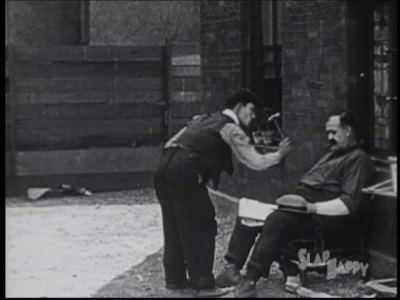
Bud Jamison appeared in nearly 400 features and shorts during his 30 year career, working steadily his entire life. He worked appeared with Harold Lloyd and many of the other top comedians of the day, and though you will probably recognize him, most people wouldn't be able to put a name with the face.
Many other comics are shown, with clips from their films. Bud Duncan of the team "Ham and Bud," is covered, as well as Jimmy Adams, Snub Pollard, and my favorite, Al St. James.
Larry Semon: One of the most popular comics of the 1920's, Semon is hardly known today. Staring in a series of comedy shorts for Vitagraph, he called himself the king of the daredevil comedians had a popularity that was only rivaled by Chaplin. This episode looks at the work of this great talent.
Semon's shorts were fast and frantic, with a lot of comic action. The stunts were very well choreographed, and the timing of the gags was excellent. In one of the most hilarious clips in the series, Semon stars with a young Stan Laurel in Frauds and Frenzies. The duo look like a pair of acrobats as they kick, fall, and swing at each other.
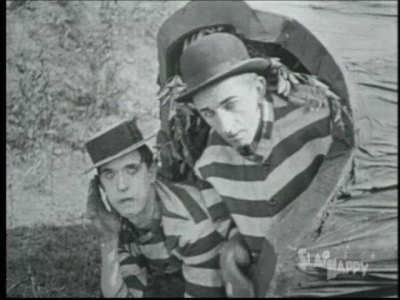
In 1920, Semon added a large comic actor to his acting troupe; Oliver Hardy. Hardy soon become his favorite foil, and the two made a series of shorts together and even appeared together in a feature length version of The Wizard of Oz (which is not shown in this episode.)
Semon never came up with a single character for audiences to identify with instead surrounding him. As and tastes grew more sophisticated in the mid 20's and people wanted more than large scale comic chase scenes, Semon's popularity faded. Today he is hardly remembered, but in this episode of SlapHappy you can see some of his hilarious work.
The DVD:
Each disc in this series comes in a keepcase and contains three half hour episodes on a single DVD-R.
Audio:
The two channel soundtrack sounded very good. The music for the series is composed of up beat Jazz music courtesy of Stomp Off Records, and it works very well. They old time sounding Jazz scores fits with the antics on screen though the music wasn't composed specifically for the clips. There are some sound effects added, the slamming of a door, or a gunshot, and these accentuate the action without becoming intrusive. Being recent recordings, there is no hiss or other audio defects.
Video:
The image quality ranges from good to excellent, with most of the clips being very good. There are no blurry, faded, scratchy prints used in the series that I've seen, and I was very pleasantly surprised. Since many of these clips are from more minor stars and studios I was expecting a poor quality image, but luckily that isn't the case. Some of the source material is from 35mm prints, though much of the film comes from high quality 16 mm reduction prints. Both of which look very good. For film that have been ignored for 80 or more years, the quality is outstanding.
The only qualm I had with the picture is that there is a light "SlapHappy" bug in the lower right hand corner during the entire show. This is a minor annoyance at best though.
Extras:
There are no extras on this discs.
Final Thoughts:
I really enjoyed this volume too. The Larry Semon episode was my favorite, but the one of Supporting Comics was very informative too. I've always been interested in the people with smaller roles, and always found it interesting that they appeared in more films than the big starts. A solid entry to an excellent series. Highly Recommended.
|




| Popular Reviews |
| Sponsored Links |
|
|
| Sponsored Links |
|
|
| Release List | Reviews | Shop | Newsletter | Forum | DVD Giveaways | Blu-Ray | Advertise |
|
Copyright 2024 DVDTalk.com All Rights Reserved. Legal Info, Privacy Policy, Terms of Use,
Manage Preferences,
Your Privacy Choices 
| |||||||