
| Reviews & Columns |
|
Reviews DVD TV on DVD Blu-ray 4K UHD International DVDs In Theaters Reviews by Studio Video Games Features Collector Series DVDs Easter Egg Database Interviews DVD Talk Radio Feature Articles Columns Anime Talk DVD Savant Horror DVDs The M.O.D. Squad Art House HD Talk Silent DVD
|
 DVD Talk Forum |
|
|
| Resources |
|
DVD Price Search Customer Service #'s RCE Info Links |
|
Columns
  


 
|
|
|
Suds
By 1920 America's Sweetheart, Mary Pickford, was 28 years old. She had made a career out of playing adorable plucky little girls, but wanted to broaden her roles. She couldn't keep playing 12 year old girls forever after all. So she bought the rights to a one act play, Op O' Me Thumb, and adapted it for the screen. Having changed the name to Suds, she stars in this, not as a beautiful young lady, but as a grungy and not too bright scrub maid.
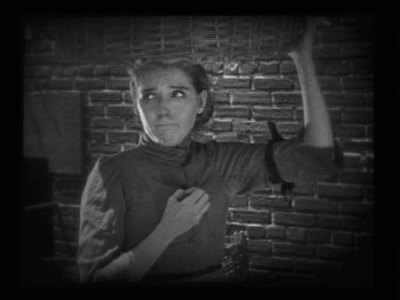
Amanda Afflick has a hard life. She works long, hard, hours scrubbing clothes for a living, but worse than that, she has no one who loves her. She's not too bright, and often makes mistakes at the laundry where she works, which makes her the butt of jokes for the other washer women. When a man that Amanda finds handsome (though he isn't really) brings a shirt in to be cleaned, she falls in love with him. More than eight months have passed when the movie opens, and he still hasn't picked up his shirt. Amanda washes it twice a week, to the scorn of her colleges, keeping it clean for his return. When the teasing of the other women gets to be too much for her, Amanda escapes into fantasy, spinning a tale of her royal ancestors and the man who gave her his shirt as a sign of his love.
This is a bit of a different role for Mary. Though she often plays poor or disadvantaged children, this time she is not a child. She's a young woman on her own. She isn't glamorous and attractive, but a dirty and grimy wash woman. He famous curls are not to be seen except in a made-up flashback, and she is always dressed in rags. Audiences of the day probably had a hard time getting used to Mary looking like a lower class gutter snipe, but she did an excellent job in the film. Her acting was very good, but there still was a lot that didn't work in the film.
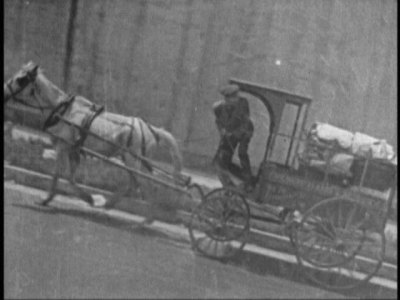
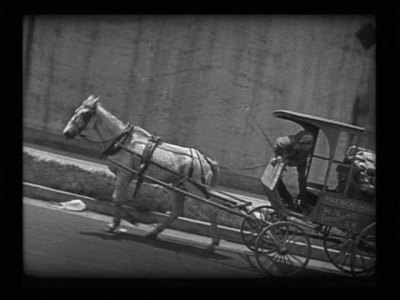
This movie is a comedy/drama, and while it is enjoyable to watch, it doesn't really succeed as either. Light humor is sprinkled throughout the film, but a lot of it doesn't work. When Amanda is forced to work all night washing clothes, for example, she puts too much soap in the water, making the barrel overflow with suds. The humor of this scene is ruined by the other wash maids laughing at Amanda while she cries into her work. Another scene has Amanda delivering some clean clothes, but ending up standing on a wagon that is running out of control down a hill. She ends up crashing, and flinging all of her clean laundry in the mud. While this would have been funny in other films, it's already been established that Amanda messes up a lot, and you know that she'll be in a lot of trouble. Instead of laughing, you feel sorry for the girl.
The drama aspect of the film isn't that strong either. While viewers grow to feel for Amanda, they also realize that most of her problems are her own doing. Telling unbelievable tales about her past isn't going to make the other women like her, and goofing around just gets her in trouble. The movie also dipped into melodrama a couple of times, like when Amanda runs to save a horse, Lavender, from being killed and made into glue. The scene was a little too sappy and Pickford over acts a bit, something she rarely does. She climbs up a gate and throws her arms through the bars screaming for them not to shoot the horse. It was just a bit much.
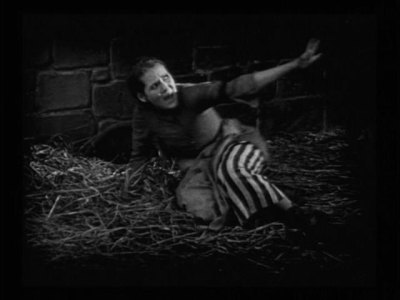
The ending of the film is also a problem. Pickford and her staff must have had a hard time deciding how to conclude the film, because there are three endings that still exist. One is depressing, the other two are happy, but abrupt and a little unrealistic. You can see the different versions in the bonus section.
Though the film is flawed, I still really enjoyed screening it. I loved seeing Mary Pickford in a more adult role, one that didn't have her looking glamorous all the time. She still had a lot of spunk though, and I really enjoyed most of her performance. She captured life in the lower class very accurately.
There were also some very funny moments in the film. The scene where Amanda takes the horse Lavender into her flat and curls its mane, is precious. It was unexpected and gave a good laugh. I also laughed through Amanda's made up story about her past. It was very amusing to see her father "the dook" talk with a Cockney accent. "You, Sir 'Orace, like all the rest, loves 'er for 'er jools 'nd title!"
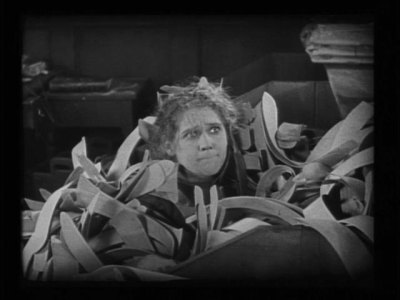
In all, this is a flawed film, but one that is worth watching. Pickford was trying something different from her usual roles, and is to be commended for that. The problems with the film are not minor, but they are outweighed by the Pickford performance and the humor that works.
The DVD:
Audio:
This movie comes with a stereo score that was arranged and performed by the Mont Alto Orchestra. The audio was very good, sounding clean and clear and creating a nice atmosphere for the film. I really enjoy orchestral tracks, even from a small five piece group like Mont Alto. They just seem to breathe life into silent films and make them more enjoyable to watch.
This audio track did a good job of complimenting the action on screen. They managed to accent the drama without becoming over bearing like many scores in current movies do. A good example of this is when Amanda comes to a bitter realization at the end of the film. Instead of having the string section swell up with sad music (if I have to listen to that one more time I think I'll scream) they have a clarinet come to the forefront, followed by a violin and piano. They followed the mood of the scene instead of trying to take the lead. A very fine score, especially when you compare it to Gaylord Carter's organ soundtrack to the foreign release cut of the film.
Video:
I was a little disappointed in the video quality to this film. It isn't as clean as most of the other Milestone discs in this series. They used a 16mm reduction print that has been run through a projector a few times and it shows. There are faint scratches through the whole film as well as a bit of dirt. The image itself is rather soft and a little blurry, and the contrast isn't spectacular. It isn't a horrible print, there are a lot worse looking DVDs out there, but it isn't spectacular either.
The good news is that there is a spectacular looking version of this film on this disc. A 35 mm print of this film meant for foreign markets is available in the bonus section of the disc. This print is outstanding with fine detail and great contrast. See the following section of this review for more information. (Most of the screen captures in this review, with the exception of the one above, are from the foreign print.)
Extras:
Milestone has gone the extra mile with this disc and includes some outstanding bonus features. First off is the foreign release of the movie which was created using film from a second camera on the set and alternate takes. This foreign version has different framing, scenes are of different lengths than in the domestic release, and the action and intertitles are not necessarily the same. (Though the story isn't changed.)
The print for this version was a 35mm copy held in the Mary Pickford Collection and is in significantly better shape than the reduction print used for the version featured on this disc. The persistent scratches are eliminated, the contrast is much better, and there is a lot more detail. Some details that were missed in the domestic version, like the tears streaming out of Lavender's eyes in the beginning, are clear as day in this print. I think that Milestone should have used this windowboxed version as the main attraction, and included the inferior looking domestic release as a bonus.
 |  |
As far as the soundtrack goes, this foreign version is accompanied by Gaylord Carter on the organ. The sound track has a slight bit of hiss in the background, but it is minor. I preferred the Mont Alto Orchestra's version over Carter's track and it is too bad that, due to the different scene lengths, the Mont Alto score isn't available as an alternate track.
There is also a short comparison between the two versions. A two minute scene is shown with both prints running side by side. It is easy to see the differences in editing, framing, and action in this example.
Another bonus item that is rare in silent movies is the alternative ending. There were three endings that were considered for this film. The first ends the movie before the last scene. The second, which is found in the print held by the Library of Congress is used on this DVD. Te print that is found in the Mary Pickford Collection has a different last scene, and it is included as a bonus. I thought this third ending was the best, not relying on coincidence and being a bit more realistic.
The Birth of a Legend is a 26-minute documentary from 1966. This was made by the Mary Pickford Corporation in 1966, and while it claims to be an overview of early movie starts, it focuses on Pickford and Fairbanks mostly. The show does get some minor details wrong, but the thing that makes this worth watching is the home movies of Pickford and Fairbanks clowning around Pickfair as well as the newsreel footage of the couple. There is also a lot of coverage of Charlie Chaplin too. They cover the WWI bond drives that Fairbanks, Pickford and Chaplin did, and there's a riotous staged fight between Jack Dempsey and Charlie Chaplin from one bond rally. This is a fun special which is narrated by Paul Frees.
There is also a reel of production photos and stills from the movie.
Final Thoughts:
Despite the problems I have with this film, I really enjoyed watching it. It wasn't until I actually thought about it that the flaws became evident. Mary Pickford was trying something different with this role, and to a large extent she succeeds. The image quality is about average for the domestic release of the film. (The one that plays when you select feature start from the main menu.) The good news is that the image to the foreign release of the film is spectacular. It comes from a 35 mm print held byin the Mary Pickford Collection and is vastly superior to the domestic cut. This disc also includes a lot of bonus material; an alternate ending, 2nd version of the film, and a half hour documentary. Overall this is a great package. Recommended.
|



| Popular Reviews |
| Sponsored Links |
|
|
| Sponsored Links |
|
|
| Release List | Reviews | Shop | Newsletter | Forum | DVD Giveaways | Blu-Ray | Advertise |
|
Copyright 2024 DVDTalk.com All Rights Reserved. Legal Info, Privacy Policy, Terms of Use,
Manage Preferences,
Your Privacy Choices 
| |||||||