
| Reviews & Columns |
|
Reviews DVD TV on DVD Blu-ray 4K UHD International DVDs In Theaters Reviews by Studio Video Games Features Collector Series DVDs Easter Egg Database Interviews DVD Talk Radio Feature Articles Columns Anime Talk DVD Savant Horror DVDs The M.O.D. Squad Art House HD Talk Silent DVD
|
 DVD Talk Forum |
|
|
| Resources |
|
DVD Price Search Customer Service #'s RCE Info Links |
|
Columns


 
|
|
|
SlapHappy Volume 2
Series Overview:
Most people have at least heard of the three big silent comedians. Charlie Chaplin is a household name even today, and Buster Keaton and Harold Lloyd are well remembered by even casual silent film buffs. In the 1910's and 20's however, there were literally thousands of comedy shorts made staring comedians who are all but forgotten today. How many people know of the work of Lloyd Hamilton, Andy Clyde or Larry Semon? To learn more about these comics, and many others that history has passed over, you need only turn to SlapHappy.
SlapHappy is an exhaustive 30 episode series that searches out the forgotten comics and studios of the silent era and gives them a moment in the spotlight again. More than just a documentary though, these shows present extended clips from silent shorts in addition to background information about the stars. This lets you see for yourself how funny and creative many of these forgotten silent clowns were. It also gives you the background on these forgotten stars; how they got their start, who they worked with, how popular they were, and often why their star faded.
One of the things I really like about this series is the fact that there is only sparse narration. The narrator gives the background of the comic who is on the screen, sets up the piece, and then falls silent. This lets the viewer concentrate on the comedy on screen, instead of having to process a lot of information. There is even an option to view the shows without any narration at all.
Though this series is very informative, the strength of this show is the rare clips that they've chosen to fill out the half hour. Some of the clips only last a few seconds, but the majority of them are minutes long, some going on for five minutes or more. This really gives viewers the chance to see how gags were set up and executed, as well as how the comics progressed on to the next gag. By cutting out the plot points of the shorts, as well as the minor gags, SlapHappy is able to present the funniest parts of the shorts as well as being able to give a good overview of an artist's work through several of their films.
Another great strength of the show is that there isn't a laugh track. This show gives the viewer credit for knowing what's funny and what isn't.
Each volume of The SlapHappy Collection presents three half hour episodes. Overall, this is a very informative and funny show, and the DVDs look great. Where else can you get more laughs than a feature length movie and learn something at the same time?
Volume Two:
The three episodes on volume two are:
The Hal Roach Studio: Some of the best comedy shorts ever made came out of the Hal Roach Studio, and this episode looks at the actors and directors who made these great films. Founded by Hal Roach in 1915 with a small inheritance that he received, the Roach Studio (originally called the Rolin Film Company) was home to several talented comedians.
Their first big success was with a Charlie Chaplin imitator called Lonesome Luke played by Harold Lloyd. These films did well and made Roach a lot of money, but Lloyd never liked the character since he was an imitation. He eventually put on a pair of hone-rimmed glasses and a pork pie hat, and created the character that would make him famous. There is an extended scene from an early Llyod comedy Ask Father as well as some footage from Number, Please.
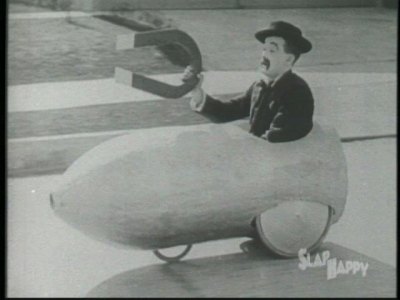
While Keystone was known for its chase scenes, Roach excelled at sight gags. One comedian who made many one reelers for Roach that incorporated innovative devices and odd inventions for comic effect was Snub Pollard. A long scene from It's a Gift, where Pollard used as large magnet to pull his small car around town shows how outrageous and entertaining these type of films can be.
Of course Roach also invented the Our Gang series, and a section from one of their early comedies is also included. This is a great introduction to the important film studio.
The Comedy Chase: A staple of silent comedies, it often didn't matter who was chasing whom, as long as the chase was fast and frantic. Early on in film it was recognized that a harried chase could get a lot of laughs. By 1907 it had already emerged as a genre itself in France.
No one took the chase to the extent that Mack Sennett did at Keystone. Sennett realized early on that the more destruction and mayhem, the larger the laughs. He also discovered that a chase was a good way to end a film, a tactic that his studio employed time and time again.
In this installment features an extended clip from The Cannon Ball featuring comedian Chester Conklin. This Keystone film is one of the best to come out of the studio, with cannons firing and nearly constant explosions this film is a riot.
Another funny film that's featured is Circus Today. In this film a Billy Bevin and Andy Clyde are chased by a lion, and end up trapped in a shack hanging floating high in the sky from the anchor on a hot air balloon. Of course the lion ends up in the shack too.
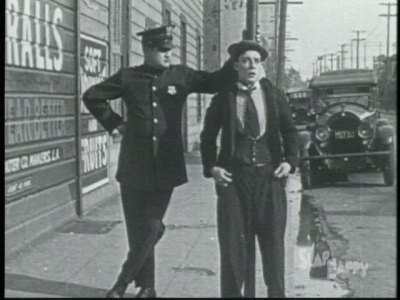
One of the best clips in this show is from the Buster Keaton short The Goat. Keaton runs afoul of a group of policemen and uses some very clever techniques to elude them. A classic chase scene.
Help Wanted: This episode looks at comedy sketches that revolve around the workplace. While this instalment may have a weak premise, it is strong on entertainment.
There are several comics featured in this program. The Ton of Fun Trio was a comedy team that had a series of shorts produced by Joe Rock. The theory was that if one fat man such as Roscoe Arbuckle or Oliver Hardy was funny, then three would be a riot. A long clip from one of their films shows that there was some merit to that thinking.
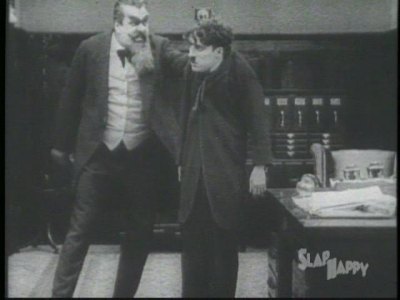
A good clip from The Floorwalker, a Chaplin short he made at Mutual, is also shown. It features the first appearance of Eric Campbell, Chaplin's large nemesis that he used throughout the Mutual series he did. A funny clip, as all of Chaplin's shorts are, this features the tramp clowning around on a department store escalator.
There is also a rare short staring Sidney Chaplin, Charlie's older brother, as well as clips with Billy Bevin, Harry Langdon, and Stan Laurel.
The DVD:
Each disc in this series comes in a keepcase and contains three half hour episodes on a single DVD-R.
Audio:
The two channel soundtrack sounded very good. The music for the series is composed of up beat Jazz music courtesy of Stomp Off Records, and it works very well. They old time sounding Jazz scores fits with the antics on screen though the music wasn't composed specifically for the clips. There are some sound effects added, the slamming of a door, or a gunshot, and these accentuate the action without becoming intrusive. Being recent recordings, there is no hiss or other audio defects.
Video:
The image quality ranges from good to excellent, with most of the clips being very good. There are no blurry, faded, scratchy prints used in the series that I've seen, and I was very pleasantly surprised. Since many of these clips are from more minor stars and studios I was expecting a poor quality image, but luckily that isn't the case. Some of the source material is from 35mm prints, though much of the film comes from high quality 16 mm reduction prints. Both of which look very good. For film that have been ignored for 80 or more years, the quality is outstanding.
The only qualm I had with the picture is that there is a light "SlapHappy" bug in the lower right hand corner during the entire show. This is a minor annoyance at best though.
Extras:
There are no extras on this discs.
Final Thoughts:
If you are interesting in slapstick comedy, you can't find a better source of information than this series. This volume's look at the sophisticated comedy of the Hal Roach Studio is a great introduction to some of the best comedy shorts ever made. These episodes feature some of the lesser known, but still talented comics like Snub Pollard, Billy Bevan, and Larry Semon. Highly informative and entertaining, this disc is also Highly Recommended.
|



| Popular Reviews |
| Sponsored Links |
|
|
| Sponsored Links |
|
|
| Release List | Reviews | Shop | Newsletter | Forum | DVD Giveaways | Blu-Ray | Advertise |
|
Copyright 2024 DVDTalk.com All Rights Reserved. Legal Info, Privacy Policy, Terms of Use,
Manage Preferences,
Your Privacy Choices 
| |||||||