
| Reviews & Columns |
|
Reviews DVD TV on DVD Blu-ray 4K UHD International DVDs In Theaters Reviews by Studio Video Games Features Collector Series DVDs Easter Egg Database Interviews DVD Talk Radio Feature Articles Columns Anime Talk DVD Savant Horror DVDs The M.O.D. Squad Art House HD Talk Silent DVD
|
 DVD Talk Forum |
|
|
| Resources |
|
DVD Price Search Customer Service #'s RCE Info Links |
|
Columns
  


 
|
|
|
Treasures From American Film Archives
In 1997 the Congress of the United States created The National Film Preservation Foundation (NFPF), a non-profit organization charged with preserving our national film heritage. This group funds restoration and preservation of films that would otherwise not be saved. Ensuring that films do not disintegrate is very worthy endeavor, but saving them is only half the job. You also have to make sure people have access to the films that are preserved. To achieve that goal the NFPF released Treasures from American Film Archives in 2000. The set sold well and in 2004 it went out of print. Now the set has been rereleased with the same content as the original version, but at a lower suggested retail price.
Labeled the 'encore edition,' this set differs only slightly from the original release. It still includes copious liner notes, but instead of being presented in a single volume as in the original release, it has been split into four sections. The DVDs are no longer housed in the cardboard cases either, they come in keepcases with one section of the book contained in each case.
This is a truly remarkable set. Though I do like the subsequent release, More Treasures from American Film Archives, a little bit more this collection has a wealth of little seen gems, films that are historically significant, informative, and also entertaining.
One of the strengths of this collection is its refusal to be limited by genre, style or era. There are straight dramas, abstract films, amateur productions, studio movies, independent films, home movies and news reels. Taken together, this is an unique and interesting overview of the last 100 years of film making.
The contents of this copious set are as follows:
Disc One:
The Original Movie (1922): An amusing animated short that is a perfect opener for the set. This parody of film making shows the troubles people encountered when trying to create a movie even back in the stone age. A lot of the situations they make fun of are things that creators are still complaining about today.
Early Films of the Edison Company (1893-1906): Three short Edison films including the first publically shown film, Blacksmithing Scene, and Three American Beauties complete with stenciled color.
Princess Nicotine (1909): An early example of an American special effects film. Inspired by Melies work in France, Vitagraph produced this sfx laden short where a man sees a fairy dancing on a table. Very sophisticated for its time.
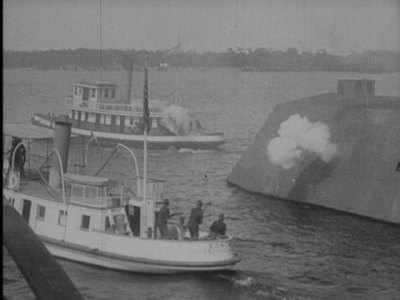
The Confederate Ironclad (1912): An action filled civil war drama. This one, like Buster Keaton's The General, makes the heroes of the film southern soldiers, possibly because it was filmed in Florida. The film boasts a very good reconstruction of an iron clad warship (that was probably not constructed for the film) and an impressive naval battle.
Hell's Hinges (1916): A feature length western featuring one of the biggest western stars of the day, William S. Hart. This film isn't like most of the other westerns made in the 30's and 40's where a lone stranger walks into a crime infested town and cleans it up. This film has a more Old Testament view of things. The print is in very nice shape and is tinted.
The Fall of the House of Usher (1928): This amateur film created by a pair of artists is strongly influenced by German expressionist films. Unique and interesting to watch, it is more of a film experiment than an attempt at linear storytelling. If you are not familiar with the original story by Edgar Allan Poe, it probably won't make much sense.
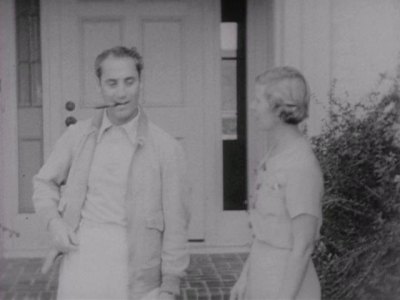
Groucho Marx Home Movies (ca. 1933): a short 2-minute reel of Groucho clowning around with his wife and kids. I almost didn't recognize him without the grease paint moustache and eyebrows.
Running Around San Francisco for an Education (1938): An early political film. This 90 second short was shown in theaters in support of a proposition in a San Francisco election to sell bonds for a junior college. The proposition passed, and the proponents gave a lot of the credit to this film. This shows, once again, the power that moving images have to sway people.
Excerpt from Tevye (1939): Between the two world wars a number of Yiddish language films were produced in the US and Europe. This is a 17-minute excerpt from one of the more lavish productions. Based on a series of stories by Sholem Aleichem, this fair self contained section shows the problems Tevye has dealing with one of his daughters. Yiddish cinema is a unique segment of independent film making that is nearly forgotten today.
Cologne (1939): A couple living in Cologne, MN documented the life in their small town in this amateur documentary. Surprisingly sophisticated in the style and content, this 'home movie' is very professional in quality.
Private Snafu: Spies (1943): A cartoon made by Chuck Jones and Theodor Geisel (Dr. Seuss) for the US Government during WW II. It has all of the humor and madcap action that make the Jones WB cartoons so enjoyable, along with Geisel's wonderful ear for language. A great cartoon.
Offon (1968): An experimental piece melding film and video images, this series of double exposed and mirrored images was the only short on this disc that I really didn't like. Too artsy and avant-garde for my tastes.
Disc Two:
Paper Print Copyright Deposits (1901-1904): Edison hit upon the idea of obtaining a copyright for his films by submitting a positive of the film printed on paper. This was not only cost effective, but would prevent anyone from copying the film, something that happened fairly frequently in those days. The unintended effect was that this preserved many early films that would otherwise have disintegrated. This section presents three short examples of films that have only survived as paper copies.
The Lonedale Operator (1911): A film by pioneering director D. W. Griffith, this is a good example of his early work. Griffith is credited with many innovations in film making that made the movies more interesting and exciting. When movies first started to tell actual stories with plots, they didn't cut back and forth from scene to scene. Griffith realized that such cross cutting could add tension to a film, as you cut from a person in peril to their rescuer. This one reel film shows how successful Griffith was at creating tension through editing.
Her Crowning Glory (1911): A one reel madcap comedy staring John Bunny, the first comedy star of films. This slapstick comedy has a cruel streak in it that is a little stronger then the later comedies of Keystone. Still an enjoyable farce.
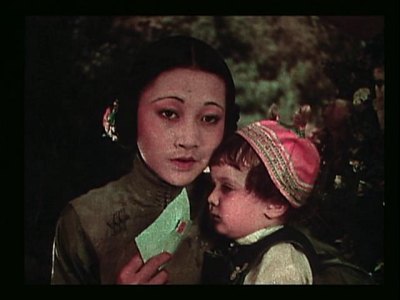
Toll of the Sea (1922): This restoration of the first two strip technicolor feature comes from the original camera negative and also this includes the original score, which was preserved separately and recently discovered. This is the first time the two have been presented together since the film's original release. The colors in this are wonderful, and look even better than those in the Black Pirate, another early 2-strip Technicolor feature. The film stars Anna May Wong (who also appeared in Piccadilly) and is a loose retelling of Madam Butterfly. Though it is a melodrama, I actually enjoyed the film and found it very poignant in parts. Wong gave an excellent preformance.
Accuracy First (1928): Training films started to pop up in the 1920's. Largely ignored until recently, these films are a unique look at how businesses were run decades ago. This film is an excerpt from a Western Union training film that shows the cost of transmitting inaccurate telegrams.
West Virginia, The State Beautiful (1929): An amateur documentary film made by a minister to counteract the view that Hollywood often provided of West Viriginia; a land full of feuding backwoods hicks. This is an eight-minute excerpt from the 75 minute feature that was created.
Early Amateur Sound Film (1936-37): Though Hollywood started converting to sound in the late 20's, home movies continued to be silent for all practical purposes until videotape cameras were introduced for consumers in the late 1970's. There were a few consumer cameras that recorded sound available as early as 1934. One person who adopted this early technology was Archie Stewart. This four minute segment presents some of his home movies. It contains familiar scenes from home life, children having a tea party, sledding in the winter, and blowing out birthday candles. While most of the other home and amateur movies in this set are interesting in their own right, the only attraction to these pieces is the novel use of sound.
Composition 1: Themis (1940): An interesting experimental film. Shapes and objects dance around creating abstract art on the screen. The colors were a little dark on this piece, obscuring some of the detail.
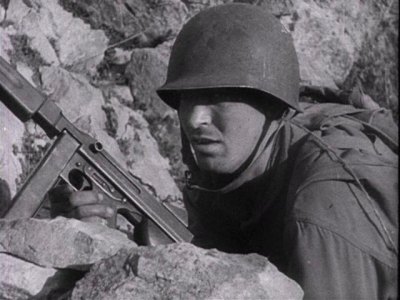
The Battle of San Pietro (1945): John Huston directed this war documentary at the behest of the US Army. He chronicled a battle in the mountains of central Italy, and in doing so created a powerful piece of documentary film. Using footage recorded during the actual battle, Huston's narration and his all too real images brings home the terrible price of war. Easily the most moving film in this collection.
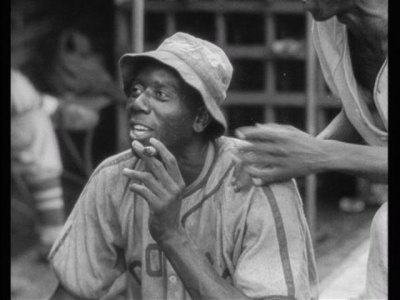
Negro Leagues Baseball (1946): In an impressively funny display of baseball, the Indianapolis Clowns warm up before playing a game against the Kansas City Monarchs. These players juggle the ball and pass it around with grace and great comic timing. The star of this picture, Reece "Goose" Tatum would play baseball in the summers and then play basketball with the Harlem Globetrotters in the winter. Tatum developed many of the Globetrotter's classic routines, and it's clear from seeing this that he could have started a similar baseball team had he wished.
Battery Film (1985): The latest work in this anthology, Battery Film is an independent work that presents a unique look at New York City. Seen through animated sequences that dissolve into actual photos from the city, the film makes the viewer see this large city in a different light.
Disc Three:
The Thieving Hand (1908): This bizarre, almost surrealist film, is a great example of how nearly anything could be made into a film in the early days of the medium. A one-armed man returns a ring to the wealthy man who dropped it. In return for his kindness, the peddler is taken to a store where a new arm is bought for him. The arm acts of its own accord though, and steals everything it can get its hand on. (Bad pun intended.) Deliciously strange.
White Fawn's Devotion (1910): This is the earliest surviving film directed by an American Indian. James Young Deer both wrote and directed this western for the Pathé Frères company, a French firm that was the largest movie studio in the world at the time. Pathé hired Young Deer in order to get a more realistic feel to its western films, and in this example he succeeds for the most part.
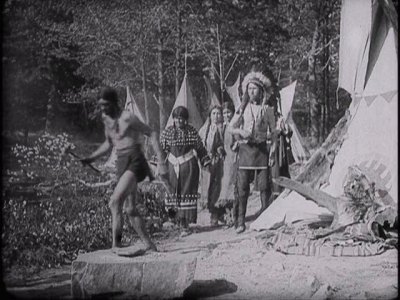
The Chechahcos (1924): By its title, this eight reel feature film sounds like a western, but it's not. This independent film was the first movie entirely filmed in Alaska. A dismal failure at the box office, the production company never made another film. Seen today, this film's worth is in the interesting look it provides of the Alaskan Gold Rush days, told by people who lived through it. Unfortunately this isn't a documentary, it is a melodrama involving a lost baby girl and the gold miners who raise her to adulthood. The scenery is wonderful and makes the film worth watching.
Japanese American Communities (1927-32): Home movies from Japanese American families. This window into the lives of ethnic Americans before WWII isn't reproduced anywhere save for home movies like these.
Rare Aviation Films (1928-36): Two early films concerning aviation. The first is a promotional film to promote the Keystone "Patriarch" a plane that could hold 20 people. This film was hoping to convince Americans that air flight was safe and glamourous.
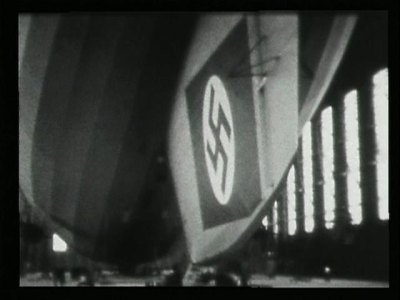
The next film consists of two sequences of an American family's vacation to Germany where they traveled on, and filmed, the Zeppelin Hindenberg.
We Work Again (1937): A fifteen minute documentary on the employment of African-Americans during the depression is notable because it includes footage of the first proffesional play staged by Orson Welles; Voodoo Macbeth, a Harlem produced version of Shakespear's play set in Haiti.
La Valse (excerpt) (1951): Two dance numbers from a ballet.
The Wall (1962): A film that was produced by the US government during the Cold War and meant to be distributed overseas as a propaganda tool. This film chronicles the building of the Berlin Wall and uses it as an emotional and effective tool against Communism.
George Dumpson's Place (1965): Artist Ed Emshwiller created this short film about George Dumpson, a black man squatting on land on Long Island. Dumpson used discarded objects he found to decorate his shack, and Emshwiller thought that this artistry should be recorded. Personally, I wasn't moved by any of the art in this film, but that's just me.
Disc Four:
Peepshow Kinetoscopes (1894): Two early Edison Kinetoscope films including the first movie filmed outdoors.
Interior New York Subway (1905): This simple film was made only a few months after the subway system had opened in New York. It was made by putting a camera in the front of a subway train, and then filming the train in front of it from station to station (there was a third train on a parallel track that contained lights.) Having traveled via the subways system in New York, the thing that first struck me was how neat and clean and new everything looked. This is an interesting glimpse into the past.
The Land Beyond the Sunset (1912): This 1912 one reel film made by the Edison studio is rather unique. It starts off as a story about the plight of inner city youth, turns into a fairy tale, and then ends on an odd and ambiguous note. After watching the recent Edison collection, I think this is one of the best films the studio ever made. They have a very good source for this title too. The film that is presented with an incredibly clear picture... simply gorgeous.
I'm Insured (1916): An early cartoon about a man who is trying to injure himself to collect insurance money. The film is interesting because it used both hand drawn animation and cut out figures to create motion.
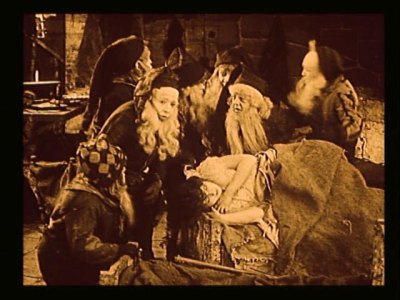
Snow White (1916): Long thought to be a lost film, a single copy was discovered in the Netherlands and restored in 1998. This six reel feature was viewed by a teenaged Walt Disney when it was first released, and it left such an impression on him that he used the story for his first full length animated film. The film features Marguerite Clark in the title role, and is based on the Broadway play that she starred in. Clark, like Mary Pickford, was a famous actress who usually played young girls. Clark doesn't have Pickford's energy and screen presence, but does a good job in this film. The movie is a little darker than the Disney film that everyone is familiar with, and includes scenes that are in the Grimm fairly tale that Disney omitted. The film is tinted, and there is some emulsion damage, but it is not major.
Beautiful Japan (excerpt) (1918): Benjamin Brodsky was a maker of travel films that were popular in the early decades of the 20th Century. The only film of his that still survives is Beautiful Japan, a two-hour + exploration of the land of the rising sun. Presented her are four sequences from the film, running about 15 minutes total. These segments are an interesting look at Japanese life right after WWI. This transfer comes from the a 16mm reduction print, the only surviving copy.
Rural Life in Maine (ca. 1930): The overwhelming majority of amateur home movies involve family members hamming it up for the camera or scenes of vacation destinations. (The first time I went to Disney World a few years ago I noticed more than one person videotaping the rides as they were going on them. My first thought was "wow, and I thought my family's home movies were dull." Can you imagine watching two hours or more of someone riding amusement park rides?) The majority of them, but not all. Elizabeth Woodman Wright's home movies of her family's rural life are fairly amazing. She didn't try to make a documentary or have a common theme, but she didn't film her family goofing around either. These sequences show her family at work, plowing a field, putting shingles on a house, going to an auction. They are slice-of- life segments that capture what life in Maine was life 70 years ago. This was actually one of my favorite films in this collection due to its simplicity.
News Parade of 1934 (1934): This is an overview of the major events of 1934. They cover assassinations, the dust bowl, fires, earthquakes and floods. The Lindenburg Kidnaping trial, John Dillenger and Baby Face Nelson's death, and clashes between strikers and police are all shown. The reel ends with FDR visiting the Pearl Harbor naval base in Hawaii. Ironically, it states that "the president finds Uncle Sam's outpost defenders on the alert." Made at the height of the Depression, this reel is a good example of not only what occured, but of what America found newsworthy.
Rose Hobart (1936): This is a 'collage film' by avant-garde artist Joseph Cornell. Taking a copy of the film East of Borneo, Cornell cut and rearranged the scenes into this 19 minute surrealist journey. Named after the star of East of Borneo, Rose Hobart has an almost hypnotic appeal. These rearranged scenes seem to make sense, but not quite.
The Autobiography of a "Jeep" (1943): A fun educational short, narrated by a Jeep, that gives the history of he all purpose vehicle as well as boosts moral.
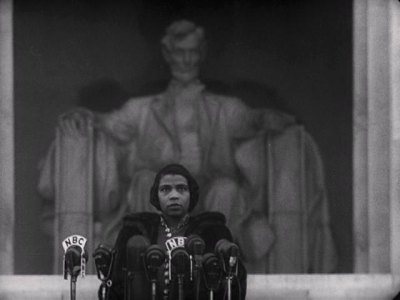
Marian Anderson: The Lincoln Memorial Concert (1939): This volume ends with an important moment in civil rights history. The noted singer Marian Anderson was contracted by Howard University to preform a concert in 1939. When her manager contacted the Daughters of the American Revolution (DAR) to reserve Constitution Hall, their request was turned down because Marian was black. This caused a controversy and led to First Lady Eleanor Roosevelt's public resigned from DAR. Harold Ickes, the secretary of the Interior and long time advocate for African-American rights, let Marian sing of the steps of the Lincoln Memorial, the symbolism of which was not lost on critics of the event. The concert was broadcast live on the NBC radio network. This newsreel footage starts with an introduction by Ickes followed by a section of Marian Anderson's concert. Her haunting voice is reproduced much better than I was expecting, and the film itself is very clear.
I think it is safe to say that there is something here for everyone. While some of the avant-garde films didn't impress me, the silent features were great. I was also impressed with a lot of the home movies included in this set. They were of a much higher quality than I was expecting. The John Huston war documentary was also very moving and a welcome addition to the set.
The DVD:
This set comes on four DVDs. Each disc' comes in a keepcase with a set of liner notes describing the background to each film. All four cases are come in a slipcase.
Audio:
A majority of these films are silent and come with a piano accompaniment by Martin Marks. These piano scores were always appropriate and added a lot to the viewing of the movies. There was no hiss or distortion of the recently recorded scores, though some of the old sound tracks did have some background noise. There were not any instances where that was distracting though.
Video:
The video quality of this set ranges from good to spectacular. None of these films are transferred from bad prints, though some are a little soft. In every case the image presented here represents the best surviving example of the film, and you can't ask for anything better than that.
Extras:
The only extra included are the very informative notes. These are a wonderful asset, giving the background on the films, stars, directors and/or the studio that produced the films. A much better added feature than most DVDs have.
Final Thoughts:
I originally bought this collection in 2000 and rapidly devoured it. Working my way through this set a second time, I was struck by the number of films that held up to repeat viewings. There were some that didn't, particularly some of the films that were more experimental in nature, but overall this is an excellent set of movies. There are a large number of films that are both historically important and entertaining. I was happy to be able to add these films to my collection when the set retailed for $100. Now that the retail price has been lowered to less than $70 (and available for a good deal less than that at many on-line retailers) this set is a real bargain. I think this is a fantastic set. Highly Recommended.
|



| Popular Reviews |
| Sponsored Links |
|
|
| Sponsored Links |
|
|
| Release List | Reviews | Shop | Newsletter | Forum | DVD Giveaways | Blu-Ray | Advertise |
|
Copyright 2024 DVDTalk.com All Rights Reserved. Legal Info, Privacy Policy, Terms of Use,
Manage Preferences,
Your Privacy Choices 
| |||||||