
| Reviews & Columns |
|
Reviews DVD TV on DVD Blu-ray 4K UHD International DVDs In Theaters Reviews by Studio Video Games Features Collector Series DVDs Easter Egg Database Interviews DVD Talk Radio Feature Articles Columns Anime Talk DVD Savant Horror DVDs The M.O.D. Squad Art House HD Talk Silent DVD
|
 DVD Talk Forum |
|
|
| Resources |
|
DVD Price Search Customer Service #'s RCE Info Links |
|
Columns
  



|
|
|
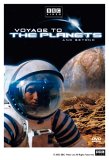
Voyage to the Planets and Beyond
Is it a film? Is it a documentary? It's both, or perhaps neither: Voyage to the Planets and Beyond is filmed in the documentary format, but what it documents is fictional. The film (or documentary?) covers the hypothetical six-year voyage of a manned spacecraft that visits Mars, Venus, Jupiter's moon Io, the rings of Saturn, an asteroid, and finally Pluto. We see the "astronauts" deal with various challenges, and get to see what scientists think the various planets might really look like, based on what we know from space probes.
Voyage to the Planets and Beyond (original British title: Space Odyssey: Voyage to the Planets) is undeniably a polished production, and it presents its material seriously and with visual appeal. In theory, if you appreciate the way that it's done, the program is a good way to learn about the planets of our solar system in an enjoyable way. But despite the solid pedigree of the film (I'm usually a great fan of BBC documentaries), it just never clicked with me.
What it comes down to is that I'm never quite comfortable with programs that blur the lines between documentary and fiction. Yes, it's based on fact, and tries to be as accurate as possible. But we don't actually know what the experiences that Voyage to the Planets and Beyond will be like, though we can take a good guess; the film has to make certain extrapolations. That's fine, but how do we know what aspects of what we see are accurate, and which are invented?
This isn't something that bothered me in Walking with Dinosaurs, which I loved; perhaps the difference is that Walking with Dinosaurs (and its successors) is presented in a more documentary manner, with a voiceover narrator. There's no attempt to fictionalize it or create characters and an overall story, and so I feel that there's less pressure for excitement over accuracy; I also feel (perhaps wrongly, I suppose) that the documentary format puts the emphasis on the real information rather than the "story" that could be told in that situation.
Perhaps that's at the root of my dissatisfaction with Voyage to the Planets and Beyond: I simply don't care for "edutainment," not even when it's done in a fairly polished way, as here. The nature of the solar system is a fascinating subject in its own right, as is the future of space exploration. Dressing up a documentary about these subjects in the clothing of a feature film sends the message that viewers wouldn't really be interested in the material otherwise. But I disagree: learning interesting new things – when it's done right – is extremely compelling in its own right, and it's certainly more compelling than a generic mini-drama about characters going on an exploratory trip. Certainly, there are great films that can be made (and have been made) using the same theme material, but they're not trying to be documentaries at the same time. Adding the drama angle to the documentary makes for a whole that's less than the sum of its parts.
If it had been done badly or presented in a cheesy manner, the program would have been a disaster. As it is, the polished presentation and seeming attention to realistic detail (I'm taking their word for it, of course) makes Voyage to the Planets and Beyond watchable for me. If the mix of documentary and fiction is something that you're more comfortable with than I am, the program will likely be much more of a success for you.
The DVD
Voyage to the Planets and Beyond is packaged in a plastic keepcase, with both Part I and II on a single disc.
Video
Voyage to the Planets and Beyond appears in an anamorphic widescreen 1.85:1 format, which preserves its original aspect ratio. The image is generally clean and attractive; it's slightly soft, but otherwise looks very nice. The CGI is incorporated into the live-action footage well, and always looks good on-screen.
Audio
The Dolby 2.0 soundtrack handles the requirements of the film well, with a clean and clear sound. English subtitles are also included.
Extras
If you enjoyed Voyage to the Planets and Beyond, the special features here will be of interest. First off is a 48-minute piece called "Robot Pioneers"; it's a history of robotic exploration of the solar system, mixed with making-of material for Voyage to the Planets and Beyond.
The "Making of" section has several short featurettes that focus on particular aspects of the production: "Turning Actors into Astronauts" (6 minutes), "Weightlessness" (5 minutes), "Building Pegasus" (10 minutes), and "In Search of Mars and Venus" (6 minutes).
A text "Fact Files" section provides information on the planets and other landmarks of the solar system, and a photo gallery is also included. Finally, we get trailers for BBC America, Blue Planet, Walking with Dinosaurs, Allosaurus, Walking with Beasts, Walking with Cavemen, and Building the Great Pyramid.
Final thoughts
If you don't mind the "fake documentary of future events" format, and you're interested in the subject matter, Voyage to the Planets and Beyond will probably be an interesting viewing experience, as it's reasonably polished and does have some interesting material. I couldn't really get past the drama angle, which I felt spoiled what could have been a quite good documentary, though. I'd suggest this as a rental.
|



| Popular Reviews |
| Sponsored Links |
|
|
| Sponsored Links |
|
|
| Release List | Reviews | Shop | Newsletter | Forum | DVD Giveaways | Blu-Ray | Advertise |
|
Copyright 2024 DVDTalk.com All Rights Reserved. Legal Info, Privacy Policy, Terms of Use,
Manage Preferences,
Your Privacy Choices 
| |||||||