
| Reviews & Columns |
|
Reviews DVD TV on DVD Blu-ray 4K UHD International DVDs In Theaters Reviews by Studio Video Games Features Collector Series DVDs Easter Egg Database Interviews DVD Talk Radio Feature Articles Columns Anime Talk DVD Savant Horror DVDs The M.O.D. Squad Art House HD Talk Silent DVD
|
 DVD Talk Forum |
|
|
| Resources |
|
DVD Price Search Customer Service #'s RCE Info Links |
|
Columns
  


 
|
|
|
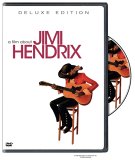
Jimi Hendrix: Deluxe Edition
There have never been any other performers in rock history quite like Jimi Hendrix. His onstage personality and style were completely engaging and fully integrated with his incredible musicianship, from his innovative guitar-playing and resounding voice to his masterful songwriting and his ability to elevate other people's songs in his own style. Like the very best rock documentaries, Jimi Hendrix, produced just a couple of years after the legendary performer's untimely death in 1970, features interviews with countless family members, collaborators, friends, lovers, and contemporaries, but most importantly it's heavily loaded with music.
Many of the performances in the film come from Hendrix's 1967 Monterey set, but clips from other festivals, like Woodstock and Isle of Wright are featured as well. While hearing reminiscences from those closest to Hendrix helps round out his personality somewhat, the music is the message. Hendrix takes a rock standard like "Wild Thing" and bends it all around with his supple rhythm guitar and saucy vocals until it's way more interesting than the original. Similarly, Hendrix's version of Bob Dylan's "All Along the Watchtower" is thunderingly powerful, an apocalyptic vision that takes Dylan's text and builds an atmosphere around it that improves the song immensely. Hendrix's own originals like "Purple Haze" and "Voodoo Child (Slight Return)" are intense sessions of vocal and guitar interplay that blur the line between just performing a song and actually embodying it. His famously elaborate stage persona (including colorful outfits and an penchant for destroying amps and burning guitars) added to the legend and helped make him a star. It's great to get such a good look at his total performance package here.
As for the interviews, they are sometimes enlightening, sometimes obvious. All of those interviewed (including Eric Clapton, Pete Townsend, Mitch Mitchell, Mick Jagger and many others) were clearly very moved by Hendrix. The editing is nimble enough, however, to crosscut a lot of different interviews without the talking heads making the film feel static. There are some interesting ideas expressed: Various participants talk about how Hendrix felt somewhat pigeonholed by his stage antics, like people would be disappointed if he didn't set his strat on fire in every performance. Most of those featured still seem somewhat shell-shocked by Hendrix's death. But they do offer a complex view of the man: Bold but shy, fiercely independent but collaborative, highly original but heavily influenced by the past. This feature gives a nicely rounded view of a complex musician whose career lasted for far too short a time but whose music and influence have never really weakened.
VIDEO:
The anamorphic widescreen video is really good considering the source. Some interviews are overly soft and there's a noticable amount of grain throughout but the bulk of the footage (particularly the concert segments) is colorful and vibrant. For the most part it's a fine transfer.
AUDIO:
The audio is available both as Dolby Digital 5.1 and 2.0. The 5.1 really sounds terrific. It's hard to imagine that the concerts were shot over three decades ago. (The interviews are much less dynamic and play much quieter than the music.) The concerts sound dynamic, crisp and clean. The surrounds are used to some extent for crowd noise, although I found that occasionally distracting. (The audience clapping sometimes sounded odd.) But other than that it's an excellent track. The 2.0 track is fine as well but it really shows how much murkier a two track mix can be when compared to the multi-channel mix. The instruments aren't as distinct sounding and the performances have less energy and punch. There are English and French subtitles, but not for song lyrics.
EXTRAS:
Three extra features are included and they're all pretty good. From The Ukelele To The Strat is an assembly of interviews with family and longtime friends that gives a shorter, more capsule look at Hendrix's history from those who really knew him the longest. It seems to come from some of the same interviews as the main feature and isn't in quite as good shape, but it's good to have.
The Making of Dolly Dagger is a look at the production of the densely layered track. Producer Eddie Kramer plays with the mix, adding and dropping elements, to show how the song was constructed. It's a terrific feature that reminds me of the Classic Albums series. I love these behind-the-scenes glimpses into how great music is really made.
A live performance of "Stone Free" from the 1970 Atlanta Pop Festival is also included. It's a groovy, driving rendition that gives viewers one more chance to see how amazing Hendrix was on stage.
NOTE: A previous release of Jimi Hendrix on DVD was bare-bones. Make sure you get the new version.
FINAL THOUGHTS:
Jimi Hendrix was truly one of a kind and this documentary takes its time showing why. It's possible that this is the definitive documentary on the artist, a brilliant musical and visual performer whose style and sounds transcend time. Long after many other cultural institutions have grown to look quaint or dated, Hendrix still seems strangely futuristic.
|



| Popular Reviews |
| Sponsored Links |
|
|
| Sponsored Links |
|
|
| Release List | Reviews | Shop | Newsletter | Forum | DVD Giveaways | Blu-Ray | Advertise |
|
Copyright 2024 DVDTalk.com All Rights Reserved. Legal Info, Privacy Policy, Terms of Use,
Manage Preferences,
Your Privacy Choices 
| |||||||