
| Reviews & Columns |
|
Reviews DVD TV on DVD Blu-ray 4K UHD International DVDs In Theaters Reviews by Studio Video Games Features Collector Series DVDs Easter Egg Database Interviews DVD Talk Radio Feature Articles Columns Anime Talk DVD Savant Horror DVDs The M.O.D. Squad Art House HD Talk Silent DVD
|
 DVD Talk Forum |
|
|
| Resources |
|
DVD Price Search Customer Service #'s RCE Info Links |
|
Columns
  


 
|
|
|
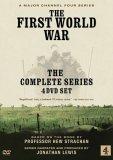
First World War - The Complete Series, The
The Show:
World War One was one of the defining moments of the 20th century. It was the first modern war. Millions were killed on the battlefields and there was an unprecedented amount of destruction. It was responsible for the Russian Revolution and launch the US on its way to becoming a world power. In the end it redrew the map of Europe and was directly responsible for the rise of the Nazi Party in German which resulted in the Second World War 20 years later. Yet for all of its importance in the last century, it has been mostly ignored in the film, TV and print media. While it is hard to turn on the History Channel and not find a show about WWII or the US Civil War, "the war to end all wars" has been largely forgotten. Until now that is. The First World War is an excellent 10 part mini-series that finally examines this seminal event from the 20th century. Produced by the BBC in 2003, this not only gives an overview of the conflict, but also show what life was like in the trenches and in the cities under siege.
This series starts off looking at the way Europe was set up before the war, and the tensions that existed. It clearly and concisely describes how the assassination of the heir to the Austro-Hungarian Empire's throne brought all of these international tensions to a head and started a war of unprecedented scale and destruction.
As the series progresses, it covers all of the arenas of battle, not just the Western Front in France. World War One was truly a world wide conflict, with battles taking place in every hemisphere. The war in the Middle East gets it's own episode, and the battles in Africa, China, the South Pacific and India are all discussed too. The series discusses the major battles of the war such as Verdun, Somme, and Gallipoli but it also covers the political aspect of the war, such as the Russian Revolution and the Italy agreeing to side with the highest bidder. The introduction of chemical warfare and tanks as well as flame throwers help examine the technological side of the war too.
The events of the Great War are told in a style similar to Ken Burn's Civil War mini-series. The main events are narrated, but there are copious quotes from letters, diaries, and news reports that were recorded during the war that help put a human face on the suffering.
A majority of the video is film footage and stills taken at the time. Much of this material comes from film archives from Eastern Europe that were previously unaccessible. I was simply amazed at how much quality film footage they had, an how little it was reused. These images are supplemented by contemporary footage of historic battlefields and important buildings that survived (or sometimes didn't) the war.
I knew a little about WWI going into this series, but I was astounded to discover how much I didn't know. I was familiar with the death of Prince Ferdinand and the horrific trench warfare that followed in France, but I never realized how wide the fighting ranged. I always assumed that the war consisted solely of the trench warfare that took place in France, but many of the other theaters had a lot of mobility, including Germany's Eastern Front with Russia.
The place that the series really excels is in bringing together all the disparate parts of the war and weaving a cohesive whole out of them. They take the time to explain why Germany wanted to attack India, something that would seem to have little impact on the war in Europe but actually did. They also explain how England's empire was it greatest asset and biggest liability.
The analysis is often very interesting too. They make a good case for proclaiming that the war was started for defensive reasons. All of the powers (with the exception of England) felt that they were under threat of attack and were acting to defend their country and possessions.
The only area where I think that the series didn't fell down a bit was the lack of in screen interviews with historians. Ken Burns has used that tactic to great effect in many of his documentaries, and this one would have been improved by having different voices give their opinions. That's a minor nit to pick though, and the series is still very strong even without it.
The DVD:
This four disc set contains all ten hour-long episodes from the series. The discs come in a fold-out case that is held in a slipcase. There is a 32-page book containing notes on each episode.
Audio:
The stereo audio track is very good. A LFE track would have given the battle scenes more punch, but it sounds good as it is. The narration was clear and crisp. The actors who read the letters and diaries of the men who fought the war often took on accents based on the nationality of the writer. Some of these are a little hard to understand in parts, but this is a minor problem.
Video:
The full frame video is very good. Of course the vintage film footage is sometimes spotty or faded, but much of it looks excellent with a good amount of contrast and detail. The contemporary footage of some of the battlefields and building that survived the war look great. Digital defects are very minor. A good looking set.
Extras:
Unfortunately, there were no extras.
Final Thoughts:
This documentary doesn't have the dramatic impact of films like The Big Parade or All Quiet on the Western Front, but it does an excellent job of explaining the war, examining the various theaters of battle and putting a human face on the suffering. Like Ken Burn's The Civil War, this show is an immensely entertaining and engrossing series that presents a thorough overview of this important event that shaped the 20th century. Highly Recommended.
|



| Popular Reviews |
| Sponsored Links |
|
|
| Sponsored Links |
|
|
| Release List | Reviews | Shop | Newsletter | Forum | DVD Giveaways | Blu-Ray | Advertise |
|
Copyright 2024 DVDTalk.com All Rights Reserved. Legal Info, Privacy Policy, Terms of Use,
Manage Preferences,
Your Privacy Choices 
| |||||||