
| Reviews & Columns |
|
Reviews DVD TV on DVD Blu-ray 4K UHD International DVDs In Theaters Reviews by Studio Video Games Features Collector Series DVDs Easter Egg Database Interviews DVD Talk Radio Feature Articles Columns Anime Talk DVD Savant Horror DVDs The M.O.D. Squad Art House HD Talk Silent DVD
|
 DVD Talk Forum |
|
|
| Resources |
|
DVD Price Search Customer Service #'s RCE Info Links |
|
Columns
  


 
|
|
|
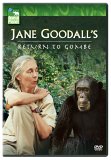
Jane Goodall's Return to Gombe
Jane Goodall's Return to Gombe is a 50-minute special from the Animal Planet channel, which should provide a good preview as to how in-depth the program is going to be. It's decent for what it is, but it's certainly "nature documentary lite."
As most viewers should know, Dr. Jane Goodall is famous for her work with the chimpanzees of Gombe, and for her tireless work in support of conservation and educational work to protect the chimpanzees and their African habitat. There's ample material for any number of documentaries on Goodall's work and on the chimpanzees themselves, but what Return to Gombe focuses on is a bit of a hybrid. The program follows Goodall as she wraps up a lecture tour and heads to Gombe for a visit with the chimpanzees she studied more than forty years earlier; it's a meaningful visit for her, as she has had little time to return to the research station in the past several decades. Interspersed with this material is some information on how the chimps of Gombe are doing: as it turns out, a power struggle is under way, with the alpha male, Frodo, under threat by rivals for his position.
The documentary is tantalizing in that it hints at interesting aspects of chimpanzee behavior. We're told that the chimps have a complex social hierarchy, and that diplomacy can be as important as brute force in consolidating a strong position in the group. It's very clear that the chimps have individual personalities as well. (Goodall's then-radical choice of naming the chimps when she started studying them in the 1960s turned out to be a very good idea; it's not a question of anthropomorphism when the named animals really do behave in human-like ways). It would be fascinating to explore how the group really lives and how the chimps interact with each other; even in the short clips we do see, it's startlingly clear that these "animals" are much, much closer to us humans than we're used to thinking. It's a little disturbing -- in the sense of shaking up one's preconceptions -- to look into the chimp's eyes and see another thinking being; the "bush meat" trade that has so devastated ape populations looks a lot like cannibalism once you get to know the chimps as individuals.
That's not what Return to Gombe is about, though. Rather than going into any particular topic in detail, we get a general overview of a lot of different topics, including Goodall's pioneering work with "Roots and Shoots" to promote conservation and education in Africa. As an introduction to Dr. Goodall's work and influence, then, the documentary does a decent job; if you're already familiar with the basics and want more, it'll leave you feeling unsatisfied. The program would probably be a good choice for children.
The DVD
Video
The documentary is presented in a pleasing anamorphic widescreen transfer, at what I believe is its original 1.78:1 aspect ratio (certainly it does not seem to have been cropped for the DVD). Colors and contrast look good; the footage in the forest is, not surprisingly, a little lower in quality than the footage shot in more amenable circumstances, but overall it's a pleasing transfer.
Audio
The Dolby 2.0 soundtrack handles the requirements of the film well. All the participants come across clearly (both human and chimp) and the voiceover narration is clear as well.
Extras
A 26-minute featurette called "On the Road with Jane Goodall" takes a reasonably interesting look at Goodall's work as a traveling lecturer and promoter of conservation.
Final thoughts
Jane Goodall's Return to Gombe is a fairly well done program that offers a light-weight introduction to Goodall's research and conservation work. It's "light" in the sense of not going into any depth of information, not in tone: apart from the oddity of calling Dr. Goodall by her first name (which I consider to be a little disrespectful), the program has a serious and thoughtful approach. It's not going to provide much new information to adults who are already even a little bit familiar with Goodall's work, but it would be a nice introduction for children. I'll give it a strong "rent it" recommendation for younger audiences, whether at home or in a classroom.
|



| Popular Reviews |
| Sponsored Links |
|
|
| Sponsored Links |
|
|
| Release List | Reviews | Shop | Newsletter | Forum | DVD Giveaways | Blu-Ray | Advertise |
|
Copyright 2024 DVDTalk.com All Rights Reserved. Legal Info, Privacy Policy, Terms of Use,
Manage Preferences,
Your Privacy Choices 
| |||||||