
| Reviews & Columns |
|
Reviews DVD TV on DVD Blu-ray 4K UHD International DVDs In Theaters Reviews by Studio Video Games Features Collector Series DVDs Easter Egg Database Interviews DVD Talk Radio Feature Articles Columns Anime Talk DVD Savant Horror DVDs The M.O.D. Squad Art House HD Talk Silent DVD
|
 DVD Talk Forum |
|
|
| Resources |
|
DVD Price Search Customer Service #'s RCE Info Links |
|
Columns
  



 
|
|
|
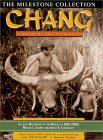
Chang: A Drama of the Wilderness
Merian C. Cooper and Ernest B. Schoedsack are most famous for their 1933 film King Kong. Before that influential movie though, they started out making travel films, a popular film genre that has all but died out. These weren't documentaries per se, but fictional stories that were set in remote corners of the world that integrated natives and their local customs into the story. They were educational and also entertaining. The first two films that Cooper and Schoedsack directed have been released by Milestone: Grass (1925) and Chang (1927). This review discusses the latter picture, and you can read about the earlier one here.
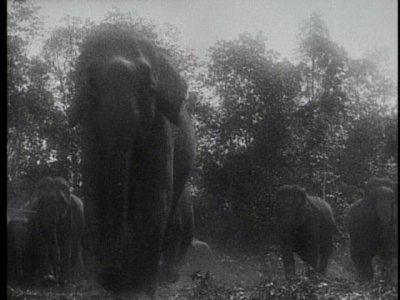
Chang is set in the jungles of Siam (present day Thailand) and features natives in all the roles. Kru has left his village and trekked deep into the jungle to carve out a homestead for his family. As the opening titles warn though, the jungle is an adversary that doesn't give up. Kru has to deal with leopards that attack his goats and tigers that attack he and his family. The biggest problem is when his rice crop gets trampled by a herd of elephants (or changs in the local language.)
Kru informs the village that a great herd of elephants is nearby, but no one will listen to him until it's too late.
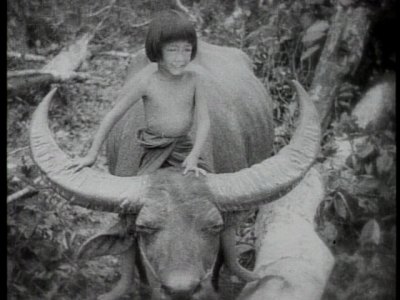
I really liked this film. Unlike Robert J. Flaherty's Nanook of the North (1922), Chang doesn't pretend to be a documentary. It is clearly fiction and labeled as such. But Cooper and Schoedsack also create a record of what life in Siam was like at the time. They chose which customs and rituals to film and crafted a story around them.
Though this isn't a documentary, the film has a very real feel to it since natives were used as actors. These non-actors, at the prodding of Cooper and Schoedsack, reenacted things that they had done before, often many times. Because of that, this film is an interesting, though not totally accurate, documentation of life in rural Siam. It illustrates many day to day tasks that are done in significantly different ways nowadays. It shows how they processed their rice, chopped down trees, and tended their crops. There are also tiger and leopard hunts which are not as accurately depicted as the daily work.
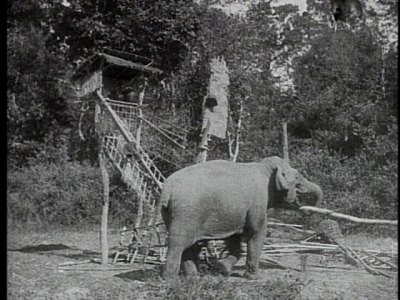
This film was made a long time ago, and people's feelings towards animals are quite different than they are today. Many animals were hurt in the making of this film, and much of it happens on camera. Tigers are shot, a goat and a leopard fight (thought the ending isn't shown) and animals aren't handled as gently as they would be today. There isn't a lot of blood of corse, that wouldn't have passed the censors in the 1920's, but you do see some wild animals killed.
This movie is also interesting from a film making perspective. Cooper and Schoedsack had to develop different ways of filming the animals and telling a story at the same time. They came up with many interesting camera angles that were copied for decades afterwards. In the elephant stampede near the end of the film, Ernest B. Schoedsack, had a pit dug and covered with timbers. He then cut a hole for the camera and climbed into the pit so he could film while the elephants were trampling over him. This low angle with elephants passing over has been used in Tarzan and other jungle pictures.
In the end, this film was a huge money maker. It was the most successful travel film ever produced. It established Cooper and Schoedsack as legitimate film makers and launched them on their way to making King Kong.
The DVD:
Audio:
The stereo score, newly composed by Bangkok composer Bruse Gaston and preformed by a Thailand Orchestra that specializes in traditional music, Fong Naam. This score fits the picture well for the most part, and adds a lot to the movie. There are some scenes where the score just don't work however. The elephant stampede at the end is accompanied by bells and xylophones, which didn't fit the mood of the film. These scenes were in the minority. The soundtrack is clear and crisp, and is reproduced very well.
Video:
The restored full frame image looks very good. The picture was very clear and it has an excellent amount of definition. Some of the bright spots are a little too bright, but this is due to the way the film was made, with the camera's aperture fully opened. There are only a very few spots and scratches on the print, and digital defects are nonexistent. Milestone has done a great job with this release.
Extras:
Milestone has included some nice extras on this disc. The major one is an audio commentary by director/film historian Rudy Behlmer who provides a very informative track. He talks in detail about the hardships that the film makers went through on location and how they achieved many of the shots. He also includes portions of an audio interview he conducted with Merian C. Cooper in 1966 where the director talks about the creation of Chang.
There is also a short film clip of Merian C. Cooper and Ernest B. Schoedsack just before they left for Siam to film Chang, and a 3 minute clip from the movie that Technicolor added color to in the 1950's as a test for a possible re-release of the film that never occurred.
The extras conclude with a reel of images of the original press book for the film.
Final Thoughts:
With this film, Cooper and Schoedsack were able to turn the documentary into popular entertainment. By adding an actual story to their travel adventures, they were able to entertain audiences that were hungry for images from far off lands. Chang is an interesting film that is also entertaining. It is a record of a lifestyle that no longer exists, but it also has a solid story with drama and humor. Recommended.
|



| Popular Reviews |
| Sponsored Links |
|
|
| Sponsored Links |
|
|
| Release List | Reviews | Shop | Newsletter | Forum | DVD Giveaways | Blu-Ray | Advertise |
|
Copyright 2024 DVDTalk.com All Rights Reserved. Legal Info, Privacy Policy, Terms of Use,
Manage Preferences,
Your Privacy Choices 
| |||||||