
| Reviews & Columns |
|
Reviews DVD TV on DVD Blu-ray 4K UHD International DVDs In Theaters Reviews by Studio Video Games Features Collector Series DVDs Easter Egg Database Interviews DVD Talk Radio Feature Articles Columns Anime Talk DVD Savant Horror DVDs The M.O.D. Squad Art House HD Talk Silent DVD
|
 DVD Talk Forum |
|
|
| Resources |
|
DVD Price Search Customer Service #'s RCE Info Links |
|
Columns
  


 
|
|
|
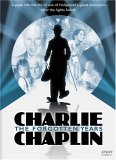
Charlie Chaplin:Forgotten Years
Charlie Chaplin is one of the most famous and popular movie stars in the world. His films reached every corner of the globe, and most people would recognize the Little Tramp. The events in his later life, after he left America and settled in Switzerland, aren't as well known to the general public as his years is Hollywood are. A Swiss documentary, Charlie Chaplin: The Forgotten Years, attempts to fill that gap of knowledge, but only partially succeeds.
In 1952 at the height of the McCarthy hearings, Chaplin was under suspicion for being a Communist. He left the US on a trip to Europe, and while he was out of the country Chaplin's entry visa (he was a British citizen) was revoked. Not being able to return to the country that made him famous, he settled with his family in Switzerland and lived there until his death in 1977.
During this period, he made his final two feature films, A King in New York and A Countess from Hong Kong, as well as wrote musical scores for some of his silent films. In this documentary, the first ever to focus on the later years of his life, includes interviews of his friends, neighbors and his children to get an image of Chaplin at this time. There are also rare home movies and little seen newsreel footage of Chaplin.
This documentary presents some interesting interviews about Chaplin, but it ultimately doesn't work. While I enjoyed his children reminiscing about their father and how they remember him, (three of his children participated in this project) there were a lot of interviews that just seemed to be included as padding. A neighbor who's claim to fame is NOT going to London with the Chaplin's to see the filming of A King in New York gets some screen time, as well as bell hops and the pair of workmen who dug Chaplin's grave. This latter pair never even met him while he was alive, so I'm not sure what insight the creators of this film thought that they would give.
A lot of the interesting events of this time are glossed over for the most part. Partially because of the short running time, it's less than an hour in length, but also because they seemed to give equal weight to everything that happened at this time. A vacation trip gets as much attention as the filming of A King in New York, which seems odd.
I was surprised at the information that they chose to exclude too. The film never mentions that his Visa was revoked after he left the US, just that there were political problems and he decided to stay in Switzerland. They talk about how his Swiss estate bordered a rifle range and how much that distressed Chaplin. They talk about the case that he brought to court concerning the range, but stated that the resolution was that he had to accept a compromise. They don't mention what that compromise was however. These are errors that leave the viewer wanting more, rather than educating them on the subject.
Another problem with the program is that it doesn't have a theme or a central premise. It's just a chronicle of things that happened (not always in chronological order), and an accumulation of interviews with people who met Chaplin. While it is focused on Chaplin, having something that would string these various interviews and home movies together would have strengthened the documentary considerably.
The DVD:
Audio:
The stereo English audio track was a little less than average for a recent production. Most of the dialog was clear, but there was a hum in some of the interviews, most notably Geraldine Chaplin's. Given the fact that these were set up interviews under controlled conditions I was really dismayed at that. Otherwise, the sound was acceptable for such a documentary.
Video:
The full frame image was okay, but not great. The contemporary footage was a little worse than I was expecting. There was a good amount of digital defects, aliasing and digital noise being prevalent, and these adversely effected some scenes. The vintage footage wasn't restored, and it was easy to tell that these were old, with many of the defects you'd associate with film that's 40 years old or more. One the plus side the colors looked fine and the image was clear. If it wasn't for the digital defects, this would have looked much better.
Extras:
As far as bonus material goes, there is an additional 20-minutes worth of interviews that weren't included in the feature itself, as well as 12 poster images and a pair of stills in an image gallery.
Final Thoughts:
While it was interesting to see Chaplin's children talk about their father, this documentary lacked substance. There wasn't a central theme that was explored and because of this the program comes across as just a group of anecdotes rather than a thought out documentary. You don't get a feeling for what Chaplin was like or what he was feeling at this time in his life, just a list of things that he did. An impartial list at that. If you are interested in Chaplin's later life, this would be a good rental, but many of the biographies written about this comic genus do a better job of chronicling this time of his life.
|



| Popular Reviews |
| Sponsored Links |
|
|
| Sponsored Links |
|
|
| Release List | Reviews | Shop | Newsletter | Forum | DVD Giveaways | Blu-Ray | Advertise |
|
Copyright 2024 DVDTalk.com All Rights Reserved. Legal Info, Privacy Policy, Terms of Use,
Manage Preferences,
Your Privacy Choices 
| |||||||