
| Reviews & Columns |
|
Reviews DVD TV on DVD Blu-ray 4K UHD International DVDs In Theaters Reviews by Studio Video Games Features Collector Series DVDs Easter Egg Database Interviews DVD Talk Radio Feature Articles Columns Anime Talk DVD Savant Horror DVDs The M.O.D. Squad Art House HD Talk Silent DVD
|
 DVD Talk Forum |
|
|
| Resources |
|
DVD Price Search Customer Service #'s RCE Info Links |
|
Columns


 
|
|
|
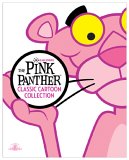
Pink Panther Classic Cartoon Collection, The
When Warner Brothers closed down their animation division in 1963, director Friz Freleng joined with producer David DePatie and formed their own animation company, DePatie-Freleng. One of the first jobs they landed was to animate the credits of a United Artists picture staring David Niven: The Pink Panther. The credits, involving a pink panther and being chased by a bumbling detective was so funny, and popular, that it was rumored that Niven was considering suing UA because his name was upstaged by a cartoon credit. (One can only guess what Mr. Niven thought of the fact that this movie started a series of films that stared, not himself, but supporting actor Peter Sellers.)
Given the critical acclaim that the credits of the film received, a series of shorts was sure to follow. UA contracted with DePatie-Freleng to produce a series of six minute shorts staring the Panther. The first short they turned in, Think Phink, was a huge success that was advertised on theater marquees along with the feature and went on to win an Academy Award. The cartoon series was off to a strong start. There would eventually be well over 100 Pink Panther shorts released to theaters, and when the market for theatrical cartoons started to wane in the late 60's, the panther easily made the jump to the small screen and was found on Saturday morning TV his shorts continued to run for over a decade.
Now MGM has released a five-disc boxed set of Pink Panther cartoons that is sure to please the silent feline's fans. Including all 124 theatrically released shorts and several nice bonus features, this is a wonderful, if uneven, set.
The Pink Panther has a minimalist style that accents the humor of the cartoons. These shows have very sparse backgrounds, often only one of two straight lines and a patch of color will serve as the entire setting, and frequently only one or two characters besides Pink himself. Another thing that really made the show was the cool Panther theme written by Henry Mancini. This plays in the back of the cartoons over and over but it never gets repetitive, just adds a hip atmosphere to the mayhem.
This is a very funny set of cartoons, at the beginning at least. The series starts of strong and the first couple of discs worth of shows are wonderfully entertaining and uproariously funny. Along with the award winning Think Phink, other stand-outs include Pink Panic, where the panther spends the night in a ghost town complete with ghosts, Pink, Plunk. Plink where Pink tries to hijack an orchestra and make them play his theme, Rock-a-bye Pinky and one of my favorites In the Pink of the Night.
By the end of the sixties though, the series had started to run out of steam. There's only so much that you can do with a silent but moral character who loves the color pink, and it's easy to see that the creators had run out of ideas. The writers tried to mine some ideas that were successful for Looney Tunes cartoons, but it just didn't work. As where Bugs Bunny went to ancient Persia in Ali Baba Bunny and was very funny ("Hassan Chop!"), when Pink did it in 1978's The Pink of Bagdad the gags are lame and a bit cliched. 1979's Toro Pink was obviously a rip off of the classic Bully for Bugs even to the point of stealing some of the gags, but the panther writers failed to realize how to construct a joke for comic effect and Pink spends much of the cartoon running in fear. These later shows are pretty pathetic.
Not only did the plots go down hill, but the seventies cartoons have cheaper animation too. With fewer and fewer theaters showing cartoons costs had to be cut, so limited animation was used in the later installments of the series and this hampers the comedy to some extent. These later cartoons also suffer from the fact that they dropped the Mancini theme. What were they thinking. That music gave Pink a lot of his characteristics. When it's playing and he's on screen he seems dignified and very cool. In the later cartoons without the Mancini music Pink comes across as more of a bumbling fool.
Note: There is possibly one scene missing from the short The Pink of Bagdad. In one instance the panther is fighting with a rope and the rope jumps up and smacks Pink in the face. There is a jump cut here, and you don't see the actual hit, just the rope starting to smack the feline and then him laying on the ground. I'm sure this was cut for the TV release, do to violence on TV ruining America's youth and all that rot, but I couldn't determine if that scene was ever shown theatrically.
The DVD:
This set comes in some neat packaging. The five disc are housed in a fold out book. Unfortunately discs 2 & 3 and 4 & 5 share the same pages with one partially overlapping the other. This book comes in a hard plastic slipcase that has a puffy exterior that is nicely illustrated with images of the Pink Panther. There is also a booklet with a short history and episode list included.
Audio:
The two channel audio sounds very good for cartoons that are up to 40 years old. There Henry Mancini theme song is clear though not as crisp as a modern recording would be. Oddly enough for silent cartoons where no one talks, there are subtitles in French, Spanish, and Portugese. These translate the few signs that appear in the show.
Video:
The full frame video looks very good for cartoons this old. The colors are generally solid and the lines are tight. There is a fair amount of grain to several of these shows, which is regrettable, but digital defects are at a minimum.
Extras:
This set has some nice bonus features, all included on the last disc. The set starts out with a 10 minute documentary, Behind the Feline: The Cartoon Phenomenon, that gives the history of Pink and features interviews with Blake Edwards and David DePatie. I just wish that they had included more of the DePatie interview where he talks about the end of Termite Terrace and the old Warner Brothers cartoon unit.
Pink Patter: The Story Behind the Animation is a fifteen minute featurette where animation director Art Leonardi talks about the style and composition of the Pink Panther cartoons, which is quite interesting.
One of the best features is Remembering Friz. This featurette is a tribute to Friz Freleng, where his daughters where they talk about how their father started in animation working in the same studio as Walt Disney and how he came to be the popular animator that he soon became.
Art Leonardi give a short drawing lesson in Think Pink: How to Draw the Pink Panther, and From Page to Screen compares the storyboards to the finished cartoons for two shorts, In the Pink and Pink Blueprint. Another bonus item I really enjoyed was the opening credits to five Pink Panther live action movies including the first one that gave the character his start.
The extras conclude with Life in a Pink Panther Factory, a text interview with Friz Freleng from American Cinematographer magazine.
Final Thoughts:
Completists will love this collection. It includes all 124 theatrically released Pink Panther cartoons and they all look good. They are presented without a laugh track, as they were originally shown (the laugh track was added later for television broadcasts) which is as it should be. These shows start of uproariously funny, and are solid throughout the first few discs. By 1970 though, these cartoons have run their course and aren't nearly as good as they once were. I highly recommend the earliest shows (the first three discs in this set, the best ones, are available separately) but this set is recommended for completists and those who enjoy the later shows.
|



| Popular Reviews |
| Sponsored Links |
|
|
| Sponsored Links |
|
|
| Release List | Reviews | Shop | Newsletter | Forum | DVD Giveaways | Blu-Ray | Advertise |
|
Copyright 2024 DVDTalk.com All Rights Reserved. Legal Info, Privacy Policy, Terms of Use,
Manage Preferences,
Your Privacy Choices 
| |||||||