
| Reviews & Columns |
|
Reviews DVD TV on DVD Blu-ray 4K UHD International DVDs In Theaters Reviews by Studio Video Games Features Collector Series DVDs Easter Egg Database Interviews DVD Talk Radio Feature Articles Columns Anime Talk DVD Savant Horror DVDs The M.O.D. Squad Art House HD Talk Silent DVD
|
 DVD Talk Forum |
|
|
| Resources |
|
DVD Price Search Customer Service #'s RCE Info Links |
|
Columns
  


 
|
|
|
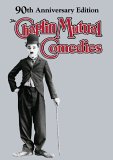
Chaplin Mutual Comedies: Restored Edition
Charlie Chaplin was touring the US with Fred Karno's comedy troupe in 1913 when he was recruited by Mac Sennett's Keystone Films. They signed him at $150 a week and put him to work making one reel slapstick shorts. He quickly became the star of the lot, with his films becoming more and more popular. With this success Chaplin was able to exert more control on his movies, which led to higher quality films and even bigger demand. Soon he was writing and directing all of his pictures. While at Keystone he came up with the costume for the character that would soon be known around the world.
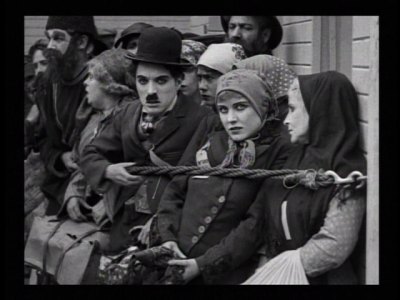 When his contract was up, Chaplin was a star and wanted a star's salary. Keystone couldn't meet his price, so he signed a one year contract with Essanay for an astounding $1250 a week. It was during this time that Chaplin came up with the Tramp's personality and character, which lead to even more fame. While at Essanay he became a national sensation and his shorts started becoming more popular than the feature films that they were opening for.
When the Essanay contract was up, he was the most in demand actor in the world. He was wined and dined by several companies bidding for his service, but he ended up signing with Mutual in 1916 where he made $10,000 a week, plus bonuses. He was not only the highest paid actor; he had a higher salary than anyone in the country.
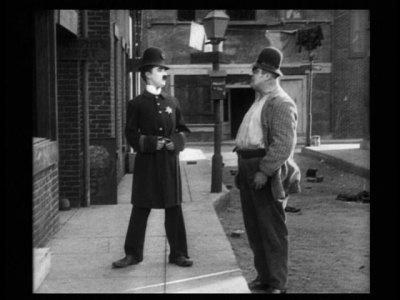 When he arrived at Mutual, Chaplin had the look and the personality for his character, and that would be enough for just about all other comedians. He could have continued to churn out a two-reeler every month or two and become very, very rich if he wanted to. Chaplin wanted more than that. He wanted to create art. It was during his tenure with Mutual that Chaplin evolved his comedy style to include bitter sweet elements and pathos. This would set him apart from all other comics and make him the most famous person in the world.
Image has released these 12 important films on DVD once before over three volumes. They have now released them for a second time, digitally cleaned and with some missing scenes added in. These shorts also have new scores that are very good and copious extras that make this well worth a double dip.
One of the biggest improvements with this set over the previous three discs is that the films are arranged in chronological order. Watching these you can see Chaplin's style evolve. He starts off with simple slapstick shorts with some creative ideas, but still filled with prat-falls and sight gags and often ended with a chase. As the series progresses his films become more sensitive and Chaplin gave his movies heart. One of the most significant series of films in the history of comedy, it was the Tramp in these films that the world fell in love with.
The films in this collection are:
The Floorwalker – this film ends very abruptly, indicating that it may still be incomplete.
The Fireman – these first two still have the feel of his earlier work. Mostly gags and falls, and they both end with a chase. While amusing, they only hint at what is to come.
The Vagabond – Chaplin weaves drama and sadness into this film with great success. An important stepping stone for the actor.
One A. M. – this film is improved with the footage that was added in with this release. This is also an interesting experiment; except for the brief appearance of a cab driver, Chaplin is working solo here.
The Count
The Pawnshop – another wonderfully comic short. The way the Chaplin interacts with props in this would be expanded upon in future films, notable The Gold Rush.
Behind the Screen – a parody of slapstick comedy that has no meaning, this is arguably the funniest of the Mutuals.
The Rink – Chaplin demonstrates who graceful he can be even while clowning around.
Easy Street – the last four films, starting with Easy Street, really showcase Chaplin's talent. Confident and in control, Chaplin was able to give these films the time that was needed to craft them without going overboard. This is a great story about a city street where things were anything but easy.
The Cure – another wonderfully funny short where Chaplin, not playing the Tramp, goes off to a hospital to 'rest' and cure his alcoholism.
The Immigrant – a masterpiece. Simply brilliant. This was Chaplin's favorite Mutual and it's easy to see why. It's funny, graceful and touching all at the same time.
The Adventurer – This last Mutual film was the most popular of the bunch when released and certainly helped him get the record-breaking contract with First National.1 A fast and furious comedy it is very unlike the gag pictures that he made only a year and a half earlier when he started his relationship with Mutual. A wonderfully constructed film.
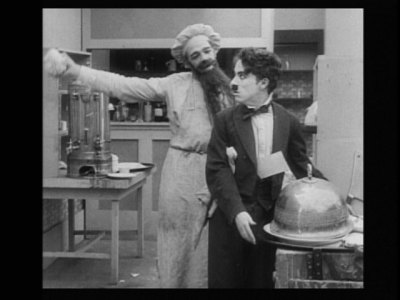 An amazing set of films that are not only very funny, but show Chaplin's style emerge like a butterfly from a cocoon.
Chaplin is so entertaining in these films that it's easy to overlook the simple direction. Chaplin didn't work from a script. He'd just get his crew together, come up with a set (a store, a skating rink) and then have everyone stand around while he came up with the gags and story. This process could take days or weeks (and even longer later in his career.) After he figured out what the action would be, Chaplin would act out each individual part in minute detail for each actor. Then everything would be filmed, with Chaplin making changes and improving the story as he went.
Because of this unique way of making a movie, the direction is rather basic. The films consist entirely of medium and long shots, with hardly any camera movement. The focus is on the comedy, not on fancy tracking shots or pans over elaborate sets. This simple down to earth style of direction actually works well in these films. It was a style that Chaplin would use for the rest of his life.
The DVD:
Audio:
One of the biggest differences between this release and the previous Image version of the Chaplin Mutuals is the new soundtrack. Carl Davis has created a new orchestral score that is just excellent. This new soundtrack is definitely superior to Michael Mortilla's synthesizer track for the earlier edition. Davis does a good job matching the feel and emotion of the music to what is happening on screen but the music never overshadows or dominates the visuals. The only complaint I have is that some sound effects were added which distracted from the action. Aside from that one critique, this is a nice set of scores that works very well.
Video:
This edition of these films uses the same masters as the previous Image release did; the 1984 David Shepard restorations. Shepard used the finest surviving 35 mm prints and negatives when he did his work, and the image looks very good. These look better than the earlier release because they have been digitally cleaned with techniques that weren't available or practical when the other set was being mastered.
In side by side comparisons between the two editions, this new set was better, but only slightly. There was less spotting and the transitions from black to white were much smoother with a wider range of gray shades. The new image is just more pleasing. They did a nice job on cleaning these up. The differance is subltle though, and weren't very noticable in the screen caps that I made so I didn't include them.
In addition to the improved picture, there are added scenes and bits. The biggest addition is to the movie One A.M., where seven minutes worth of film have been added back. They used a totally different print for this film. The earlier version came from a print that had a soundtrack added to one side which caused the image area to be squeezed. The result was a nearly square picture instead of a 1.33:1 image. This new print, in addition to being more complete, has the correct aspect ratio. The down side is that it is softer than the earlier release with fewer details. It is still a nice looking version of this funny film.
The image quality does vary from short to short, but this is probably the best these films will look. The picture is overall really outstanding. The contrast is very good and the level of detail is excellent. The entire set has a very pleasing look. The only complaint that I really have is that the image has been rather liberally windowboxed. I understand wanting to correct for overscan an make sure that everyone sees the entire picture, but the black bars were wider than the needed to be. This is a minor complaint though.
Extras:
There are a couple of extras with this set that add a lot of value. First off is a 75-minute documentary on Chaplin – The Gentleman Tramp. This was made in 1975 before the advent of home video and a lot of the film is taken up with clips from Chaplin's comedies, which would have been hard to see when the special was made. These clips take up too much time however and leave very little room for information about Chaplin himself. They gloss over his childhood and only give a brief intro to his films. A quick and superficial overview of the comedian's life.
The second documentary is Chaplin's Goliath, a biography of Eric Campbell the heavy in these shorts. This is a nice inclusion, especially since it is available separately and retails for $20. The documentary itself is a little sparse. There's not a lot known about Campbell's early days back in Scotland and even after he came to America the information is spotty. Unfortunately he died in a car accident just as Chaplin was reaching his highest heights and so his story ended abruptly. Well worth watching even if there isn't as much meat as one would like.
These discs also have a photo gallery of 90 images all together, some of which are behind the scenes shots and many of which aren't available elsewhere.
There are also two booklets, one covering the Mutuals that is made up of excerpts from Jeffery Vance's book Chaplin: Genus of the Cinema and a second contains an essay by Richard Patterson on the creation of the documentary The Gentleman Tramp. Both of these are excellent and add to the appreciation of the films presented on the DVDs.
Is it worth an upgrade?:
This is always a hard question to answer since everyone's criteria for double dipping is different, but I feel this is work a purchase even if you have the original releases. The superior video quality, not to mention the extra scenes are welcome additions, but the new score is the biggest improvement and well worth the investment.
Final Thoughts:
This is just a great package. Twelve extraordinary films where viewers can witness Charlie Chaplin turn from a very talented comedian into an artist. These films are touching and charming, but above all very funny. The image quality is improved, there is newly added footage, and the soundtrack is vastly improved. The two documentaries and enclosed booklets are welcome bonus items too. This set comes Highly Recommended.
1) In 1917 Chaplin signed an incredibly lucrative contract with First National Picture Corporation that would make him an independent contractor. Chaplin agreed to make eight two-reel comedies over the next eighteen months. He would receive $125,000 for each picture, but he had to pay for all cost of producing the movies. He would then split the profits from the distribution of the pictures 50/50. In addition to this he was giving a $75,000 signing bonus. The biggest part of the contract though was that he would retain the copyright on his films, and in five years he would also own the worldwide distribution rights. A very sweet deal that made Chaplin very wealthy.
|



| Popular Reviews |
| Sponsored Links |
|
|
| Sponsored Links |
|
|
| Release List | Reviews | Shop | Newsletter | Forum | DVD Giveaways | Blu-Ray | Advertise |
|
Copyright 2024 DVDTalk.com All Rights Reserved. Legal Info, Privacy Policy, Terms of Use,
Manage Preferences,
Your Privacy Choices 
| |||||||