
| Reviews & Columns |
|
Reviews DVD TV on DVD Blu-ray 4K UHD International DVDs In Theaters Reviews by Studio Video Games Features Collector Series DVDs Easter Egg Database Interviews DVD Talk Radio Feature Articles Columns Anime Talk DVD Savant Horror DVDs The M.O.D. Squad Art House HD Talk Silent DVD
|
 DVD Talk Forum |
|
|
| Resources |
|
DVD Price Search Customer Service #'s RCE Info Links |
|
Columns
  


 
|
|
|
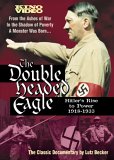
Double Headed Eagle: Hitler's Rise to Power
The rise of Nazi Germany was pretty astounding when you think about it. Crippled under the strict Versailles treaty that force Germany to pay reparations and banned they from having an army, the country seemingly overnight became the most powerful nation in the world. What is even more astounding and perplexing is that a poor, racist, failed painter with a criminal record would have been able to seize the reins of power in such a country. The Double Headed Eagle is an attempt to document the rise of the Nazi Party, and Hitler in particular, from 1918 at the end of WWI until 1933 when Hitler was elected Chancellor. Told solely though vintage film clips and newsreel footage without narration, the film largely fails to provide explanations or rationales and instead is just a record of what we all know happened.
Starting with Hitler's first speech to the German people after raising to power in 1933, in which he promises to leave office after four years, the film jumps backwards in time to 1918. With a lot of film of the German countryside and cities, it shows what Germany looked like in the days between the wars. Interspersed throughout the movie are appearances by Hitler, including a rare film of him in 1919 when the members of the Nazi party could be counted on one's hands.
The excepts from Hitler's speeches are the highlight of the film, where he blames Jews, communists, and the ever popular 'enemies abroad' for all of Gemany's ills. There is also clips of communist marches as well as Hitler Youth parades and groups of brown shirts goose-stepping through the streets.
As a window into the past, this was an interesting look at a bygone era. The candid photos of Buster Keaton walking through downtown Berlin, and some clips of Josephine Baker doing her famous 'banana dance' were fun to see, as well as some of the nightclub scenes and the shelters that were provided for the unemployed.
As far as documenting Hitler's Rise to Power as the cover claims it does, technically I suppose they are right, but this film does nothing to explain who he came to power or why the German people supported him or his party. These clips are presented in a vacuum, with no real information as to what's happening aside for the occasional subtitle that tells how many people were unemployed at the time. The film states that the Nazi party had 6,000 members in 1923 and 50,000 members by 1926 but it doesn't do more than that. Narration detailing the party's strategy for increasing membership or even what they stood for at this time would have helped greatly.
Though it purports to be a document of Hitler and the Nazis, there's a lot of padding in this film. There is just as much footage of 1920's Berlin, train stations, and the German countryside as there is of Hitler. This is more than just providing a background, it takes up a large chunk of the film.
Another problem that I had with this documentary is that some of the footage was obviously recreations and clips from movies, but never identified as such. Passing off scenes from a movie as being 'real' is something that the filmmakers didn't have to do.
The DVD:
Audio:
The two channel mono soundtrack is fine for what it is. Most of the footage in this movie comes from silent newsreels and other early film. These clips then had crowed noises and sound effect dubbed over it, which sounded fake and distracted from the images. I didn't mind the German music that was playing but having four or five people try to sound like a hundred just doesn't work. The vintage audio tracks were rough naturally, but the music that was dubbed in often had a hiss in the background as well as pops and other audio defects which was surprising. In addition to that, the English subtitles were burned into the print and not optional. Overall not a very good sounding disc.
Video:
These vintage black and white film clips were acceptable but not outstanding. They hadn't been restored so the contrast was often poor, the images soft and there were a lot of scratches and spots as well. This is still watchable, but it could have looked better.
Extras:
The only extra is a gallery of images from the film.
Final Thoughts:
When all was said and done, I'm not sure what the film makers were trying to say. That Hitler rose to power? Well we all knew that. Trying to illustrate how he came to power? Well they don't do that at all. The film does succeed to a limited extent in showing clips of life in Germany between the wars, but again they don't explore that angle much. Though it was interesting too see some of the scenes, when all was said and done I didn't walk away from this documentary with any additional knowledge or insight to the subject. Unless you are a serious student of pre-war Germany, this film won't offer anything to you. Best to just skip it.
|



| Popular Reviews |
| Sponsored Links |
|
|
| Sponsored Links |
|
|
| Release List | Reviews | Shop | Newsletter | Forum | DVD Giveaways | Blu-Ray | Advertise |
|
Copyright 2024 DVDTalk.com All Rights Reserved. Legal Info, Privacy Policy, Terms of Use,
Manage Preferences,
Your Privacy Choices 
| |||||||