
| Reviews & Columns |
|
Reviews DVD TV on DVD Blu-ray 4K UHD International DVDs In Theaters Reviews by Studio Video Games Features Collector Series DVDs Easter Egg Database Interviews DVD Talk Radio Feature Articles Columns Anime Talk DVD Savant Horror DVDs The M.O.D. Squad Art House HD Talk Silent DVD
|
 DVD Talk Forum |
|
|
| Resources |
|
DVD Price Search Customer Service #'s RCE Info Links |
|
Columns
  


 
|
|
|
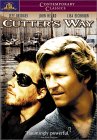
Cutter's Way
Cutter's Way is one of Savant's very favorite films. Although I escaped Vietnam duty (by mercy of a 307 number in the 1971 draft lottery) and didn't spend much time around the idle California rich, I certainly saw my share of unemployed, aimless despair in the middle '70s, and did my share of antisocial grumbling about Nixon and the System ... man. Richard Cutter and Alexander Bone (the movie was abortively released first as Cutter & Bone) are two very key characters in my consciousness, and writers Jeffrey Alan Fiskin and Newton Thornburg have used them to fashion what is really a thinking man's Easy Rider.
Cutter's Way is poignant, powerful, funny and tragic. The vivid characters perfectly embody the fringe dwellers in the lush California lifestyle: educated bums, resentful, self-loathing intellectuals. Jeff Bridges' Bone, who steadfastly refuses to commit to anything even as his youthful looks and virility fade, has qualities in common with many tennis bums and marina rats I've met. Alex Bone is the essential anguished man, whose wit and friends are the only things separating him from a life on skid row; his enabling wife Mo, so perfectly incarnated by Lisa Eichhorn, drinks her way through a disability-check existence that is just barely existing at all. So many of us who were aimless (or like my friends, just had frustratingly remote goals) ended up finding any kind of comfortable niche that came along, resenting our own seduction by the commercial frills and luxuries of a society we didn't respect.
Every scene in this gem is a keeper, with dialogue and situations that surpass anything in Stone, Lynch, or Tarantino's entire output, put together. Alex's wild antics, whether suicidally baiting the black pool players in the local bar, or smashing into the car next door just for the fun of watching his neighbor go ballistic ('Ha ha, I better try that again!) are better than believable, and establish Cutter as an extremist simply because he has absolutely, utterly nothing to lose. He latches onto the Cord case for personal reasons known only to him and Cord's lackey at the yacht sales office, George (Arthur Rosenberg), and freely admits that he's not only a conspiracy theorist, but hasn't 'even begun to to turn my imagination loose on this one!' All three leads have an incredible commitment to their roles, with Heard taking top honors by convincingly portraying a one- legged, one-armed, one eyed cripple mostly by simply acting.
(book spoiler)
The book Cutter & Bone is even bleaker than Ivan Passer's movie, and is marred by a conclusion that closely mimics the end of Easy Rider. Instead of the film's feverish finish, the book has our pair follow J.J. Cord inland to his farm hacienda, only to independently fall victim to the industrialist's long and deadly reach. The film has kept the paranoid streak but retained its own brand of ambiguity. (movie spoiler) If you look at the first scenes again, it isn't absolutely convincing that the girl who makes eyes at Bone at the El Encanto is the murdered Duran girl. J.J. Cord's infuriating attitude would be the same whether or not he was a psychopath, and his draconian security forces are no exaggeration either.
What brought Cutter's Way into focus for Savant was the realization that it's a loose transposition of Hamlet, of all things. The giveaway is in the very first scene, where Cutter ID's his drinking companions as, 'Rosencrantz and Guildenstern, emisaries from the Danish court.' I remember them from the book because they were the Ericksons, identified as a pair of Weather Underground radicals passing quietly through Santa Barbara.
The Hamlet parallel works like this: Richard Cutter and Alexander Bone, one a borderline mental case, the other merely indecisive, together represent the Hamlet character. (spoiler) George's father was indeed murdered in the long-ago past by his old partner, Cord, who usurped his place in big business, keeping George alive almost as a trophy. The emasculated George is living proof of Cord's Prince-like power over his domain. But the bigger parallel is what elevates Cutter's Way above the simpleminded 'America is Evil' pouting of Easy Rider. The Queen, Hamlet's mother, is America And Her Ideals, of which Alex and Richard are indeed loyal subscribers. The murdered King is really Uncle Sam, who has been killed by Corporate Big Business, represented by J.J. Cord. Cord has not only taken on the mantle of entitlement to all of America's vast riches, but is sleeping with the old lady too (to put it politely). Cutter's most advanced ravings accuse Cord of being guilty even if he didn't murder the Duran girl, because in Cutter's view, Cord is already guilty, already responsible, for all of it - Vietnam, Cutter's wounds, George's trembling subservience. Corporate tyranny has induced a new kind of economic class system in what used to be an America where most companies were still run by 'people', and the power of law and government still meant something. Old and corrupt, Cord's lust for power drives him to victimize the young, with their strength and their undiluted sexuality. (additional spoiler) Cord killed Cutter's past and now he kills Cutter's future with the murder (?) of Mo ... in the book, she's newly pregnant, which accounts for her choice of groceries instead of liquor in one scene.
Savant thinks this brilliant thematic conceit makes Cutter's Way into an anti-paranoid conspiracy film. At the end of The Parallax View and most others of its ilk, it's pretty easy to dismiss the idea that sinister armies are secretly using technology to enslave us. At the black, bleak end of Cutter's Way, Richard Bone does something he never has before, mainly make a clear-cut commmitted decision, as life-altering as a decision can be. His act of 'terrorism', done in cold blood instead of Cutter's heated passion, is the best scene of its kind Savant can think of. It's more potent and compelling than anything in avowed radical films like Battle of Algiers, or even good satires like The President's Analyst, where a milquetoast rebel played by James Coburn is finally put in his place with the admonition, "Ya wanna change the world? Pick up the gun." Thornburg clearly sided with his Weather underground 'emissaries from the Danish court' and his book is one of the few successful examples of radical literature to emerge from the '60s. And Ivan Passer & co. did a fantastic job turning it into a movie.
MGM's DVD of Cutter's Way is a simple affair with a great 16:9 transfer that brings out the richness in Jordan Cronenweth's often dark and moody photography. The neon El Encanto sign in one of the very first shots is finally completely legible. Jack Nitsche's haunting, quirky score and the brassy mariachis used to represent J.J. Cord's Santa Barbara empire come across alive and kicking on the soundtrack. The lone extra is the rather good original trailer. The only thing Savant misses with the DVD is the beautiful black & white photo art that graced the cover of the 1997 laserdisc release. That and some good liner notes: the lame plot description on the back of the DVD box wrongly makes the movie sound like a buddy film or a high-octane thriller.
This is a classic example of a film that lots of enthusiastic fans (and most of the people at its own studio) have never heard of, yet is a bona fide winner, a stealth classic. So it's nice that MGM is bringing it out now. I was totally unaware of its existence until it showed up on cable tv only a few months after its short theatrical life. It's been a major, 'Hey ya gotta see this,' ever since. Do yourself a favor and set some time aside for it.
On a scale of Excellent, Good, Fair, and Poor,
Cutter's Way rates:
Movie: Excellent
Video: Very good
Sound: Very good
Supplements: Trailer
Packaging: Amaray case case
Reviewed: August 5, 2001
| |
|



| Popular Reviews |
| Sponsored Links |
|
|
| Sponsored Links |
|
|
| Release List | Reviews | Shop | Newsletter | Forum | DVD Giveaways | Blu-Ray | Advertise |
|
Copyright 2024 DVDTalk.com All Rights Reserved. Legal Info, Privacy Policy, Terms of Use,
Manage Preferences,
Your Privacy Choices 
| |||||||