
| Reviews & Columns |
|
Reviews DVD TV on DVD Blu-ray 4K UHD International DVDs In Theaters Reviews by Studio Video Games Features Collector Series DVDs Easter Egg Database Interviews DVD Talk Radio Feature Articles Columns Anime Talk DVD Savant Horror DVDs The M.O.D. Squad Art House HD Talk Silent DVD
|
 DVD Talk Forum |
|
|
| Resources |
|
DVD Price Search Customer Service #'s RCE Info Links |
|
Columns
  



 
|
|
|
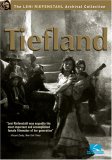
Tiefland
Leni Riefenstahl was a German filmmaker who is justly famous for two documentary films she made at the behest of the Nazis: Olympia and Triumph of the Will. Both of these are amazing works that are still studied in film schools. Riefenstahl had free rein when she was making these films since she was a favorite of Adolph Hitler. She didn't even have to answer to Joseph Goebbels, Hitler's Propaganda Minister, something that surely made her the envy of other German film makers at the time.
What did Riefenstahl do with this freedom? Eventually (after some aborted attempts and small projects) she started working on a project she had shelved a few years earlier, an adaptation of an opera by Eugen d'Albert; Tiefland. She started filming the movie in the mountains of Spain in 1940, but the war forced them back to Germany where they built the village seen in the film and continued shooting. Production delays and bad whether pushed the schedule further and further back, and principle photography wasn't done until 1944. The war came to an end soon after that and Riefenstahl's film was commandeered by the Allies. It wasn't until 1952 that the footage was returned to her. She then edited the movie herself and released it in 1954, a full ten years after she finished filming it. This was the last film that Riefenstahl would make with the exception of 2002's Underwater Impressions. This historic film is now available on DVD, though the audio and video quality are not what one would hope for.
Pedro is a shepard who lives a simple life by himself in the mountains with only his sheep for company. His idyllic, simple life is in stark contrast to the people who live at the foot of the mountain, in the Tiefland, or lowlands. There Don Sebastian, the Marquis of Roccaburna, rules the region and is interesting only in power and wealth. He diverts the river that feeds the farmlands to give to his prize-winning bulls. This means the poor farmers won't have any means of irrigating their crops, and they turn out to have a very poor harvest.
One evening the Marquis goes into town and sees a new dancer, Martha, twirling in the local bar. He instantly falls in love with her, but so does Pedro. Don Sebastian takes Martha home with him, even though she doesn't love him, while Pedro pines for her in his mountain cabin.
The Marquis starts going through some hard times because the peasants can't pay him their yearly rent. Short on money, the only thing he can do to increase his coffers is to marry a rich woman, Donna. He doesn't love her, and she doesn't love him, but they both covet the money and title that the other has, so they wed.
The Marquis isn't willing to give up Martha that easily though. He arranges to marry her to Pedro, but forbids them from consummating their marriage. He then sneaks into Marthas room at night, something that Pedro doesn't take kindly to.
This film is filled with lovely cinematography and beautiful mountains. Riefenstahl had a real eye for how to frame a scene and where to place the camera. Unfortunately this was just an average film otherwise. The story was never gripping or even that interesting. It's easy to predict what will happen to the evil Marquis and the poor but noble Pedro from early on. We've all seen this type of story before.
Leni Riefenstahl did a credible job as Martha, but she was just too old at the time to play a young nymph that steals people's hearts. It's a bit hard to suspend your disbelief. The other main actors were also decent, but not outstanding. One point worth noting is the extras. Many of them were gypsies who were taken from concentration camps to work in this film. After filming was done, most of them were gassed at Aushwitz.
Riefenstahl fans and apologists often claim that this movie is an indictment of Nazi Germany, with the evil Marquis being an allegory for Hitler. These same people will state that Triumph of the Will was filmed under protest, or that it really isn't propaganda. I think these arguments are a ludicrous. If you work hard enough, you can claim that any film is an allegory for anything you want. No one watching this film through neutral eyes will find anything to do with Nazi Germany. The strongest argument against this interpretation of the film is Riefenstahl herself who claimed that it was totally apolitical. People with agendas often dismiss the data that doesn't agree with their theories instead of the other way around however.
The DVD:
Audio:
This film has a two channel mono mix, in the original German with optional English subtitles. Unfortunately this isn't a very clean audio track. There's a slight hum in the background and the dynamic range is very limited. The dialog sounds muddled in many places too. That isn't too bad since most Americans will watch this with the subtitles on, but the translation was rather poor. The film is filled with poor grammar and sentences that don't make much sense. Phrases like "But the Marquis seems thinking..." pop up regularly.
Video:
Like the audio, the full frame image leaves something to be desired, even when taking the film's age into account. The picture is very dark and much of the detail is lost because of this. Worse than that, there is a constant jitter throughout the whole movie, the frame vertically jiggles slightly. This grew old really fast and made it very hard to watch the film. (I assume this is due to a poor Pal to NTSC conversion.) The disc doesn't have a progressive transfer either, so interlacing is a problem, as is aliasing and macroblocking. To add to the problems this disc has, it also appears to be authored from a PAL master and has all of the problems associated with that.
Extras:
The extras are pretty sparse, but that's not too surprising. There is an essay by Riefenstahl scholar Luc Deneulin in which he gives a brief overview of the director's career, discusses the origin and plot of this film and the problems with shooting it. This was an informative essay. The only other extra is a photo gallery.
Final Thoughts:
This film, though it is impossible to deny Riefenstahl's talents as a director, is rather dated and predictable. The characters are hard to relate to and the plot is too trite. In addition the jittery video and poorly translated subtitles made viewing this film a chore rather than a relaxing evening's entertainment. Because of that the curious should rent it.
|



| Popular Reviews |
| Sponsored Links |
|
|
| Sponsored Links |
|
|
| Release List | Reviews | Shop | Newsletter | Forum | DVD Giveaways | Blu-Ray | Advertise |
|
Copyright 2024 DVDTalk.com All Rights Reserved. Legal Info, Privacy Policy, Terms of Use,
Manage Preferences,
Your Privacy Choices 
| |||||||