
| Reviews & Columns |
|
Reviews DVD TV on DVD Blu-ray 4K UHD International DVDs In Theaters Reviews by Studio Video Games Features Collector Series DVDs Easter Egg Database Interviews DVD Talk Radio Feature Articles Columns Anime Talk DVD Savant Horror DVDs The M.O.D. Squad Art House HD Talk Silent DVD
|
 DVD Talk Forum |
|
|
| Resources |
|
DVD Price Search Customer Service #'s RCE Info Links |
|
Columns
  


|
|
|
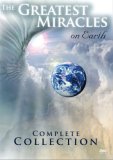
Greatest Miracles on Earth, The
As Christmas approaches, the release of vaguely holiday-themed DVDs increases. It's a sensible move on the part of marketers; even this reviewer isn't immune, as the impulse of the season led me to give a try to a DVD that I otherwise might not have picked up, The Greatest Miracles on Earth: Complete Collection. (That and the kind of groovy cover art, I have to admit. Not that I recommend that as a criteria for choosing one's viewing material.) It's clear from a quick glance at the back-cover copy that this is a collection of inspirational miracle stories, a feel-good program above all. Does it have any real substance, or is it fluff?
As a tough-minded person myself, I recognized pretty quickly that The Greatest Miracles on Earth really wasn't aimed at an audience that included me, which is too bad, because as it is, I think the program reinforces the idea that there are only two positions on miracles: disbelief in the possibility of any miracles, or total credulity in all miracle stories. Alas, there's not much room for the view that I share with CS Lewis: that belief in miracles doesn't mean believing that everything claimed to be a miracle actually is one. Many, perhaps most, perhaps almost every single instance of claimed miracles can be "explained" by natural causes; that doesn't rule out the possibility of an ultimately supernatural cause acting through more immediately natural causes, nor the possibility of at least a few miracles being genuine. As a Christian, I believe that history records at least one genuine miracle in the Resurrection, but as a critical thinker and scholar, I wince at the uncritical approach taken here to the topic. Then again, I'm a real geek, the kind of person who thinks the program would have been a whole lot better if it had started out by discussing the definition of a miracle in the first place, and exploring where the concept of "miracle" fits into our ideas about reality.
That actually brings me to the other main criticism I have of The Greatest Miracles on Earth, which is its rather New-Agey focus. I think that the filmmakers were trying very, very hard to make their inspirational stories of miracles be as non-denominational and in fact as non-religious as possible. This strikes me as a bit... odd. "Faith" is discussed totally out of context, as something that you can have without ever asking the real question, which is "faith in what?" God is mentioned, at least some of the time, but one of the interviewees with the most on-screen time, author Paul Robert Walker, works hard to present the idea of God as just a force that somehow responds to us when we ask, perhaps equivalent to the energy of the universe, or something that would go well on a poster advertising crystal pyramids for meditation. Miracles are a fascinating, challenging topic that can challenge us to rethink the very nature of reality and God's involvement in the world; it rather pains me to see the subject watered down to feel-good stories that will make skeptics roll their eyes and be more convinced that it's all silly wishful thinking, and that won't challenge believers to actually use their minds as well as their hearts.
OK, given that The Greatest Miracles on Earth is very lightweight viewing, what, exactly, do we have here? The program subtitle of "The Complete Collection" is a bit misleading, as there are just three 50-minute episodes. OK, it's "complete" if that's all there was, but somehow "Complete Collection" implies a bit more in my view. Anyway, we get "Miracles of Healing," "Miracles of Time and Faith," and "Miracles of Love." They're listed out of sequence on the back cover and they're also out of sequence in the DVD menu, which is a bit weird, but not too hard to figure out.
"Miracles of Healing" covers exactly what its title suggests: specific examples of miraculous healing or healing-related stories, such as a mission in New Mexico with sacred earth, individual stories of healing, and a profile of an artist who had a startling vision that led him into his artistic career. While there's a definite New Age flavor, some of the material here is interesting, especially the section on artist Andy Lakey. "Miracles of Time and Faith" is perhaps best retitled "Miscellaneous Miracles," as its three sections are "Apparitions," "Mysteries of Faith," and "Near-Death Experiences." The first two sections are reasonably interesting, with segments on the Virgin of Fatima and the Shroud of Turin, while the last section is weaker. The third episode, "Miracles of Love," is by far the weakest, relying on rather fluffy stories of personal experiences that are drawn out too long.
Probably the biggest barrier between The Greatest Miracles on Earth and viewers who might enjoy it is the cheesy 1970s feel. The program was made in 1996, but honestly it feels twenty years older. The uber-cheesy opening and closing graphics and the clips from old Hollywood movies to illustrate key moments in particular stories ought to have been filed in the "bad idea" category from the start; when the program sticks to a more straightforward interview style, it works better.
The DVD
Video
The episodes are presented in their original television aspect ratio of 1.33:1. I wasn't particularly impressed by the image quality, especially whenever I remembered that this was a 1990s production, not a 1970s one. The interview footage is sometimes clean and natural, but more often it's overly bright with odd colors.
Audio
The 2.0 audio scrapes by with a satisfactory mark. It's often slightly muddy-sounding, but doesn't get actively annoying.
Extras
There are minimal special features here. We get text biographies of the director and producer, and trailers for three other films: Christmas Carol, The Pistol: Birth of a Legend, and Miracle of Marcelino. Sorry, guys, at this point "scene selections" don't count as bonus features any more.
Final thoughts
The Greatest Miracles on Earth has some interesting material, but I think that in the end it doesn't take on any of the questions that would have made the program really interesting. We're left with a vaguely New-Agey approach that in my view completely misses the point of looking at instances of miracles in the first place; I suspect it's too shallow to appeal to Christians and too credulous to push past skeptics' preconceptions. If you're really interested in the subject, and don't mind the distinctly 1970s flavor, it might be worth a rental, but otherwise I'd suggest skipping it.
|



| Popular Reviews |
| Sponsored Links |
|
|
| Sponsored Links |
|
|
| Release List | Reviews | Shop | Newsletter | Forum | DVD Giveaways | Blu-Ray | Advertise |
|
Copyright 2024 DVDTalk.com All Rights Reserved. Legal Info, Privacy Policy, Terms of Use,
Manage Preferences,
Your Privacy Choices 
| |||||||