
| Reviews & Columns |
|
Reviews DVD TV on DVD Blu-ray 4K UHD International DVDs In Theaters Reviews by Studio Video Games Features Collector Series DVDs Easter Egg Database Interviews DVD Talk Radio Feature Articles Columns Anime Talk DVD Savant Horror DVDs The M.O.D. Squad Art House HD Talk Silent DVD
|
 DVD Talk Forum |
|
|
| Resources |
|
DVD Price Search Customer Service #'s RCE Info Links |
|
Columns
  


|
|
|
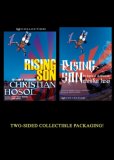
Rising Son - The Legend of Skateboarder Christian Hosoi
There's something fascinating about skateboarding and skate culture, even for total bystanders like myself. I mean, I'm a female college professor in my 30s - not exactly skateboarding fan club material. (OK, I do live in Southern California and find myself saying "dude" surprisingly often, so there's a tiny cultural overlap there.) But there's something really interesting about surfing and skateboarding culture, perhaps because they're sub-culture that in many ways serve as a microcosm of popular culture in general. Rising Son: The Legend of Skateboarder Christian Hosoi gives a satisfying glimpse into the skateboarding world by following one of its biggest idols through his rise, fall, and redemption.
Rising Son dovetails beautifully with another well-known skateboarding documentary, Dogtown and Z-Boys. The earlier film traced the origins of skateboarding and the careers of the Z-Boys, one of the first (and most famous) skateboarding teams. Rising Son focuses on just one skateboarder rather than a team, but we see Christian Hosoi squarely in the context of the skateboarding culture. He's a second-generation skateboarding legend, who was inspired by the Z-Boys when they were professionals and he was an eager preteen. Hosoi soon demonstrated amazing talent and became a phenomenon, pulling in an outrageous yearly income from promotional deals, while stamping his authority across the skateboarding scene as a master not just of technique but also of style.
We hear from Hosoi himself, but what makes Rising Son particularly interesting is how it draws on the recollections of many professional skateboarders who knew Hosoi, worked with him, or competed against him. The most well-known names who reflect on Hosoi's career include Jay Adams, Tony Alva, and Tony Hawk, as well as many others whose names will no doubt be familiar to skateboarding fans. Hawk's interviews in particular are quite interesting, as he offers a thoughtful and intelligent perspective on the "Hawk vs. Hosoi" rivalry that was much-touted in the 1980s.
As a document of skateboarding history, Rising Son does an excellent job, giving viewers extensive footage of skateboarding contests and behind-the-scenes shenanigans from the late 1970s to the 1990s. Even if you don't know much about skateboarding (and I don't), it becomes clear that Hosoi was indeed superbly talented. For skateboarding fans, Rising Son does a great job of filling in the history gap between Dogtown and Z-Boys and the present day in broad terms, though I'm sure that there are a lot of elements here (like the rise of street skating) that could easily take up a full documentary of their own.
What interested me the most in Rising Son was not so much the skateboarding history (though that was interesting) but rather the personal rise and fall of Hosoi himself. His ascent was spectacular; his decline and fall was equally so, as he descended into drug abuse and lost everything. Hosoi's story could easily have been that of so many media superstars, whose lives end in disgrace after a losing struggle with addiction, but it didn't turn out that way: at his lowest point, he found God and became a Christian. It's a dramatic example of redemption, and by far the most compelling part of Hosoi's story. Unfortunately, Rising Son doesn't explore this part of his life in depth; while we get a lengthy exposition of his wild, partying days and excesses, the film skims over his conversion. It's as if the filmmakers were a bit uncomfortable with Hosoi's evident seriousness about the subject.
Though overall Rising Son is well done, I did find the pacing to be a bit uneven. At several points, I felt that the film lingered longer on a particular phase in Hosoi's life than was really necessary (while giving other sections short shrift, as I noted above). I suspect that the filmmakers felt the urge to include as much rad skating footage as they could manage, and skateboarding fans probably won't complain.
Rising Son is officially unrated, but it's worth noting that it does contain quite a lot of vulgar language and a good many drug-use scenes.
The DVD
Video
Rising Son is presented in a widescreen 1.78:1 aspect ratio, but unfortunately it is not anamorphic. For the most part, it looks good: the footage from the 1970s and 1980s is reasonably clean, and the modern interviews look nice and clear.
Audio
The Dolby stereo soundtrack does a good job of presenting the material in a clean, crisp, and appealing way. The music portion of the soundtrack is clear and well balanced with the rest of the track.
Extras
The main special feature is a section called "Christ Tales," running 30 minutes; it's a collection of segments in which friends reflect on Christian Hosoi and various events in his life. Basically, it's like a long section of deleted scenes, and it'll be interesting to Hosoi fans. The "Quiksilver Grabs" section is 29 minutes of music videos with skateboarding footage... definitely for skateboarding fans only. Lastly, there's a trailer for the film, and a trailer for a Tony Hawk video game.
Final thoughts
Rising Son: The Legend of Skateboarder Christian Hosoi is a nicely done documentary that will be of interest not just to skateboarding fans, but to any viewer who's interested in the story of an athlete or media darling who rose, fell, and found redemption. I'll give it a strong "recommended" rating, but if you have Dogtown and Z-Boys in your collection, you'll want to have this one for sure.
|



| Popular Reviews |
| Sponsored Links |
|
|
| Sponsored Links |
|
|
| Release List | Reviews | Shop | Newsletter | Forum | DVD Giveaways | Blu-Ray | Advertise |
|
Copyright 2024 DVDTalk.com All Rights Reserved. Legal Info, Privacy Policy, Terms of Use,
Manage Preferences,
Your Privacy Choices 
| |||||||