
| Reviews & Columns |
|
Reviews DVD TV on DVD Blu-ray 4K UHD International DVDs In Theaters Reviews by Studio Video Games Features Collector Series DVDs Easter Egg Database Interviews DVD Talk Radio Feature Articles Columns Anime Talk DVD Savant Horror DVDs The M.O.D. Squad Art House HD Talk Silent DVD
|
 DVD Talk Forum |
|
|
| Resources |
|
DVD Price Search Customer Service #'s RCE Info Links |
|
Columns
  


 
|
|
|
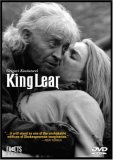
Grigori Kozintsev's King Lear
Looking at a Russian version of King Lear brings up an interesting question. Shakespeare's brilliance in storytelling makes him an author for all times... but what about for all places? One problem with translating Shakespeare is that his genius lies to a great extent in his mastery of the language. He freely adopted plots and characters from history or other plays or stories, making classics for all time from material that, in other hands, was merely ordinary. It is in Shakespeare's language that he brings his characters to life in all their subtlety and complexity, and it's in his language that he sets the drama of humanity so vividly before us. In order to translate Shakespeare properly, the translator would need to be the equal of Shakespeare... and I don't think any translator would suggest that he's on a par with the Bard! So what do we make of this film?
I'd have to say that Grigori Kozintsev's 1971 version of King Lear is an.... interesting attempt. It's not what I'd call successful, though.
I would first of all venture to say that there is little point for an English-speaking viewer to watch a Russian King Lear, seeing as all the beauty and power of the language is completely lost. What's left is the realization of the story: how well does this version of Lear bring out the essential themes and power of the story? How well acted is it?
Apart from the language issue, though, it's still not a particularly effective rendition. The acting is stilted and overly melodramatic even from the very beginning, and it only gets more so as the story develops. Yuri Yarvet's rendition of Lear, in particular, might be the kind of performance that would work on stage, but on film, where we see everything up close and have no need for extra theatricality to carry the emotion, it feels like too much right from the start. Frankly, the whole vision of the film is melodramatic to the point of making Shakespeare's serious insight into the characters and situations vanish in a puff of overacting.
The musical score is another aspect of this version that is interesting, but not in a good way. Dmitri Shostakovich's score is, indeed, "stirring" as the back-cover copy suggests, but it stirred me to feel intense dislike of the music rather than anything else. The score feels overheated (though in that respect it matches the acting) and weirdly inappropriate (especially at the start of the second part). It's part and parcel of a generally overdone, overheated tone that takes Shakespeare's insights on madness and suffering and makes them appear ludicrous.
Peter Sellars provides some comments that give a context for this King Lear, particularly in reference to how Shakespeare's political plays were not permitted to be performed in Soviet Russia. In that sense, this film version of King Lear may offer some insights into Russian culture, politics, and art... but I wouldn't go so far as to suggest that it's a particularly good realization of Shakespeare's play for English-speaking viewers.
The DVD
Video
King Lear is presented in its original widescreen aspect ratio, but it's not anamorphically enhanced. The black-and-white image has been presented in a nicely clean transfer, with no apparent noise or print flaws showing up in the image, except for a vertical print flaw that appears early on. There's some pixellation and edge enhancement, but overall the image looks quite satisfactory.
Audio
The DVD starts off rather inauspiciously, with an unpleasantly piercing quality to the opening music. Fortunately, the soundtrack overall is satisfactory, with the dialogue sounding clear and clean. Some subtle popping noises appear in the background of the sound, but it's not very noticeable. Optional English subtitles are included, appearing in the "black bar" area below the picture.
Extras
The one special feature is a substantial one: there's about an hour's worth of interviews with Peter Sellars, a film, theater, and opera director who sat down in 2006 to give his thoughts on this version of King Lear. I found Sellars to be rather grating, but he has some interesting insights into the film. A booklet is also included with the DVD, giving some background on the filmmaker and several excerpts from his book about the making of King Lear.
Final thoughts
I love Shakespeare, but this version of King Lear just didn't do it for me. It's undoubtedly significant in the history of Russian cinema, but taken as a rendition of Shakespeare's play, in its own right, it doesn't have anything much to offer. Unless you are a serious Russian cinemaphile, I'd give this Lear a wide berth. Skip it.
|



| Popular Reviews |
| Sponsored Links |
|
|
| Sponsored Links |
|
|
| Release List | Reviews | Shop | Newsletter | Forum | DVD Giveaways | Blu-Ray | Advertise |
|
Copyright 2024 DVDTalk.com All Rights Reserved. Legal Info, Privacy Policy, Terms of Use,
Manage Preferences,
Your Privacy Choices 
| |||||||