
| Reviews & Columns |
|
Reviews DVD TV on DVD Blu-ray 4K UHD International DVDs In Theaters Reviews by Studio Video Games Features Collector Series DVDs Easter Egg Database Interviews DVD Talk Radio Feature Articles Columns Anime Talk DVD Savant Horror DVDs The M.O.D. Squad Art House HD Talk Silent DVD
|
 DVD Talk Forum |
|
|
| Resources |
|
DVD Price Search Customer Service #'s RCE Info Links |
|
Columns
  



 
|
|
|
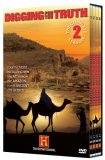
Digging for the Truth - The Complete Season 2
Call me a closet archaeologist. I've always enjoyed learning about past civilizations and the mysteries of history: there's a wealth of material in humanity's past that dwarfs the imagination of the most creative fiction writer. The History Channel documentary series Digging for the Truth capitalizes on the allure of the past, exploring some of the most intriguing puzzles from the depths of history. The list of topics in Season 2 of Digging for the Truth includes some really sensational ones: Is the story proposed in The Da Vinci Code really true? What's up with Stonehenge? What happened to the lost colony of Roanoke Island?
One of the things I like about the program is that the host, Josh Bernstein, makes the science of anthropology interesting, while also keeping it realistic. This isn't Indiana Jones, but it's pretty close: exotic locations, fascinating ideas, mysterious puzzles... and it's all for real. The program picks up on strange topics, but they're always ones that have interesting roots in history, fable, and science: in exploring these questions, Josh is able to look at the kinds of evidence that really gets used in historical and scientific studies: original source documents, ancient ruins, DNA evidence from bones, and the like.
Another aspect of the program that I like is that, while it touches on some "hot" topics, other episodes follow up on fascinating elements in parts of history that viewers may already have heard of. For instance, "Troy: Of Gods and Warriors" examines the real, historical city of Troy and its connection to Homer's epic poem the Iliad; "Vikings: Voyage to America" looks at the Viking presence in the New World; "Cleopatra: The Last Pharaoh" focuses on the famous figure of Cleopatra; and Biblical archaeology gets a solid exposition in "The Real Sin City: Sodom and Gomorrah."
Others are little-known but equally interesting. Ever heard of giants in South America? Check out "Giants of Patagonia." We all learn about the pyramids in Egypt - what about "America's Pyramids"? Several episodes take advantage of the wealth of fascinating archaeological sites in South America, as in "The Real Temple of Doom," which looks at the Peruvian civilization of Chavin de Huantar, "City of the Gods," examining the enormous pyramid of Teotihuacan, and "Lost Cities of the Amazon."
The difficulty in handling material that's been sensationalized is highlighted in "Bloodlines," which explores the ideas in Dan Brown's fictional thriller The Da Vinci Code. Overall, I felt that the show did a good job with the material, although some of the fringe claims and later folk traditions about Mary Magdalene are presented without quite enough balance from more reputable experts. My only concern is that while Josh is careful to use accurate language in describing the theories ("if this were true...", "assuming this to be the case...", etc.), I suspect that some viewers of Digging for the Truth won't catch the careful language of "exploring the possibilities" and instead would tend to see the hypothetical strings of what-ifs as actual, proven truth. Fortunately, while Digging for Truth allows the fanciful theories to spin out for a certain amount of time, Josh wraps the episode up with a clear and responsible assessment of what the historical and archaeological facts actually tell us - and what parts of the story are pure fantasy.
Digging for Truth is very good overall about handling its material in a responsible way. The program chooses topics that have a sensational, glamorous, or sensational aspect to them, but it doesn't take the low road of exploiting the material. Instead, Digging for the Truth looks at these interesting topics in a realistic way, looking at the explanations and theories advanced by working archaeologists, anthropologists, and naturalists. When conclusions can be drawn, Josh draws them; when the case is still open, he makes that clear, too. In truth, there's plenty of fascinating stuff going on in history without needing to exaggerate.
The program takes an "adventure" approach to the material: we follow Josh around the world, Indiana-Jones style, as he follows the trails of evidence in each episode; it capitalizes on Josh's amiable demeanor, willingness to roll up his sleeves and get involved in the exploration of his material, and ability to make the topic accessible to viewers. In pleasant contrast to some other documentaries with a similar general approach, Digging for Truth backs up this accessible approach with solid content. Josh calls on experts of all kinds, explaining clearly what they do and how their work will help him with the puzzle at hand. The program makes good use of maps and computer graphics to help convey the information in the program; it's not overdone, but rather is used just as needed to provide useful contextual information. Re-enactments and imaginative re-creations of scenes from history and prehistory are used very effectively, giving us a feeling for the lives of people in the era being discussed.
The DVD
The thirteen episodes in Digging for the Truth: The Complete Season 2 appear on four DVDs, packaged in ultra-slim plastic keepcases inside a glossy paperboard slipcase.
Video
The video presentation is a bit odd: the image is widescreen, but it's non-anamorphic and, in fact, is windowboxed. Colors are bright and attractive, with contrast handled well. The level of detail is satisfactory, though it gets a little pixellated at times.
Audio
The audio is generally satisfactory, with a clean and clear voiceover from host Josh Bernstein. For the most part, the on-site material is likewise clean and clear, but occasionally the audio track is a bit harsh or muffled. All in all, though, the stereo soundtrack is satisfactory.
Extras
The most interesting special feature is a 15-minute interview with host Josh Bernstein, in which he reflects on his experiences with the show. There's also a text biography of him.
Final thoughts
I quite liked Digging for the Truth. While I haven't seen the first season to compare, the episodes in Season 2 are intelligent and well-researched, giving insight into fascinating historical and archaeological puzzles. It would be an excellent show for younger viewers, while also being worthwhile viewing for people of all ages. Highly recommended.
|



| Popular Reviews |
| Sponsored Links |
|
|
| Sponsored Links |
|
|
| Release List | Reviews | Shop | Newsletter | Forum | DVD Giveaways | Blu-Ray | Advertise |
|
Copyright 2024 DVDTalk.com All Rights Reserved. Legal Info, Privacy Policy, Terms of Use,
Manage Preferences,
Your Privacy Choices 
| |||||||