
| Reviews & Columns |
|
Reviews DVD TV on DVD Blu-ray 4K UHD International DVDs In Theaters Reviews by Studio Video Games Features Collector Series DVDs Easter Egg Database Interviews DVD Talk Radio Feature Articles Columns Anime Talk DVD Savant Horror DVDs The M.O.D. Squad Art House HD Talk Silent DVD
|
 DVD Talk Forum |
|
|
| Resources |
|
DVD Price Search Customer Service #'s RCE Info Links |
|
Columns
  


 
|
|
|
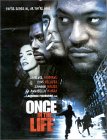
Once in The Life
Trimark // R // November 6, 2001
List Price: $24.99 [Buy now and save at Amazon]
NEW YORK STORIES:
In trying to escape the depression and paranoia that have become part of daily life in New York City since the attack, I turned to a stack of DVDs waiting for me to review. Hoping for a little escapism I found three consecutive movies about three totally different communities in New York. Taken together, they only help to underscore the tragedy of the deaths of so many different kinds of people as well as the death of a certain kind of environment that fostered diversity. Each film, of course, also features its own view of the World Trade Center, whether a gloriously lingering establishing shot or the kind of subliminal glimpse you take when you just assume something will stand forever. The fact is shots of the towers in films used to signify location, a short-hand for the great city. Now they will forever also indicate time. Whenever you see the towers in a movie you'll automatically know: This takes place before September 11th, 2001.
A Life Apart: Hasidism in America - Once in the Life - The Blank Generation / Dancing BarefootTHE STRAIGHT DOPE:
Laurence Fishburne has been an important part of the film scene for most of his life. Starting with his great performance in 1979's Apocalypse Now!, which began production when he was only 14, through films like School Daze, Deep Cover, and Boyz n' The Hood, he has proven to be a thoughtful, talented actor. He has made missteps (Fled, Just Cause) but has always bounced back. When it came time to direct his first feature film Fishburne adapted his own play, "Riff Raff". The result, Once in the Life, is a meandering character-driven piece that narrowly avoids drug dealer cliches by infusing his situations with a strange poetry.Fishburne has a good background in theater (I saw him in a fantastic August Wilson play called "Two Trains Running" right before he stopped going by the name "Larry") and has developed a good ear for dialog that propels his characters forward. Once in the Life focuses on three men, which includes two very different brotherly relationships. 20/20 Mike (Fishburne) and Torch (Titus Welliver) are actually half-brothers, sharing a philandering father, but they haven't seen each other since childhood. A coincidence reunites them and Mike immediately sees an opportunity to make some money. Mike has another "brother", Tony the Tiger (Eamonn Walker), with whom he shared a jail cell. Mike trusts Tony completely and calls on him for help in a tight spot. The bulk of the film involves the complex dynamic between these three men and how their ability to trust each other, and then lose that trust, can shift from moment to moment. Walker and Welliver deliver strong and specific performances. Fishburne himself is actually far more self-conscious than normal. He has the look of an actor who is also trying to keep track of the camera and everything else in the frame while still trying to perform. The cast is populated with assorted other strong character actors in smaller roles, including Annabella Sciorra as Tony's wife, Paul Calderon as a feared drug lord, Nick Chinlund as Mike and Torch's dad, and, in a curiously uncredited role, Gregory Hines as a thug. Dominic Chianese Jr., son of Dominic Chianese, The Sopranos' Uncle Junior, really stands out as Freddie 9 Lives, a fast talking huckster whose two timing lands him in some trouble. His opening credit dance routine crackles with energy and helps kick the movie off to a good start. Ultimately Once in the Life feels very theatrical. While the first half features a variety of locations and character combinations, the second half finds the three leads holed up pretty much alone. While the opportunities for visual storytelling are limited in such a static environment, Fishburne is more interested in the emotions of the characters and succeeds at exploring that. VIDEO:
Richard Turner's cinematography is dark and gritty. Once in the Life is by no means a pretty film and, while the grime is appropriate, the film is still pretty ugly. The print is grainy and shows occasional dirt. It is non-anamorphic widescreen. AUDIO:
The Dolby Digital 5.1 audio is pretty good, if simple. Branford Marsalis' score is engaging and the songs sound good. The dialog is clear and, while nothing exceptionally complicated is attempted, the mix is good. English, Spanish, and French subtitles are included. EXTRAS:
The only extra feature is a commentary track from Fishburne. Given his work as an actor he is more able to create a dramatic flow to his comments than many directors. His comments are informative and he spends a good deal to time discussing the genesis of many of his characters. He drew on his own personal experiences growing up in Brooklyn to create many of the names and situations in the film and approaches everything involved with the sense of someone taking it all personally. FINAL THOUGHTS:
While not the most fresh look at urban low-lifes in recent years, Laurence Fishburne's Once in the Life adds a few layers of familial complexity to his tale of a deal gone bad. Good performances help keep the film from being a total retread while Fishburne's quiet intensity as a storyteller leaves the door open for future works. E-mail Gil at [email protected]
In trying to escape the depression and paranoia that have become part of daily life in New York City since the attack, I turned to a stack of DVDs waiting for me to review. Hoping for a little escapism I found three consecutive movies about three totally different communities in New York. Taken together, they only help to underscore the tragedy of the deaths of so many different kinds of people as well as the death of a certain kind of environment that fostered diversity. Each film, of course, also features its own view of the World Trade Center, whether a gloriously lingering establishing shot or the kind of subliminal glimpse you take when you just assume something will stand forever. The fact is shots of the towers in films used to signify location, a short-hand for the great city. Now they will forever also indicate time. Whenever you see the towers in a movie you'll automatically know: This takes place before September 11th, 2001.
A Life Apart: Hasidism in America - Once in the Life - The Blank Generation / Dancing BarefootTHE STRAIGHT DOPE:
Laurence Fishburne has been an important part of the film scene for most of his life. Starting with his great performance in 1979's Apocalypse Now!, which began production when he was only 14, through films like School Daze, Deep Cover, and Boyz n' The Hood, he has proven to be a thoughtful, talented actor. He has made missteps (Fled, Just Cause) but has always bounced back. When it came time to direct his first feature film Fishburne adapted his own play, "Riff Raff". The result, Once in the Life, is a meandering character-driven piece that narrowly avoids drug dealer cliches by infusing his situations with a strange poetry.Fishburne has a good background in theater (I saw him in a fantastic August Wilson play called "Two Trains Running" right before he stopped going by the name "Larry") and has developed a good ear for dialog that propels his characters forward. Once in the Life focuses on three men, which includes two very different brotherly relationships. 20/20 Mike (Fishburne) and Torch (Titus Welliver) are actually half-brothers, sharing a philandering father, but they haven't seen each other since childhood. A coincidence reunites them and Mike immediately sees an opportunity to make some money. Mike has another "brother", Tony the Tiger (Eamonn Walker), with whom he shared a jail cell. Mike trusts Tony completely and calls on him for help in a tight spot. The bulk of the film involves the complex dynamic between these three men and how their ability to trust each other, and then lose that trust, can shift from moment to moment. Walker and Welliver deliver strong and specific performances. Fishburne himself is actually far more self-conscious than normal. He has the look of an actor who is also trying to keep track of the camera and everything else in the frame while still trying to perform. The cast is populated with assorted other strong character actors in smaller roles, including Annabella Sciorra as Tony's wife, Paul Calderon as a feared drug lord, Nick Chinlund as Mike and Torch's dad, and, in a curiously uncredited role, Gregory Hines as a thug. Dominic Chianese Jr., son of Dominic Chianese, The Sopranos' Uncle Junior, really stands out as Freddie 9 Lives, a fast talking huckster whose two timing lands him in some trouble. His opening credit dance routine crackles with energy and helps kick the movie off to a good start. Ultimately Once in the Life feels very theatrical. While the first half features a variety of locations and character combinations, the second half finds the three leads holed up pretty much alone. While the opportunities for visual storytelling are limited in such a static environment, Fishburne is more interested in the emotions of the characters and succeeds at exploring that. VIDEO:
Richard Turner's cinematography is dark and gritty. Once in the Life is by no means a pretty film and, while the grime is appropriate, the film is still pretty ugly. The print is grainy and shows occasional dirt. It is non-anamorphic widescreen. AUDIO:
The Dolby Digital 5.1 audio is pretty good, if simple. Branford Marsalis' score is engaging and the songs sound good. The dialog is clear and, while nothing exceptionally complicated is attempted, the mix is good. English, Spanish, and French subtitles are included. EXTRAS:
The only extra feature is a commentary track from Fishburne. Given his work as an actor he is more able to create a dramatic flow to his comments than many directors. His comments are informative and he spends a good deal to time discussing the genesis of many of his characters. He drew on his own personal experiences growing up in Brooklyn to create many of the names and situations in the film and approaches everything involved with the sense of someone taking it all personally. FINAL THOUGHTS:
While not the most fresh look at urban low-lifes in recent years, Laurence Fishburne's Once in the Life adds a few layers of familial complexity to his tale of a deal gone bad. Good performances help keep the film from being a total retread while Fishburne's quiet intensity as a storyteller leaves the door open for future works. E-mail Gil at [email protected]
|



| Popular Reviews |
| Sponsored Links |
|
|
| Sponsored Links |
|
|
| Release List | Reviews | Shop | Newsletter | Forum | DVD Giveaways | Blu-Ray | Advertise |
|
Copyright 2024 DVDTalk.com All Rights Reserved. Legal Info, Privacy Policy, Terms of Use,
Manage Preferences,
Your Privacy Choices 
| |||||||