
| Reviews & Columns |
|
Reviews DVD TV on DVD Blu-ray 4K UHD International DVDs In Theaters Reviews by Studio Video Games Features Collector Series DVDs Easter Egg Database Interviews DVD Talk Radio Feature Articles Columns Anime Talk DVD Savant Horror DVDs The M.O.D. Squad Art House HD Talk Silent DVD
|
 DVD Talk Forum |
|
|
| Resources |
|
DVD Price Search Customer Service #'s RCE Info Links |
|
Columns
  


 
|
|
|
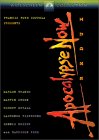
Apocalypse Now Redux
viewable in the older Savant column Archive.
Coppola's back with a new version of his drug-soaked Vietnam opus, Apocalypse Now, a neo-classic that was the debate rage of cineastes and film students for years. A movie that had an incredibly stormy production history, it's truly a masterpiece of creative editing and structuring of material that everyone, including Francis Ford himself, thought would never come together.
But this is a recut, that adds material not seen before, revising the movie for reasons that Zoetrope and Coppola have taken great pains to insist are not commercially motivated, that were 'needed all along.'
This is the review where Savant loses the understanding of DVD fans under 35 years old, for whom everything new and unseen and extra about a DVD is automatically Good.
I'm afraid that this is indeed another case of the deplorable trend to go back and create new marketable items out of established hits, by adding scenes and details that the filmmakers originally did not intend to be included. Francis Coppola has joined his pals Lucas and Spielberg by pulling his pretty-darn-amazing Vietnam War movie out and retooling it. According to all the hype, this is the 'expanded version' that fully expresses the filmmaker's intentions, etc.
That this is just so much hooey isn't making too much news. The added 'redux' word hangs over the new Apocalypse poster like the 'now with Bleach' sticker on a box of detergent. Coppola could have edited together a bunch of trims and outs in 1979 and UA would have released it - he had total control and spent years figuring out the best final form for the movie. This recut is just commercial opportunism ... did somebody in Zoetrope-Land see the need for some extra cash ...?
The added scenes are very damaging to the film. For curiosity value, plenty of us will want to see this - several nice things from the famous work-in-progress rough cut are there, such as the stealing of Robert Duvall's surfboard. But all are unnecessary. The original cut, which savagely ejected major scenes left and right, has been a model of editorial genius for 22 years. Coppola and his editors truly fashioned a diamond out of a lot of discordant material, and gave it a consistent through-line. All of the new material either breaks this through-line, or slows what used to be a deliberate picture into a static one. Worse, it re-invents the movie in a way that suggests that something was wrong with it in the first place. At 202 minutes, it's just long, long, long.
The surfboard theft business is cute, but breaks Coppola's sombre tone. A few more details show Duvall's Kilgore not only behaving like a silly ass about his surfboards, but being compassionate to Viet civilians, all of which goes entirely against the grain of what was once a consistent and eerily credible war-obsessed character. The added scene with Marlon Brando, reading from a magazine in broad daylight, dissipate the delicate aura of mystery around Col. Kurtz. All of these small changes lighten the story and humanize the characters, exactly what you'd expect in a commercial movie circa 2001. Apocalypse Now was, until now, an event and a work of art of its time and place: 1979.
Other interesting material that floated around undigested in the legendary Rough Cut are nowhere to be seen. There is not a single frame more of the mysterious Scott Glenn character or his fight with Willard. No death scene for Dennis Hopper. No massive chanting rituals that, even in crude rough cut form, made you feel like joining in and stomping around the room like a savage. Nothing challenging, nothing that takes the dark themes any further.
The two major breaks, the visit with the Playboy Bunnies and the very extended French Plantation scene, are simply all wrong. Coppola himself has been vocal, on several occasions, about the wisdom of not using them originally - he is quoted as saying exactly this in the documentary Hearts of Darkness. The Bunnies had made their impact already in the concert scene, and the footage with the sailors hopping in the sack with them always had the 'whatever' look of improvisation, practice scenes shot to keep the actors and the crew occupied, while sets were being repaired from a hurricane. We learn nothing new about the soldiers and their gaga adulation of the Bunnies; the scene plays like it sneaked in from Bachelor Party.
But it's harmless compared to the French Plantation scene, which really kicks the movie into a bucket by introducing a new tone and a 'romantic' subplot that goes nowhere. I got ZERO feel for any idea of the movie tracing a reverse evolution of Vietnam history, as claimed by Coppola. Worse, the scene is wall-to-wall exposition watching Frenchmen at a table harangue Willard about Viet history ... just the kind of specific, literal chatter that the original movie avoided, choosing instead to remain a kind of violent and dreamlike poem about Vietnam - slightly abstracted. It also reminds me too much of John Milius' screaming right-wing harangues in real life, the kind I once heard when he was upset that President Carter had decided to give Panama back its canal. Presented unchallenged or even commented-on, the scene comes off as a clear defense of colonialism as a concept. Does Coppola now back the idea of re-colonizing the middle east, or something?
A small part of the funeral scene at the French plantation is very nice, especially for Albert Hall's character, who was given short shrift in the old cut. But the scene's feeling of military reverence, again, goes against the grain of what was once consistently subversive and surreal.
Now Savant has to get defensive. Why is this such a big deal? Why can't directors Coppola or Spielberg or Lucas, or Mort Flortt for that matter, rework their movies? It's not like anyone is censoring them. These are the original moviemakers.
Well, Apocalypse Now Redux is about repurposing, repackaging, and remarketing instead of moviemaking, and it's about screwing up film history. Every time Lucas retools Star Wars and changes 'details' 1 , movie history is changed. Do you know that because of cuts made right after release, generations of moviegoers actually think that Gary Cooper is fighting for the Franco side in the Spanish Civil War? Do you know that a short about a firehouse from 1905 has the credit for all kinds of editing innovations - which were done to the film in a 1920's revision? Do you know that it is believed that Dumbo once had several more scenes featuring the jive crows, that have disappeared, perhaps forever? Soon, E.T.'s sinister government agents will be changed for all time, into benign helpers of little boys and cute aliens everywhere. This is the kind of revisionism for which we used to condemn the Soviets.
"Aw, but these are just movies, lighten up, Glenn." Once upon a time, as a lowly production grunt, a big-time cameraman who hated, or didn't get, Taxi Driver, challenged me to defend it. I quoted Hud, where granpa says, "The landscape of the country changes depending on what men we look up to." I said I thought that it was the same with Scorsese's movie, which certainly shocked and sickened me, but nevertheless was a big dose of Truth, especially when compared to that feel-good Best-Picture crock Rocky. 2 Yes, they're just movies, but if they're important, they become part of us. Pictures like Apocalypse Now and Taxi Driver are landmarks that say where and who we were, what we believed, and what our culture was capable of. And diluting them, as is happening more and more frequently, is rewriting & distorting history.
Savant frequently shows his impatience with DVD fans who scream about changes to relatively obscure movies, because the DVD companies are violating Art. I've always immediately conceded that they are 100% correct - the moment you start considering movies as pieces of Art ... artists revisit their paintings by repainting them if necessary, but they don't call back the masterpieces from the galleries and add new things to them. 3
Maybe the old moguls had a point when they routinely trashed trims and outs from their movies ... even though we'd give our eye teeth to see outtakes from them now.
Paramount's DVD of Apocalypse Now Redux looks and sounds pretty much like the first DVD release, excellent. The audio mix that so annoyed Savant in the theater (I'm now convinced I saw it at a bum venue) sounds identical to the original in most aspects; I'm sure hardcore aficionados will find differences in the track Savant didn't hear. The aspect ratio still hovers somewhere between 1:85 and 2:1, which is kind of frustrating for this 2:35 original. Coppola, Murch and company clearly want to make their DVD, their way. A nice difference between the theatrical release and the DVD is that optional English subtitles are available, so as to better understand the dialogue in the plantation scene. The insert card's scene index (36 chapters) highlights the altered sequences in yellow so as to easily find them. Too bad this wasn't planned as a special DVD from the start; perhaps seamless branching could have been employed to choose between the original version and the 2001 cut.
Otherwise, the disc is plainwrap city. At 202 minutes, perhaps it was a good idea to conserve all the bit space for the best feature possible, but the extras-oriented fans aren't going to be pleased. The definitely 2001-styled trailer is the only added-value item.
On a scale of Excellent, Good, Fair, and Poor,
Apocalypse Now Redux rates:
Movie: "Hmph" (sound of grumpus grumping)
Video: Excellent
Sound: Excellent
Supplements: New trailer
Packaging: Amaray case
Reviewed: November 13, 2001
Footnotes:
1. Like making dashingly cuttthroat hero Han Solo into a Dudley Do-Right wimpus - the Greedo "shoot second and wear a halo" revision.
Return
2. Don't worry, my attempt at converting any of the effects 'geniuses' fell totally flat. I think Doug Trumbull gave up on any hopes of my ever being a special effects guy right then and there.
Return
3. When I get impatient, it's that DVD fans don't understand that in functional reality (not our high-toned ArtSpeak), movies and DVDs are commerce plain and simple. If the studios thought they'd earn more money by showing their films upside-down dubbed into Latvian, some corporate edict would make them do it. You can't combat this reality by ignoring it, or crucifying every studio employee who has to compromise with it. If Coppola collects a bundle of money from Redux and uses it to make another masterpiece, super .... then with his millions he can insure that the original Apocalypse becomes the official version again.
Return
| |
|



| Popular Reviews |
| Sponsored Links |
|
|
| Sponsored Links |
|
|
| Release List | Reviews | Shop | Newsletter | Forum | DVD Giveaways | Blu-Ray | Advertise |
|
Copyright 2024 DVDTalk.com All Rights Reserved. Legal Info, Privacy Policy, Terms of Use,
Manage Preferences,
Your Privacy Choices 
| |||||||