
| Reviews & Columns |
|
Reviews DVD TV on DVD Blu-ray 4K UHD International DVDs In Theaters Reviews by Studio Video Games Features Collector Series DVDs Easter Egg Database Interviews DVD Talk Radio Feature Articles Columns Anime Talk DVD Savant Horror DVDs The M.O.D. Squad Art House HD Talk Silent DVD
|
 DVD Talk Forum |
|
|
| Resources |
|
DVD Price Search Customer Service #'s RCE Info Links |
|
Columns
  



 
|
|
|
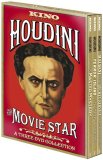
Houdini: The Movie Star
When I was in college I became interested in sleight of hand. In addition to learning how to perform a couple of tricks with a certain degree of skill, I read a lot of books on both magic and magicians, including a couple of biographies of Harry Houdini. Houdini was a very good magician and escape artist. What set him apart from other magicians of his day, and the reason that just about everyone reading this knows his name, was his genius for self-promotion. There have been several people more talented and creative in performing magic, but no one comes close to Houdini's ability to capture the interest of the public and turn that interest into paying customers.
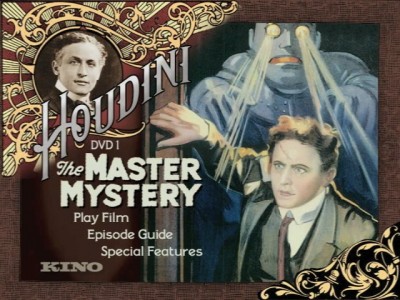
As early as 1901 Houdini recognized the power of film. That year he made a short for Pathe that showcased a number of his escapes and tricks, which is sadly lost. In the following years Houdini would film some of his larger scale spectacles and screen them during his stage show, and in 1918 decided to become a movie star. He filmed several films and a 15-part serial before giving up on the movies in 1923. Some of his films have been lost, along with a few chapters of the serial, but Kino now put together an amazing collection: Houdini: The Movie Star. This set brings together all three of Houdini's existing movies as well as the surviving chapters of his serial The Master Mystery. Not only that, but the set contains extensive and informative notes of the films and their production as well as several shorts of Houdini escapes, an audio recording of the escape artist, and more. A truly comprehensive package that is one of the most exciting silent film releases of 2008.
The Master Mystery (1919): To avoid studio interference, Houdini and his co-producers created their own production company to make his first major film. The Master Mystery is rip-roaring chapter play that has all of the advantages of the format (suspense, excitement, and lots of action) along with all of the pitfalls (convoluted and sometimes nonsensical plot, a story that's slow to make any real advances until the final chapter, and low production values.)
In this adventure Houdini plays Quentin Locke (one of the few times his character doesn't have the initials H. H.,) a government agent who poses as an inventor in order to gain employment at International Patents Inc. This is a company that buys up patents from inventors, and then sits on them so that the new technology doesn't get out and the holders of the rights for earlier, less advanced, machines will still be able to make money. (Okay, I know this doesn't make any sense, but it's a serial.) The head of IPI, Peter Brent (Jack Burns) is getting death threats and starting to have second thoughts about what he's doing. He decides to do the right thing and release all of the new inventions to the world. His VP, Herbert Balcom (Charles E. Grahm,) has different ideas however. He wants to take over the company and keep the inventions locked away forever.
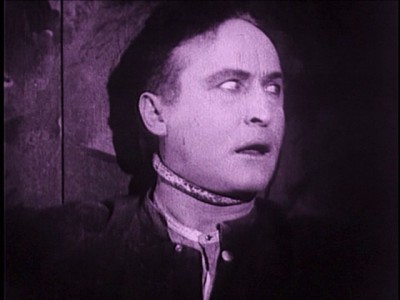
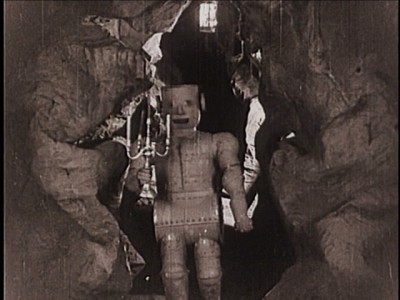
That night while meeting with an informant, Brent and his friend come down with the "Madagascar Madness" a malady that makes them laugh non-stop. This was brought on by Q, a mysterious robot with a human brain that keeps his hideout in the tunnels beneath Brent's mansion. It's up to Locke along with Brent's plucky daughter Eva (Marguerite Marsh) to stop Balcom and his agents from taking over the company and stifling innovation.
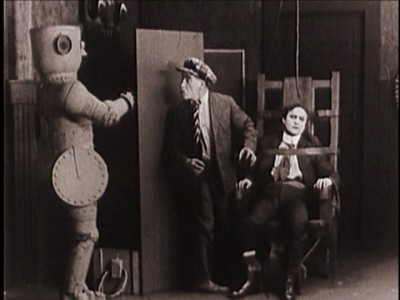
A fun serial, there are several subplots involving Balcom's son Paul (William Pike) who is engaged to Eva and the femme fatal with the unlikely name of De Luxe Dora (Edna Britton). After the plot is set up in chapter one, the follow installments fall into a pattern where Locke and/or Eva discover some clue, follow it, only to be discovered by the villains. Locke manages to fight off four or five guys only to be knocked out at the last minute and put into some improbable death trap. He's dangled over a vat of acid (my favorite...available only in the censor's report), tied up with barbed wire, locked in a chest and thrown in a river, strapped into an electric chair, just to name a few.
The episodes usually end with poor Locke facing death, and the beginning of the following installment always shows him escaping. Some of these are quite fun to watch and the creative escapes are the highlight of the serial. Most of the big chapter-ending escapes at least look like they're real (though it's obvious in some places the traps are not nearly as dangerous as they appear. The barbed wire one is a good example, the barbs bend and flatten when Houdini rolls on them.)
It's too bad the same can't be said for the story itself. Written by Arthur B. Reeve, the creator of the popular (at the time) pulp hero Craig Kennedy, Scientific Detective and scribe of the hit serial Exploits of Elaine, the chapters of this serial are convoluted and muddled. Viewers will often wonder why Locke is going somewhere, or how the thugs knew where he was going to be. Locke is also pretty gullible. In one episode he thinks he's tricked Balcom into believing that he and Eva have gotten into an argument and split, only to fall for the exact same trick himself when De Luxe Dora confides that she's had it with Paul. If he'll only bring Eva to the docks late that night, she'll reveal all of his secrets! No, that doesn't sound suspicious, but Quentin falls for it hook, line, and sinker.
It's obvious that this serial was done on a tight budget, both in time and money. The acting is wooden and stiff, to say the least, and Houdini has almost no screen presence. This is ironic since he was so charismatic and gregarious in real life. Still, as a fan of chapter plays I found this one entertaining and worth watching, though playing more than a couple of episodes in one sitting isn't recommended.
Note: There are a few chapters missing from this serial. Kino has re-created the lost sections by stitching together any extant footage with title cards that fill in the missing action.
The Grim Game (1919): Though Master of Mystery was successful, the accounting was sloppy and all the partners ended up suing each other and the company folded. The film did accomplish one thing however; it illustrated that Houdini could bring people to the theater. He ended up making his next two films with Famous Players Lansky/Paramount. The Grim Game is a lost film, but one significant five minute fragment still survives and is included in this set. During the filming of a wing-walking scene where Houdini (doubled by a stunt man) is supposed to transfer from one plane to another, a patch of turbulence caused the two bi-planes hit each other and crash while the stunt man was hanging from a rope. No one was seriously injured, and this accident was worked into the script. Luckily, that is the fragment that survives, and it's quite interesting to see.
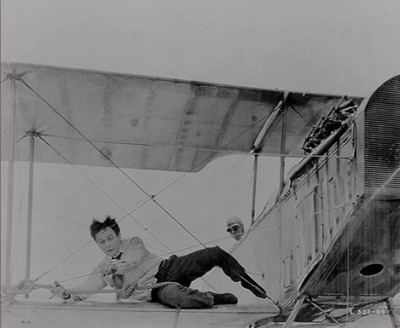
Terror Island (1920): The best film in this collection is easily Terror Island. This has all the best elements of The Master Mystery, without the long convoluted plot, and a talented director (James Cruze who would later direct The Great Gabbo with Erich von Stroheim.) Unfortunately reels 2 and 3 no longer exist. Title cards that explain the missing action are included.
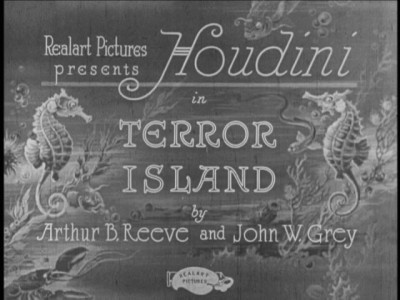
Houdini plays Harry Harper, an inventor (once again) who has built a new submarine. He wants to use his invention to recover sunken treasure from ships that were sent to the bottom of the ocean during WWI. He'll use the money he collects to "brighten the lives of little waifs" (i.e. orphans).
Luck seems to be on his side when a young girl, Beverly West (Lila Lee), comes to Harper seeking help. Her father has given her a map that leads to a South Seas island where he is being held captive that just happens to be near where a boat carrying a load of diamonds was sunk. Beverly's evil relative is trying to steal the map in order to get the diamonds. They eventually are able to get the map, and Beverly, so Harper is forced to follow the villains in his sub. Can he save the woman he loves and her father while retrieving a fortune worth of diamonds?
It's a shame that only 5 of the 7 reels still exist, because this is a fun adventure flick. The first reel drags a little with the set up, and just as things start to get interesting we're forced to skip past the missing footage. The newly made title cards do a good job of bringing viewers up to speed on the stiff they've missed, but it's disappointing that so much is missing.
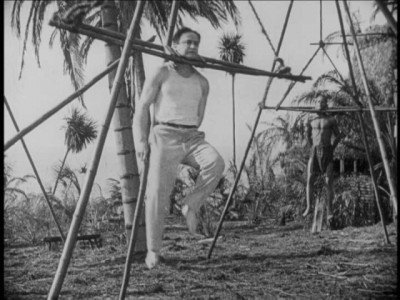
Starting with reel four the film moves at a good clip. There are some escapes, but they're worked into the plot a bit more elegantly than in the other films in this set. There're angry natives and evil competitors to deal with and this plays like a standard adventure film rather than a Houdini vehicle. One nice twist is that someone else is locked in a safe and thrown into the ocean. Of course Houdini jumps in after and saves them, but it was still an unexpected pleasure.
Houdini is a bit more natural in this film, but he's still no actor. He never looks like he's comfortable with his leading ladies, but in this film he seems a bit more at ease than the others. The rest of the cast does an adequate job, but it's the adventure that really caries this film.
The Man From Beyond (1922): Terror Island made money but didn't do well at the box office, and so Houdini formed another independent company to film his next feature. This film, based on a story by Houdini who was fascinated by the occult by this time, is a mess and plays very poorly today.
A scientific expedition to the Arctic discovers a ship that has been frozen in the ice for 100 years. On board is a man frozen solid in a block of ice. When thawed, he comes back to life and introduces himself as Howard Hillary (Harry Houdini). Hillary was knocked out by an evil ship's captain as the rest of the crew, including Hillary's love, Felice, abandoned the ship. The scientists take Hillary back to civilization, and there he meets the daughter of a missing scientist, also named Felice (Jane Connelly) who is identical to Hillary's lost love of 100 years ago.
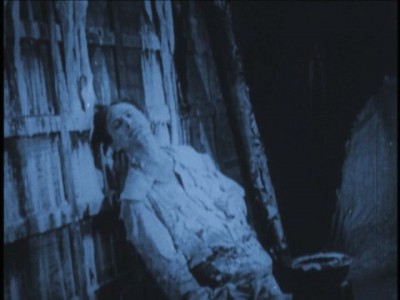
A wicked man has kidnapped Felice's father and is holding him hostage. He plans on marrying the young girl to gain control of the father's fortune. Hillary is sure that this new Felice is the reincarnation of his old love, and that their souls are joined. Not only does he have to stop Felice from getting married, but he has to convince her of who she was in a previous life.
When seen today, this film is pretty poor. There's very little action, the thing that people go to a Houdini movie for and only one escape trick. Even this is set up poorly. Houdini's trapped in a straight jacket in a padded cell in a mental hospital, and when the door is opened some time later he has gone. It's not until 10 minutes later that they show the actual escape, and by that time no one really cares.
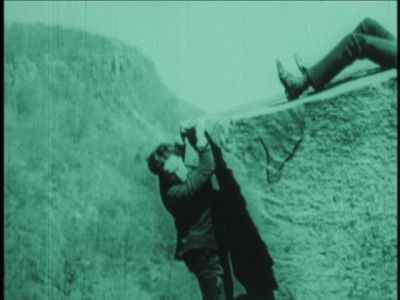
The film also spouts a lot of metaphysical claptrap about reincarnation, which apparently both Moses and Christ preached (at least according to a title card.) The bits about immortal souls searching for their "heart's desire" really drag the movie to a halt. It's hard not to roll your eyes at the naïve way this aspect is shoe-horned into the plot. Houdini was trying to make believers out of his audience instead of trying to tell an entertaining story.
Haldane of the Secret Service (1923): This was Houdini's final film as an actor, and he also wrote the film and directed it. Famous for wanting to control all aspects of his stage shows, the surprising thing isn't that Houdini took on all of these roles for one of his films, but that he didn't do it earlier. In any case this last entry in the Houdini film archive is not an auspicious entry. While not as bad as his previous effort, it doesn't work quite as well as Terror Island.
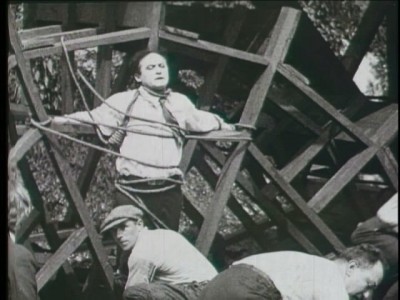
This time around Houdini is an international man of action, Heath Haldane. Looking for the counterfeiters who killed his father (an officer like himself) Heath stumbles upon a bag belonging to a young attractive woman, Adele Ormsby (Gladys Leslie) filled with bogus bills. Tracing the bag back to its owner, Haldane discovers that the young lady grabbed the wrong bag by mistake and gets hot on the trail of a ring of crooks who's nefarious schemes ensnare the whole world.
With this film, like his last, it seems that Houdini was trying to get away from the 'escape trick' film that had served him well in the past. There's only one escape in this movie too. There is a lot of action, with Houdini fighting gangs of men as he did in several of his earlier films. Overall the plot is a bit too melodramatic and relied on amazing coincidences to drive the narrative forward. There were also some sections that were dialog heavy, something that the best silent films were able to avoid. Overall this wasn't a horrible movie, but not a great one either.
The DVDs:
Audio:
All of these films come with piano or organ accompaniments which were solid, strong pieces. The score by Stuart Oderman for Master Mystery was a bit repetitious, but with a four hour long serial, that can definitely be forgiven. The other entries by Ben Model, Clark Wilson, and Jon C. Mirsalis were fine too. They were all scene-specific and did a good job of accenting the action on screen. While I do prefer a full orchestration, the single instrument scores for these films seemed to be very appropriate. None of these were top-tier films, and they probably were rarely accompanied by more than a piano or organ when originally released. The musicians who worked on these score assuredly put more thought into what they were going to play than the vast majority of in-theater musicians at the time, so we're really getting a nice soundtrack. Needless to say these recent recordings sound great and have no hiss, dropouts or distortion.
Video:
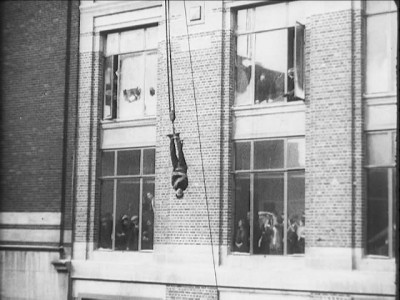
The full frame image is a bit less than the average Kino silent film. These films have not gone through extensive restoration, but they do come from nicely preserved prints. There is some print damage to all of the films, scratches and dirt, but it was a low to moderate amount and not nearly as bad as it could have been. The images overall were soft but not blurry, but the contrast was good and the level of detail was fine. Some details were lost on highlights as well as in dark areas, but this isn't too surprising. None of these films appear to come from PAL to NTSC transfers, which is a good thing. If you go into this set of very rare films expecting an average but solid image quality, you won't be disappointed.
Extras:
This is where this set really shines. It has a wonderful selection of bonus material. Each disc has extensive notes on the films written by historian Bret Wood, which delve into the production, distribution, and exhibition of the films along with some interesting anecdotes about Houdini. These were quite interesting and I only wish they had bound them into a book and included it with the discs. There are also photo galleries to most of the movies as well as notes from the NY Censor Board with scenes that they wanted cut and why. These were both comical and horrific to read, depending on your mood. In one film they wanted the scene of four men placing a log across a road to stop a car cut, since it might inspire violence and criminal activity. It's both funny that someone would actually think that, and scary that those same people had the power to demand edits to a film.
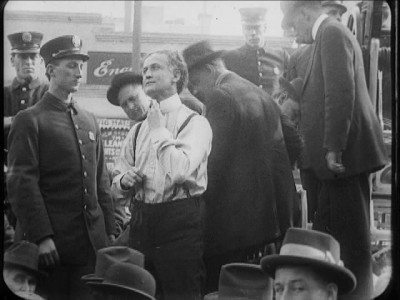
The highlights of the extras are ten short films of Houdini escapes and stunts made between 1907 and 1923 including several straight jacket escapes while hanging upside down from the top of a building or from a crane. This section runs a tad over 20 minutes all together and was fascinating to watch.
There's also a film of Houdini's brother, Hardeen performing one of Houdini's signature magic effects, the Metamorphosis on the back of a truck in NY City. A rare clip of Houdini being secured into a straight jacket before an escape is also included as well as a hilarious and surreal French film that was obviously inspired by Houdini: Slippery Jim.
Finally there's an Edison wax cylinder recording of Houdini introducing his water torture cell trick from 1914.
Final Thoughts:
This is a fantastic set. I can't imagine a more complete selection of Houdini films. This three disc set contains all of his surviving movies along with a clip from one that is lost. While some of the films aren't outstanding, I enjoyed watching all of them, even The Man From Beyond, and the best of them (Terror Island and The Master Mystery) were loads of fun. The thing that really sets this collection apart however is the copious bonus material. The rare films of Houdini escapes are engrossing and the liner notes are very complete. Kino has really outdone themselves with this release. Highly Recommended.
|



| Popular Reviews |
| Sponsored Links |
|
|
| Sponsored Links |
|
|
| Release List | Reviews | Shop | Newsletter | Forum | DVD Giveaways | Blu-Ray | Advertise |
|
Copyright 2024 DVDTalk.com All Rights Reserved. Legal Info, Privacy Policy, Terms of Use,
Manage Preferences,
Your Privacy Choices 
| |||||||