
| Reviews & Columns |
|
Reviews DVD TV on DVD Blu-ray 4K UHD International DVDs In Theaters Reviews by Studio Video Games Features Collector Series DVDs Easter Egg Database Interviews DVD Talk Radio Feature Articles Columns Anime Talk DVD Savant Horror DVDs The M.O.D. Squad Art House HD Talk Silent DVD
|
 DVD Talk Forum |
|
|
| Resources |
|
DVD Price Search Customer Service #'s RCE Info Links |
|
Columns


 
|
|
|
Dick Tracy RKO Classic Collection: Dick Tracy Detective; Dick Tracy V. Cueball, Dick Tracy's Delimma & Dick Tracy Meets Gruesome
B-movies get a bad rap. Yeah, they were made on the cheap to fill out a double feature, but that doesn't mean that they lacked artistic merit or were bad. Though some certainly were horrid, in the hey-day of the studio system B's were the training ground for up and coming talent as well as the place where falling stars found themselves working. Even though the cast and crew didn't rate the A-movies there was still a wealth of talent involved and the films often turned out very well, especially if they were made for a big studio. Unfortunately they are often over looked due to their meager beginnings. The Dick Tracy features fall into that category: a quartet of well made films that are classic Noirs but unfortunately largely ignored. VCI has now released all four of theses B-films in one set with a very nice image and informative introductions by Max Allen Collins.
Background:
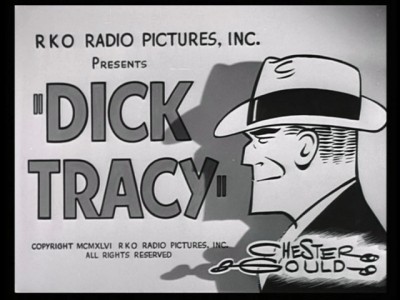
Dick Tracy started off as a newspaper comic strip in 1931 and was soon in papers around the country. The iconic police officer was optioned for films, being read by an estimated 350 million people at one point, but Hollywood didn't really know how to tap into comic characters at that time. Instead of giving a popular character a big budget and top talent as they are today, back in the depression comics were regulated to B features and serials. Such was the case with Dick Tracy. In 1937 the first of four Republic serials, aptly entitled Dick Tracy, premiered. Ralph Byrd played Tracy, as did in the three sequels, and while he looked the part none of these chapter-plays were very close in tone to the comic strip.
In 1945 RKO bought the rights to the strip and started on their own series of films. These were b-movie programmers, much to the chagrin of Tracy creator Chester Gould. Done on the cheap and not publicized very well, these films were closer to the comic strip however. With a lot of violence, some nasty villains, and darkly lit sets these films are noir thrillers that deserve more attention than they get.
Dick Tracy, Detective (1945): In this first film, Morgan Conway plays the square-jawed detective. It's a dark and sinister film that is actually much better (and more violent) than one would assume. Dick Tracy, a homicide detective, finds a series of murder victims who were all viciously butchered with a long, shape knife. The victims come from different social and economic backgrounds, and there seems to be nothing connecting them, although it seems clear that they aren't random crimes. When a psychic tells Dick that there will be 14 murders in all (the only part of the film that's a bit contrived) the master detective has to use all of his resources to track down the murderer, a disfigured maniac who goes by the name Splitface.
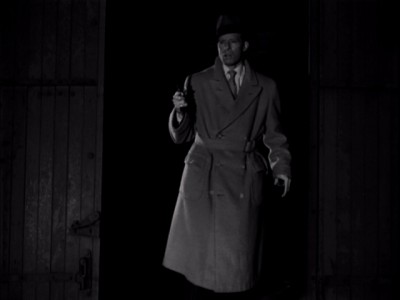
The villain, created for the movie and not part of the comic strip, could have been a Gould creation. With an eerie look and a vicious streak, Splitface is a cruel but entertaining villain, just the sort to test Tracy's mettle.
A good part of why this film succeeds so well is that it's an adaptation of the comic, but it doesn't try to recreate a comic panel on the screen the way Warren Beatty's big-budget version did. This movie is grim and gritty, like the best of Tracy's newspaper adventures, but tries to be realistic. While many of the comic's supporting cast is present, like Tracy's girlfriend Tess Trueheart (the wonderful Anne Jeffreys) and his partner Pat Patton (Lyle Latell) as well as the orphan Junior (Mickey Kuhn), the two-way wrist radio and other fanciful scientific devices that appeared in the strip were thankfully lost. This grounded the film in the real world and made it a police procedural with action elements.
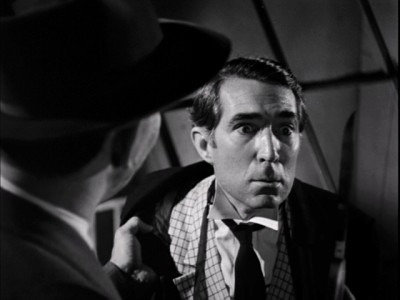
This film is rather violent, in the tradition of the great noirs. In one scene a man's throat is cut, he's thrown through a glass sky light and then tumbles down the flight of stairs that he lands on. Pretty gruesome stuff for the 40's.
The acting was good all around. Kuhn was great as junior, with a lot of pluck and the ability to think on his feet. Anne Jeffreys didn't have much to do as Tess but look pretty, and she did that with style and class. Morgan Conway didn't look like Tracy the way Ralph Byrd did, but he was a better actor. Conway has an intensity that fits the role well and he makes a good hard boiled detective. He didn't do so well in the softer moments of the film however. At one point he grabs Junior by the shoulders and smiles, and it looks like he's going to eat the poor boy. His rough Bogart-like face just didn't play well in the few comic scenes in the film.
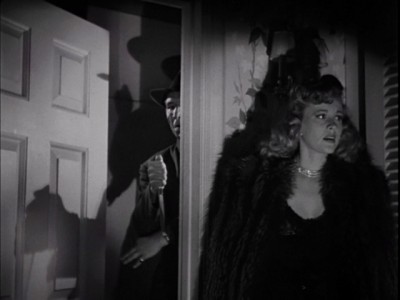
An excellent film, this is a true noir that's exciting and a lot of fun.
Dick Tracy Meets Cueball (1946): Conway returns for his second, and last, portrayal of Dick Tracy in the best film of the series. This time a small time crook, Cueball (Dick Wessel), is hired to steal some diamonds, which he does, but kills the courier in the process. With Tracy on their trail the people who came up with the plan are no longer interested in taking the diamonds and don't want to pay Cueball. The thug doesn't take that well, and starts killing everyone who he thinks is trying to double-cross him. With the bodies piling up and Cueball no closer to getting his money, Tracy has to act fast.
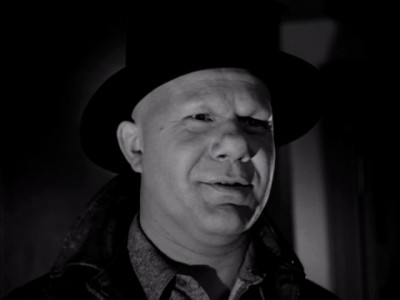
Another great noir, this film has a fantastic villain. Cueball is a dim-witted thug who is different from many b-movie baddies. Large, strong and of less than average intelligence, he's confused and uncertain of what to do most of the time. He knows he's being cheated by his partners, but he can't figure out what to do aside from threatening and killing them. You almost feel sorry for the guy especially at the end when he stoically meets a violent and unpleasant end. He's obviously out of his depth, not the criminal mastermind that Tracy usually runs up against.
This film also introduces another comic strip character to the series, Vitamin Flintheart (Ian Keith). Intended as comic relief, Vitamin was patterned after John Barrymore and is played with enthusiastic vim by Keith. His over the top and effeminate portrayal is amusing and fun but doesn't make the film silly or campy.
Dick Tracy's Dilemma (1947): Ralph Byrd returns to the role that he first played in four serials for RKO. This time Tracy is after a group of fur thieves who empty a dealer's vault and leave a dead night guard in their place. The owner seems helpful, but could this be an insurance scam? Tracy's not sure but his investigation reveals that the crimes were committed by an ex-con with a bum leg who is also missing a hand and goes by the name of...The Claw!
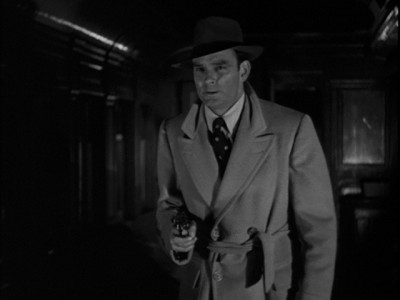
Byrd certainly looked the part of Dick Tracy. His jaw was pronounced and his smile was disarming. Compared to Conway however, his characterization wasn't quite solid. Byrd always seems to play this like this was a serial, where it's hard to take the situations seriously. Even in the more serious scenes, Byrd isn't as grim and determined as Conway was. He doesn't have much personality in this film either, playing the character by the numbers rather than trying to bring him to life. With this movie they also change the actress playing Tess to Kay Christopher who is attractive but doesn't have the screen presence of Jefferys.
This film is a definite come down from the preceding pair. For some reason Pat Patton, Tracy's bumbling side kick, is given much more screen time and an actual role in the movie. In the previous films his part was limited to getting knocked out and apologizing to Tracy. Here he's given a few tasks to help with the investigation, which he naturally messes up. While in the previous installments Patton came across as just a warm body, in this film he's an idiot. It's surprising that Tracy doesn't shoot him.
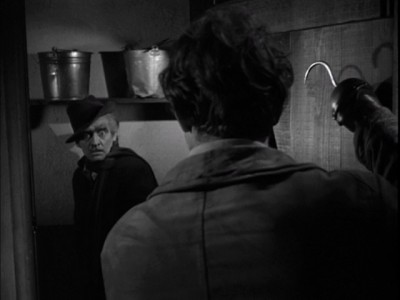
The action is a bit toned down too. Dick Tracy is investigating an insurance scam? Come on, that's so beneath him! While the Claw is a nice villain, he wasn't nearly as menacing as Cueball or Splitface and therefore less interesting.
This film isn't without its merits however. The direction was very good and there were a few nice flourishes that made the movie more exciting. In one scene the camera takes the POV of the villain as he kills a man. The ending fight between Tracy and The Claw was filmed well too, with shadows of the characters being emphasized in a very stylized way. When all was said and done however, this is the weakest entry in the series.
Dick Tracy Meets Gruesome (1947): The last entry in the series features Byrd once again filling the detective's shoes and pitting his wits against none other than Boris Karloff.
When an recently released convict, Gruesome (Boris Karloff), starts looking for work of the not-quite-legal kind, he stumbles upon a knockout gas in a scientists lab. The scientist thinks it's useless, but Gruesome knows better: He'll use it to knock everyone out in a bank and then rob it. His plan works well except for the fact that Tess Trueheart (this time played by Anne Gwynne) is in the bank and avoids breathing the gas. Her account of the robbery sets Tracy on Gruesome's trail.
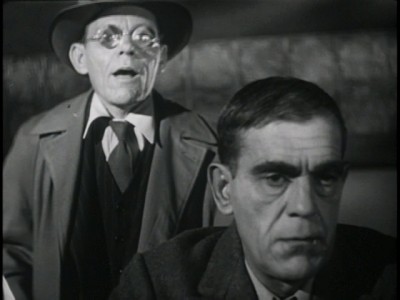
This was a step up from the previous entry in the series and not a bad film at all. Karloff, at a lull in his career, was still a great actor and made a magnificent villain. The worst part of the film was the secret paralyzing gas which would cause people to instantly freeze, even in mid step. This outlandish device made the film unbelievable and because of that it lost the edge that the other films have.
This film also features a lot of the silly names that Gould liked to use in his comic strip. There's a taxidermist named Y. Stuffem, a scientist with the moniker Dr. A Tomic, his assistant I. M. Learned, and a thug Lee Thal. While these are funny on paper, in a would-be film noir they just ruin the mood. This is the only one of the four that really isn't a noir, but it's still entertaining and worth a watch.
The DVD:
These four movies, which average a little over an hour each, come on two single-sided DVDs, two movies on each disc. They are housed in a single width keepcase with a page in the middle for the second DVD.
Audio:
These four films all come with a mono soundtrack that sounds like it has been cleaned up. There isn't any hiss or background noise at normal listening levels and I didn't notice any dropouts. The range is naturally limited and the bass particularly anemic, but the dialog was easy to discern and all the movies were easy to listen to.
Video:
All four of these films are presented with their original 1.33:1 aspect ratio, in glorious black and white, and they all look really good. The image is very clear and the lines fairly tight and the contrast is above average for a film of this age. Whites don't bloom and the blacks are solid. Some fine details are lost in dark areas, but this isn't a huge problem.
I have the previous Roan release of these films, which also look good, but I have to give the edge to this VCI release. The Roan prints have a bit of dirt and a few random spots, something that is very rare on these discs. In a side-by-side comparison the transfer on this set also looks just a little bit tighter, with some extra detail, if only a small amount. While there's not such a big difference to make it worth while upgrading, this is a nice looking set.
Extras:
All four of these films have intro's by Max Allen Collins, the author who took over the Tracy strip when Gould retired. These aren't very long but they are informative. He talks about the popularity of the Tracy strip, what Tracy's creator thought of the actors who played Dick, and talks about what he enjoys about the films.
Disc one also has a photo gallery, the first chapter of Dick Tracy Returns, a Republic serial, and trailers for The Vigilante (the DC comics hero) and The Master Key, a Universal serial.
On the second disc, there's also the first chapter to Dick Tracy's G-Men, a photo gallery, as well as trailers for the feature version of Dick Tracy's G-Men and FBI Girl. The later looks like a great film. As the preview proclaims it features "a man cruel enough to abuse a woman, a man clever enough to use a young girl's love to gain his ends." It stars Raymond Burr, Cesar Romero, and George Brent.
Final Thoughts:
These are a great set of film noir movies that are underappreciated. The first two are especially entertaining and would be discussed more with other noir films if it wasn't for its comic strip origins. This collection is boasts a good image and nice sound as well as some fun extras and a reasonable price. With some suspenseful moments and filled with noir elements, these movies are sure to appeal to fans of old-school crime films. Highly Recommended.
|



| Popular Reviews |
| Sponsored Links |
|
|
| Sponsored Links |
|
|
| Release List | Reviews | Shop | Newsletter | Forum | DVD Giveaways | Blu-Ray | Advertise |
|
Copyright 2024 DVDTalk.com All Rights Reserved. Legal Info, Privacy Policy, Terms of Use,
Manage Preferences,
Your Privacy Choices 
| |||||||