
| Reviews & Columns |
|
Reviews DVD TV on DVD Blu-ray 4K UHD International DVDs In Theaters Reviews by Studio Video Games Features Collector Series DVDs Easter Egg Database Interviews DVD Talk Radio Feature Articles Columns Anime Talk DVD Savant Horror DVDs The M.O.D. Squad Art House HD Talk Silent DVD
|
 DVD Talk Forum |
|
|
| Resources |
|
DVD Price Search Customer Service #'s RCE Info Links |
|
Columns


 
|
|
|
Stan Laurel Collection 2, The
Laurel and Hardy were one of the best, many would argue THE best, comedy teams to every ham it up in front of a camera. The shorts and movies they made are still making people roll with laughter today, nearly 80 years after they first teamed up. One of the surprising things about this duo is that they were an artificial creation. They didn't meet, come up with an act, and tour vaudeville like Abbot and Costello or Burns and Allen. They were thrown together as costars on a short, it did well, so they made another. Within a year they were billed as a comedy team, and Laurel and Hardy were born. But they were not equal partners. Stan Laurel always made twice as much money as Oliver Hardy because he did twice the work. While Oliver played golf after filming had wrapped up. Stan was still working; writing new gags, planning shots and supervising the editing of their films. But before these two comedic giants were brought together, they both had separate careers in comedy films. Now Kino, is association with the French company Lobster Films, have released a second two-DVD set of early Laurel solo work: The Stan Laurel Collection Vol. 2. Many of these are very rare and haven't appeared on DVD before. A true treasure trove for fans of silent comedy.
Mini biography of Stan Laurel:
Stan Laurel had been around show business his whole life. The son of an English theater actor, the young man would watch his father from backstage and soon was bitten by the acting bug himself. He joined the famous Fred Karno acting troupe in the mid teens, and was soon one of the group's leading actors. Karno, the man who trained a generation of English comedy actors, had a school for actors with lessons in prat falls and other comedy techniques and had several touring companies that would travel across England and the continent putting on shows. It was a great training ground for comedians, and since many of their shows were pantomime (due to an old English law that only allowed plays with dialog only in certain venues) this style of comedy was perfectly suited to silent movies. When the Karno company toured the United States Stan decided to stay in Hollywood, like another Karno star had a bit earlier, Charlie Chaplain.
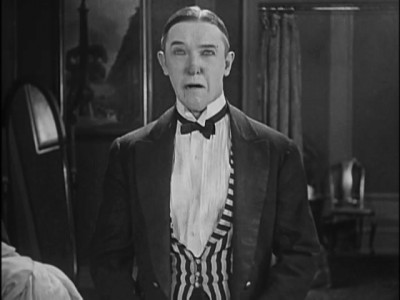
Stan played the American vaudeville circuit and then made a rough transition to film. He worked for several companies and ended up returning to the stage at several points. These early films are fun to watch not only for their comedic value (some of them are very funny) but also because you can see the Stan learning his trade as he goes along. Though many of them feel rushed and slapped together, you can see the seeds of great comedy in them.
Stan's acting style is also much different than the way he would portray his character opposite Oliver Hardy that would make him famous. In many of these films he uses exaggerated expressions and motions as a source of comedy. This is just the opposite of the much more subtle approach he would take in later films, where a simple quivering lip or double take could bring peels of laughter. He has a broad smile in many of these shorts where he shows all of his teeth; it wasn't until later that he developed the shy nervous grin that was so amusing.
Stan also derives comedy from situations that he would avoid in later years, chasing women for example. He's a very different character from the nice but dim persona he cultivated in the Laurel and Hardy shorts. In some of these early films he's outgoing and vivacious, in others inept, and in others creative. Yet you can see gags here that would be refined and repeated in his Laurel and Hardy movies.
These films also represent wide varieties of style with many different types of comedy and gags. There are straight slapstick films with Stan inadvertently causing mayhem in a public place, like Do You Love Your Wife?, and parodies of popular films such as in Mud and Sand and Rupert of Hee Haw. In Somewhere in Wrong Laurel even takes to playing a tramp (it is hard not to think of Chaplin) complete with a bittersweet ending. Some of these early films were a little rough though, without much of a plot. Just a series of gags strung together one after another, but that doesn't make them unfunny. Some of the short with the thinnest plots are the funniest.
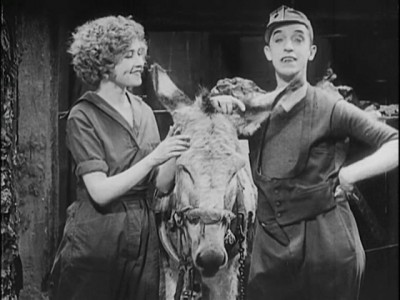
Ironically the way short comedies were made back in the mid 20's was both the reason for these films successes and failures. All of these films were made under a very tight schedule with a very small budget. The small comedy factories had to churn out at least a two-reeler each and every week, often more than that. This meant that the productions were rushed and this often caused poor production values and less well thought out gags. At the same time, this frantic schedule gave a lot of room for trial and error. If a gag fell flat, Stan would just note it and move on to the next film. It was during this period that Stan started writing and directing some of his shorts, which gave him the ability to experiment with different types of comedy, and work on the best ways to put a short together. He could adjust the pacing and work with the structure of his films. But not only did Stan spend a lot of time on the set working of gags, he would often be in the lab after the other actors had gone home helping the editor cut the film. (He personally supervised editing of all the Laurel and Hardy films up until 1940.) The lessons he learned here would be applied with great skill in the work he did with Oliver Hardy.
If you are only familiar with his Laurel and Hardy work, these films might seem a little different at first. The pacing and style is quite different, but they are still funny in their own right, and well worth watching.
DVD One:
Stan had a rough time starting in the movies. While appearing at the Hippodrome in LA in 1917, the former manager of Universal Studios, Isadroe Bernstein, signed Laurel to make comedies for a new production company he was forming. He made one (or possibly two) films for Bernstein before the newly formed comedy unit was dissolved. He then went to Universal for a couple of months (though the four films he made there would be released over the period of a year) and was back in vaudeville by the end of that same year.
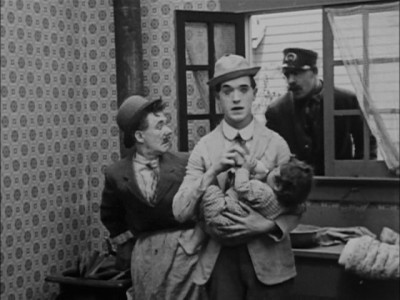
In 1918 Hal Roach was in a jam. He had signed a contract with Pathe to provide a series of films for them to release staring Toto, a popular clown. The comic quit however when there were still five pictures left in the contract, and Roach needed a star and quick! A director on Roach's lot had seen Laurel's stage work and suggested him. A screen test later Stan Laurel was back in the movie business. Three of the five films that Laurel made for Roach are included in this collection (which is arranged by release date, not production date.)
Do You Love Your Wife? - 1918- 13 Min.: The earliest Stan Laurel movie still in existence. (It was filmed in mid-June 1918.) This has Stan playing a janitor who basically makes a mess of things. A typical slapstick piece that has some funny bits.
Just Rambling Along - 1918 - 9 Min.: A knockabout film with Laurel playing a down on his luck man who manages to get a dime and runs into a restaurant to eat. A woman he flits with switches checks on him and he doesn't have enough money to pay. Like other comic films of the day, this is more a series of gags with a loose framework than a real narrative story. Laurel does well and resists the temptation to overact or ham it up.
Hustling for Health 1919 - 12 Min. (Also appears on The Lost Films of Laurel and Hardy Volume One.): The final film Laurel made with under his initial Roach contract.
After his five film contract was up, Laurel was out of work again. He soon signed on with one of the most popular comics of the day, Larry Semon. Larry had made his name with one reel films and was expanding to two-reelers. He hired several new actors to help fill out his comedy company and one of those was Stan.
Huns and Hyphens - 1918 - 19 Min - Semon's first two reeler. It's interesting because Stan only has a bit part as a heavy. Not much of him in this film at all.
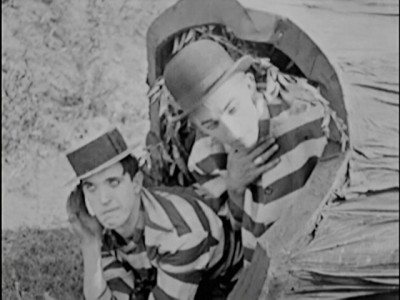 Frauds and Frenzies - 1918 - 21 Min. - The third film Laurel made with Semon, (the second was Bears and Bad Men which is not available on home video to the best of my knowledge) shows a dramatic improvement in Stan's position in the company. He's no longer a background bit-player, but an equal to Semon's. The two play a pair of convicts on a chain gang who manage to escape and head for their girl's place. If only they knew her father was the warden.
This is one of the funniest shorts included in this collection. Semon is wonderful, and Stan is able to hold his own, and more, with the popular comic. The two work very well together and have great timing. It's sad that this is the last time they would work together.
After this short was made, Semon closed down his studio due to the influenza epidemic that was sweeping the country at the time. When he opened it again (in November of 1918) he didn't try to recruit Laurel again. It's hard to imagine why, since the final film they made is so uproariously funny.
After this Stan went back to vaudeville. He'd stay there for three years and only made one film at that time (The Lucky Dog the beginning of a series that never sold.) In 1922 G.M. Anderson (Broncho Billy) came calling and set up a series of films for Stan.
The Egg 1922 - 22 Min. - a great comedy that works well. Stan play Humpty Dumpty aka The Egg and uncovers a plot to frame the president of the lumber company where he works. The foreman is a more pressing problems however, as he doesn't like it when people are late to work. Stan is later made, against his will, the leader of a movement to unionize the plant. He gives a wonderful speech ("A bird in the hand gathers no moss") and later manages to save the president and win the affections of his daughter.
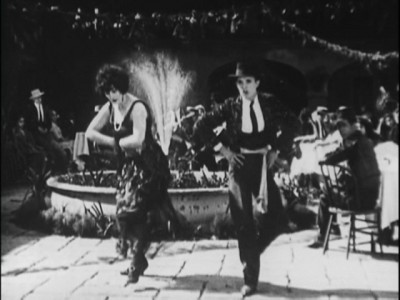 Mud and Sand - 1922 - 29 Min. - This is Laurel's first film parody, a take off of Valentino's Blood and Sand. It works better if you've seen the original, but even if you haven't this is a riotous film. The scene where Stan watches the bullfighters enter the ring, only to be carried out moments later on a stretcher is great. Just wait until Stan goes in to fight the bull. The tango he does later in the film is also a riot.
This was Stan's last film for Anderson, although he still had two films left to go in the contract. It has been suggested that the distributor, Metro, canceled the contract due to poor sales.
Stanley went back to Roach again, and this time starting out as a star. He originally started out making one-reelers but half way through 1923 he was promoted to two reelers.
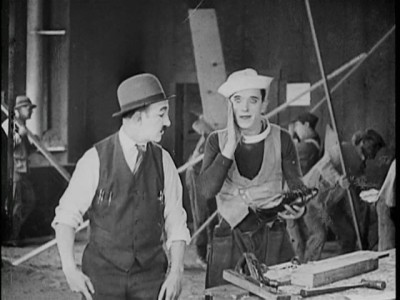 The Noon Whistle - 1923 - 11 Min: Very similar to The Egg, this involves the foreman at a lumber yard who has to whip the workers into shape, including one especially lazy person, Stan. It doesn't work quite as well as the other comedy, but it's still an interesting piece.
White Wings - 1923 - 11 Min.: Accidentally grabbing the wrong cart, Stan is thought to be a baby stealer.
Under Two Jags - 1923 - 11 Min.: The first film Stan made with the new Roach contract (although released later) this is a parody of the film "Under Two Flags." Though I've never seen the original, this is still an entertaining romp with Stan playing a man who enlists in the French Foreign Legion and then falls for a princess.
Pick and Shovel - 1923 - 13 Min.: Eh. One of the weakest shorts in the set. Stan is a lazy worker in a mine this time, and has trouble with the foreman. It's too similar to The Egg and Noon Whistle, and the gags don't work nearly as well.
Kill or Cure - 1923 - 13 Min.: This is a good film to wrap up disc one. Stan is a door-to-door salesman selling patent medicine. He has horrible luck, but he keeps on trying.
Disc 2:
Short Orders - 1923 - 12 Min: Another fairly plotless film, Stan is working as a cook/waiter in a diner and is fairly inept. There were some funny gags, but not the best film in this collection.
A Man About Town - 1923 - 12 Min.: Stan asks a street car conductor how to get to his destination and the man simply tells him to follow a woman, as she's going to the same place. Unfortunately Stan follows another woman in the same dress all around town. A cute picture.
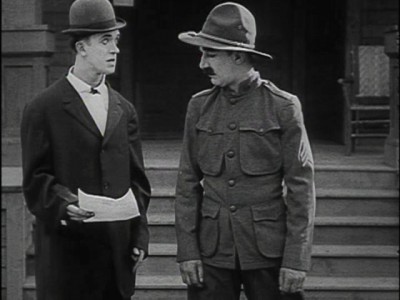 Smithy - 1924 - 24 Min.: Laurel's first two reeler with Roach it was apparently also released as a one-reel film too. I'd seen the shorter version somewhere before, and the whole two reels plays much better. A very amusing film, Stan starts out in the army, gets discharged, and eventually ends up working construction with predictable and hilarious results.
Rupert of Hee Haw - 1924 - 23 Min.: A parody of the now forgotten film Rupert of Hentzau, this mixed-up identity film plays well, though I'm sure it would be even more humorous if I'd seen the original. Stan plays a dual role, as both a drunken King and a traveling salesman, Rudolph, who is the king's double. When the royal court has enough of the King's drinking, they hustle him out of the castle and put the salesman in his place. The only problem is that Rudolph is even more of an idiot than the king is when drunk.
Stan made one more film for Roach, Short Kiltz, before starting to work for independent producer Joe Rock. There are a number of stories why this happened, and the truth will probably never be known. Laurel and Hardy biographer Roe Stone says that the most likely reason is that Stan's wife, Mae, was a source of tension on the set and the "Stan's personal life was affecting his ability in front of the camera" so Roach fired him. I find the latter a little hard to believe, since Rupert was a good film. Granted Short Kiltz is bad, but that was because the gags didn't work rather than a flaw with Laurel's acting or timing. In any case, in 1924 Stan was a star and went to work for Rock.
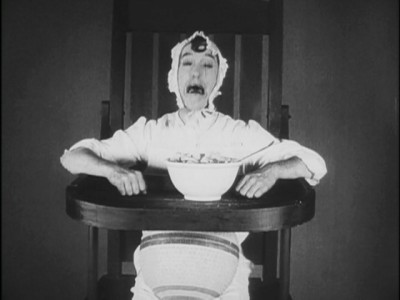 Mandarin Mix-Up - 1924 - 21 Min.: Stan plays a baby in this film (on an oversized set,) and quite effectively too. When the baby is put in the laundry, the Chinese cleaners who discover him decide to raise him as one of their own. He grows up thinking he's Chinese, but when the Tong comes after him he has to run for his life. A nice amusing story.
Detained - 1924 - 14 Min.: This is a two reel film, but only this 14 minute version still exists so it's hard to tell how it would have played in the longer version. This cut is funny enough, with Stan playing a convict who tries to tunnel out of prison, but it doesn't have that spark that some of the earlier films did.
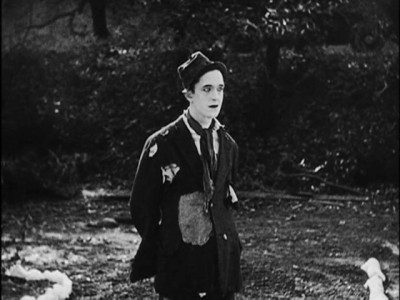 Somewhere in Wrong - 1925 - 22 Min.: Stan Laurel plays a tramp who comes to a rural family's aid when an unscrupulous landlord tries to foreclose on their property. This is a great film that works on a lot of levels. The reason it isn't better known is probably because Laurel plays a tramp, which puts the movie in the large class of Chaplin knock-offs. While Laurel doesn't look like Chaplin's character he does slow down the action quite a bit. This film isn't hectic and more attention was paid to the plot than in most of his films at Roach. In this film you can see the genesis of the character that he would play so successfully opposite Oliver Hardy. No mugging for the camera or acting wild in this film, just solid comedy.
Pie-Eyed - 1925 - 20 Min.: Watching this film right after Somewhere in Wrong is a bit of a let down. While the film is funny in parts, it doesn't have the charm that the earlier film did. In this movie Stan is a drunk. He staggers around through the film in a humorous way, but it does get a bit tiresome by the end. The plot, what there is of it, involves Stan getting kicked out of a night club and then taken home by the police....but to the wrong house, something that Stan doesn't realize even after he climbs into bed with another man's wife.
Stan would make five more film for Joe Rock through mid-1925. Then, although Stan had a five year contract, Rock shut down production for the rest of the year. He had a 12-short contract with his distributor, and having made a dozen films, he could dole them out once a month for the rest of the year and just pocket the money the distributor was paying for them. This meant that Stan was out of work for several months, and that's never a good thing.
Laurel returned to Roach. Not as an actor though, but as a writer and director. He directed and wrote shorts for James Finlayson, Clyde Cook, Mabel Normand, Theda Bara, and even a young heavy named Oliver Hardy. For contractual reasons, he wasn't supposed to appear in front of the camera. After all, he was still under contract to Joe Rock.
Get Em Young - 1926 - 23 Min.: When one of the supporting actors for this Stan Laurel-penned film was injured (Oliver Hardy as luck would have it), Stan took the role. It's not a great comedy, nor an important role, but it does jump start Laurel's film career. Hal Roach liked what he saw and told Laurel to write parts for himself into his future scripts. That he did and he started to appear more and more in Roach films through 1926 and '27. Then in June of 1927 director Leo McCarey had the idea of making Stan Laurel and Oliver Hardy a permanent comedy team for his film The First 100 Years. The rest, as they say, is history.
The DVD:
Audio:
The audio track is comprised of a piano music played by Neil Brand. The music he chooses fits nicely with the films. There is no hiss or distortion, and the music is nice and clear. A good sounding DVD.
Video:
The video quality was excellent in general. Of course, it does vary from film to film, but even the worst examples looked good, and the best prints were outstanding. Some of the films are a little bright, like Frauds and Frenzies, and there are spots and scratches on most of the prints that were used. Some had problems with contrast, like Mud and Sand which was a bit dark. Films like The Egg look fantastic however and I was very pleased with the overall look of this shorts. I didn't notice and ghosting due to a PAL-to-NTSC conversion, something I was expecting. All in all, these films look great.
Extras:
There are no extras. With such a wonderful assortment of films however, the set doesn't need them.
Final Thoughts:
This set is still highly amusing from an entertainment standpoint, and very interesting historically. These movies allow you to see a comic genius come into his own. Kino and Lobster have done a wonderful job with the transfers and packaging of this collection. Well worth picking up, this set comes Highly Recommended.
|



| Popular Reviews |
| Sponsored Links |
|
|
| Sponsored Links |
|
|
| Release List | Reviews | Shop | Newsletter | Forum | DVD Giveaways | Blu-Ray | Advertise |
|
Copyright 2024 DVDTalk.com All Rights Reserved. Legal Info, Privacy Policy, Terms of Use,
Manage Preferences,
Your Privacy Choices 
| |||||||