
| Reviews & Columns |
|
Reviews DVD TV on DVD Blu-ray 4K UHD International DVDs In Theaters Reviews by Studio Video Games Features Collector Series DVDs Easter Egg Database Interviews DVD Talk Radio Feature Articles Columns Anime Talk DVD Savant Horror DVDs The M.O.D. Squad Art House HD Talk Silent DVD
|
 DVD Talk Forum |
|
|
| Resources |
|
DVD Price Search Customer Service #'s RCE Info Links |
|
Columns
  


 
|
|
|
Space Angel Collection 1
Cambria Productions is best known for their so-bad-its-good 'cartoon' Clutch Cargo. That show was only a cartoon in the most basic sense. There was almost no animation at all. Instead of having to do to the cost and expense of animating lip movements, the lips of the voice actors were superimposed over the static facial images (using the company's patented Synchro-Vox technique.) Actor's hands would be filmed turning dials and opening doors, cardboard cutouts would slide across the frame to illustrate movement and (reportedly) cigar smoke was blown in front of the camera lens to create fog. Yes it was as bad as it sounds. Even as a kid I used to laugh at the simple stories, horrible dialog, and dreadful production values.
When I heard that VCI was releasing Cambria's second children's series, the little seen Space Angel, I jumped at the chance to review it. I'd heard of the show and assumed it was just as inept and unintentionally hilarious as Clutch Cargo. Much to my surprise I discovered a fun show with some above average art and surprisingly intelligent plots for a children's show.
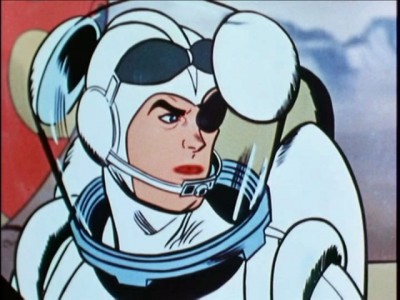
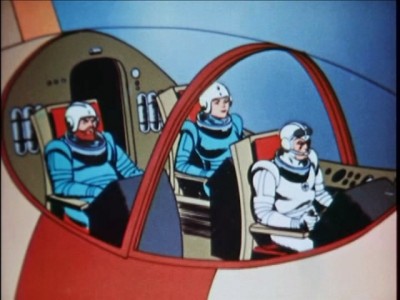
Set in the not too distant future, this SF children's program centers around Scott McCloud who is secretly the effeminate sounding Space Angel. He commands the space ship Starduster which is manned by Taurus, the mechanic with an unbelievable Irish accent, and Crystal the navigator, science expert. On Earth is Dr. Mace, Crystal's father and the inventor of many of the gadgets that McCloud uses. He's available for a quick video-phone call when things get tight and always has the answer to any problems the crew faces.
This was a syndicated show, and each story was comprised of five episodes each running five-minutes. Stations could show one a day Monday through Friday or group them together and program them as a half-hour block. Each short episode ends with a cliffhanger to make sure kids would tune in the next day.
Initially run from 1962-64, this shows was surprisingly sophisticated given the time constraints and audience. The stories incorporated some real science on occasion (when landing on a planet in one episode, the crew leaves the mother ship in orbit and takes a lander down to the planet, a pretty advanced idea in 1962) and the plots, while simple, never talked down to children. The characters used futuristic terms realistically, as if they've been using them for years and never just added the term "space" in front of a word to make it sound advanced. Many SF shows at this time felt the need to define all of the terms in the same sentence that lead to awkward and unrealistic lines like "Hand me the space wrench, a tool that can open the stuck hatch in an instant!" Space Angel gets kudos for avoiding such muck.
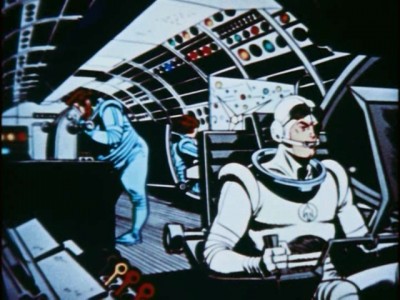
While the stories are good, the real thing that sets this apart from Clutch Cargo and indeed other cartoons of the time are the wonderful designs created by comic artist extraordinaire Alex Toth. Toth had already made his name among comic aficionados with his Zorro series for Dell (along with westerns and other magnificently illustrated comics) before turning to TV. Since Space Angel consisted mainly of static panels his art made this cartoon look much better than the other quickly animated shows presented on TV.
But what about the hokey Synchro-Vox moving lips? Yes, it's still here but the people at Cambria improved the technique significantly after their experiences with Clutch. First and foremost they added make-up around the actor's lips to match the color of the drawn characters. The jarring, surreal white lips of Clutch were replaced with something that at least matched. They also de-emphasized the technique to a large extent, rarely showing the moving lips in close up. The final improvement was that they used the technique sparingly. The person talking was often facing away from the camera or had his mouth covered by a space helmet.
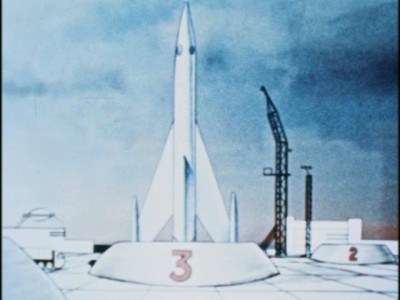
Other aspects of the non-animated cartoon (Cambria actually called the technique 'motorized motion') were also improved. A multi-plane shooting technique (similar to the way The Adventures of Prince Achmed (1926) was filmed) was employed that would give the illusion of depth to a scene. While cardboard cutouts were still pulled across backgrounds, they were physically removed from the background cell and would cast shadows. There was also a foreground cell layer that would allow the moving object to pass behind some trees and rocks while passing in front of others. It works quite well and creates a nice illusion.
The main gripe I have with this collection is that it doesn't start at the beginning of the show and proceed from there. It's a random sampling of episodes, though all of them are presented in full story form. There is no continuity between episodes, so none of the story is lost, but it is too bad they are so many gaps.
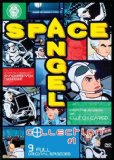
The stories presented on this disc are:
Episodes 16-20 - Incident of the Loud Planet
Episodes 21-25 - Expedition to a New Moon
Episodes 41-45 - The Slave World
Episodes 46-50 - The Exiles
Episodes 66-70 - Visitors from Outer Space
Episodes 71-75 - Rescue Mission
Episodes 91-95 - The Fugitives
Episodes 116-120 - The Donovan Plan
Episodes 141-145 - They Went That A'Way
The DVD:
Audio:
The mono soundtrack sounds pretty good. The range is very limited, which is only natural given the age of the show, and there was a bit of distortion in a few sections. This was fairly minor however. The dialog was clear and easy to discern and there was not any background noise at normal listening levels.
Video:
The color fullscreen image looks very good. The picture has been restored and the colors are vivid and the blacks are dead-on. There is some grain in the picture and a spot or two in every episode, but overall this show looks great.
On the digital side of things the show also looks wonderful. With nearly four hours of shows squeezed onto a single disc, I was afraid that aliasing and blocking would significantly mar the image. That wasn't the case however. With so little actual motion in the show, the MPEG-2 compression was very efficient and the show was reproduced without compression artifacts.
Extras:
The only extra is a nice 19-minute interview with Margaret Kerry. She was the model for Tinker Bell in Disney's Peter Pan as well as the voice for Crystal in Space Angel. She covers her whole career from the start, and relates how she got the part of Tinkerbell as well as how she was 'filmed' for the role. She talks about Clutch Cargo at length (she played Spinner and several other roles in the show) including how they made the program, the budget ($3600/for each four minute episode) and some of the reaction the series received. Oddly enough she does not discuss Space Angel at all. The interview does end abruptly, so I assume part two and her recollections from this series will be on the next collection.
Final Thoughts:
This was a surprisingly fun show. I really had low expectations when I popped the disc in and was pleasantly shocked at how good this program actually is. With a retail price of only $14.99, and available for much cheaper on-line, this is a fantastic bargain. If you're a fan of early animation, especially that with a SF theme, this is Highly Recommended.
|



| Popular Reviews |
| Sponsored Links |
|
|
| Sponsored Links |
|
|
| Release List | Reviews | Shop | Newsletter | Forum | DVD Giveaways | Blu-Ray | Advertise |
|
Copyright 2024 DVDTalk.com All Rights Reserved. Legal Info, Privacy Policy, Terms of Use,
Manage Preferences,
Your Privacy Choices 
| |||||||