
| Reviews & Columns |
|
Reviews DVD TV on DVD Blu-ray 4K UHD International DVDs In Theaters Reviews by Studio Video Games Features Collector Series DVDs Easter Egg Database Interviews DVD Talk Radio Feature Articles Columns Anime Talk DVD Savant Horror DVDs The M.O.D. Squad Art House HD Talk Silent DVD
|
 DVD Talk Forum |
|
|
| Resources |
|
DVD Price Search Customer Service #'s RCE Info Links |
|
Columns
  



 
|
|
|
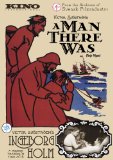
Man There Was / Ingeborg Holm, A
Kino // Unrated // July 29, 2008
List Price: $29.95 [Buy now and save at Amazon]
The Films:
You can trust Kino to search out and bring to home video quality films that are little know in the US. Their latest releases are a pair of DVDs containing films by the influential, but greatly ignored Swedish director Victor Sjöström. The disc at hand contains two of his features, 1917's A Man There Was (Terje Vigen) as well as his early film Ingeborg Holm (1913). (A review of the other disc containing The Outlaw and His Wife as well as a documentary on the actor/director can be found here.) While the first feature is clearly the better film, both of these are interesting dramas that would go well in a collection of early cinematic achievements.
Victor Sjöström is best known as an actor, most famously for his appearances in Bregman's Wild Strawberries. Though he started out as an actor, he was also a director in the early days of film. His silent movies started the golden age of Swedish film, and were quite sophisticated for their time. Sjöström was one of the first to introduce realism into film. His movies often involved psychologically complex characters and featured natural settings which played an important role in the films. His work set the stage for the German bergefilm (mountain film) genre as well as influenced such directors as Ingmar Bergman and Carl Theodor Dreyer.
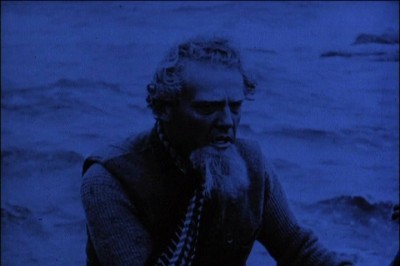
The first film presented on this DVD is A Man There Was, often cited as the film that started Sweden's golden age of film making. Based on a poem by Henrik Ibsen, the movie tells the story of a sailor, Terje Vigen (played by Sjöström himself). After returning home from a long journey at sea, Terje discovers that his wife has had a child. He's overjoyed at the discovery and spends some time at home with his new offspring. Before too long however war breaks out (the Napoleonic Wars) and Norway is under a blockade by the British. When the crops fail that summer the people start to starve.
With his wife and child desperately in need of food, Terje takes a small row boat and runs the blockade. He manages to buy three sacks of corn at a port in another country, but on the way back, when he's within sight of his town, he's spotted by a British Man-o-war. They fire on Terje and eventually sink his skiff. Taken into custody, he begs for his family, but his pleas fall on deaf ears. He's taken to jail and there he stays.
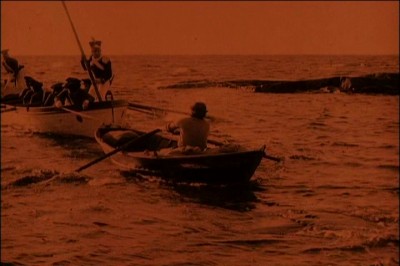
Five years pass. Eventually the war ends and Terje is released and taken back to his home. Upon returning however he discovers that his wife and child were not as lucky as he was. They died during the famine. Terje turns cold and bitter, missing his family, until one evening when a sloop accidentally wanders too close to the rocks near the shore. Terje takes his small boat to their rescue and promises to steer the vessel through the treacherous waters. The captain promises him a fortune if he can do it, but when Terje looks at the man in charge he recognizes him: it's the same captain who refused to let him go to his wife and child those many years ago.
It's easy to see why this film made such a splash (no pun intended) when it was released. The ocean scenery is beautiful; something that you'd expect in a travelogue or nature documentary from the time, but Sjöström added a strong drama to the striking images and crafted a very powerful film.
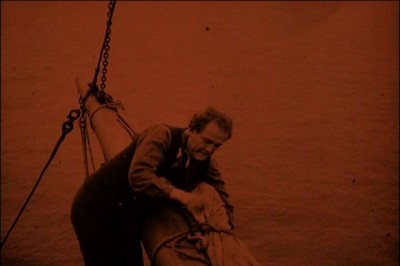
Though the intertitles, lines from Ibsen's poem, aren't as striking as they could be, the acting is first rate. Sjöström is way ahead of his time, performing his role in an understated way that makes this film feel a decade or two ahead of its time. When he returns to the house he used to live in with his wife and child after being in prison for half a decade and discovers someone else living there, he's worried but curious. He's almost afraid to ask what happened to his family, and when he finds out his reaction is to stare and drop the parcel that he's holding, and then collapse to the floor. He doesn't clutch at his chest and wave his arms, he just looks terribly sad and that look is all he needs. There's no hint of melodrama in this film, just heartfelt emotion.
The second film on the disc is Ingeborg Holm, which serves to show how much Sjöström grew as a director in the three years between these two films. The story, based on a book by Nils Krok, centers around the title character, Ingeborg Holm, played with affection by Hilda Borgström.) As the movie opens Ingeborg lives a wonderful life. She's married to a successful man who runs a local store and has loving children. All of that changes suddenly when her husband takes ill and dies. Ingeborg is left running the shop, but she's not cut out for it and the loafing staff along with a bad loan soon forces her into bankruptcy. She is sent off to the poor house, which is bad enough but what makes matters worse is that she's separated from her children. They are placed in foster homes and when Ingeborg hears that her daughter is ill, she plans to escape.
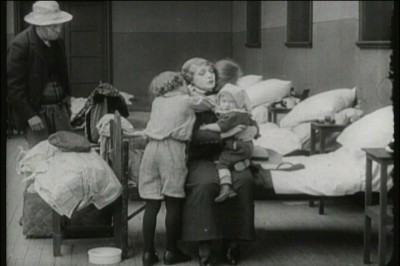
While this movie had a lot of drama and was not overdone the way some silent films are, it was still a bit staid and sedate for my tastes. There are few exterior scene, the things that bring The Outlaw and His Wife and A Man There Was to life, and the camera's lack of movement and fewer editing cuts, something not uncommon in 1913, really lessens the impact of the dramatic scenes.
Having said that, Hilda Borgström does a wonderful job in her role. Like a Swedish Lillian Gish, she's able to convey her suffering through body language rather than exaggerated movements. Her performance saves the film, and makes it worth checking out.
The DVD:
Audio:
The first film comes with a lovely piano score composed and performed by Donald Sosin. He always does a wonderful job, and this movie is no exception. (I almost wish he'd mess up and create a horrendous soundtrack so I'd have something interesting to say.) The second feature has a score by David Drazin, which also suited the movie well. Both scores accent the action on screen without becoming too overt or distracting. Being recently recorded, there are no audio defects audible at normal listening levels.
Video:
A Man There Was was considered lost for many years, but a tinted (!) print was discovered in 2004. A negative was made from that, and this DVD features a print made from that negative which was then tinted. I thought the tinting was too heavy at times, the nighttime blue obscured details and made it hard to see what was going on, but aside from that the image looks very good. I didn't notice any nitrate decomposition and though there were specs and some print imperfections there were fairly rare. The image had good contrast and the level of detail was very good aside from the night scenes.
Ingeborg Holm didn't look quite as good, though it is still a nice looking transfer. It looks like this print was a few copies away from the original negative, as the image was fairly soft for most of the film and not as distinct as it could have been. The contrast was okay, but some of the highlights were washed out and whites would occasionally bloom. There were a few specks too, and one section has some decomposition. Overall this was still a nice looking print, just not exceptional.
Extras:
There are photo galleries to both films, but no other bonus features.
Final Thoughts:
A Man There Was is an excellent film that has a lot of drama as well as some wonderful scenery. After watching it, it's easy to see why Sjöström is such an influential director. Ingeborg Holm was also a nice film, though it was much more sedate in tone and direction and didn't jump off the screen like Sjöström's later film does. This disc is a nice double feature and well worth seeking out. Recommended.
|



| Popular Reviews |
| Sponsored Links |
|
|
| Sponsored Links |
|
|
| Release List | Reviews | Shop | Newsletter | Forum | DVD Giveaways | Blu-Ray | Advertise |
|
Copyright 2024 DVDTalk.com All Rights Reserved. Legal Info, Privacy Policy, Terms of Use,
Manage Preferences,
Your Privacy Choices 
| |||||||