
| Reviews & Columns |
|
Reviews DVD TV on DVD Blu-ray 4K UHD International DVDs In Theaters Reviews by Studio Video Games Features Collector Series DVDs Easter Egg Database Interviews DVD Talk Radio Feature Articles Columns Anime Talk DVD Savant Horror DVDs The M.O.D. Squad Art House HD Talk Silent DVD
|
 DVD Talk Forum |
|
|
| Resources |
|
DVD Price Search Customer Service #'s RCE Info Links |
|
Columns
  


 
|
|
|
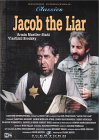
Jacob The Liar
The story of the Holocaust has been told from many different angles, but the approach that East German director Frank Beyer took in his 1974 film Jacob the Liar (spelled Jakob the Liar in the film's credits) must have seemed especially brave. At times this tale (which won the best foreign language Oscar) of a simple Jewish ghetto resident who innocently fabricates a story about having an illegal radio on which he hears tales of the approaching Russian army uses different types of comedy: Sweet humor, sardonic wit, black humor, and straight deadpan. A few films have approached this subject matter with humor since, but Beyer's original doesn't go for the overt sentimentality of Roberto Benini's emotional Life is Beautiful or the maudlin obviousness of the Robin Williams remake Jakob the Liar. Instead, Beyer's film is dry and mostly unsentimental. It approaches its material, even the comedy bits, with a sobriety and a shuffle that underlies the hopelessness of the situation.
What makes the mundane, lifeless existence of the Jews under Nazi control even more clear is Beyer's sprinkling of the film with bits of fantasy and remembrance of times past. These sequences employ a beautiful color saturation that the bulk of the film replaces with sepia toned drabness. These stylistic touches are rare enough that they don't give the impression that the film is trying to skirt the life-and-death issues at hand, but they do open the look of the film up enough that there is no question of whether or not these prisoners know what they're missing.
Part of what makes the film so powerful is the way the cast consistently underact. Vlastimil Brodsky is exceptional as Jacob. His sleepy-eyed, weather beaten face betrays the hardness that life under these conditions has given him. In flashbacks to his former life, however, Brodsky transforms to a different person, not just in wardrobe and make-up but in the way his entire physical presence appears. He straightens up and beams. Similarly, his friend Kowalski (Erwin Geschonneck) is seen to be falling apart in his current condition. Jacob's lies give Kowalski hope, however, and his demeanor changes noticeably. When the truth is revealed later on the transformation becomes visible. He practically shrinks at the news. Manuela Simon plays Lina, a small parentless child who lives alternately with different residents of Jacob's building. Her sweetness and innocence are so strikingly at odds with where she lives that just simple acts like her listening to a story about a princess are heartbreaking.
(One note: Noted character actor Armin Mueller-Stahl is given top billing on the packaging, but his role is minimal.)
When dealing with such an impossibly huge subject it's easy to get caught up in morals and lessons. By approaching the material from such a seemingly small, personal viewpoint Beyer was able to really drive at the tragedy of the Holocaust. Through the sudden, sickeningly sad ending, Jacob the Liar is one of the subtlest, most effective films ever made on this subject.
VIDEO:
The full frame picture reflects the drabness of the original look, although the image looks to be a little worn and faded beyond Beyer's intent. There is a bit of damage, including one incident of missing frames at a particular inopportune moment (during a pratfall). Still, considering that the film has probably not been well preserved it looks acceptable.
AUDIO:
The German stereo audio track is fine, if modest. Voices are clear and the spare score sounds fine. There are subtitles in English, Spanish, French, and Hebrew.
EXTRAS:
Buried in the director's bio is a feature simply called "interview" which is actually an hour long interview with the director that includes a very generous portion of clips from his nearly half century career. Many of the films look fascinating, including the black and white films like Star-Crossed Lovers and they show the director returning to certain themes again and again: War, fascism, lack of freedom. Beyer is articulate and intelligent and illuminates his complex career well. The piece is in German with English subtitles.
There is also a 12 minute montage of clips from other films produced by East Germany's DEFA studio. Edited in such topics are Anti-Fascist and Post-War, this segment gives a good impression of a film company with a mission to produce enlightening and challenging work. Hopefully more of these films will find their way onto DVD.
FINAL THOUGHTS:
Jacob the Liar is a beautiful, simple film that doesn't attempt to tell more of a story than it can handle in its short running time. Instead, it sketches out a few interesting characters trapped in a life that is both deadly and mundane and, through their very human emotions, makes a statement about how all people need even the slightest glimmer of hope to survive.
|



| Popular Reviews |
| Sponsored Links |
|
|
| Sponsored Links |
|
|
| Release List | Reviews | Shop | Newsletter | Forum | DVD Giveaways | Blu-Ray | Advertise |
|
Copyright 2024 DVDTalk.com All Rights Reserved. Legal Info, Privacy Policy, Terms of Use,
Manage Preferences,
Your Privacy Choices 
| |||||||