
| Reviews & Columns |
|
Reviews DVD TV on DVD Blu-ray 4K UHD International DVDs In Theaters Reviews by Studio Video Games Features Collector Series DVDs Easter Egg Database Interviews DVD Talk Radio Feature Articles Columns Anime Talk DVD Savant Horror DVDs The M.O.D. Squad Art House HD Talk Silent DVD
|
 DVD Talk Forum |
|
|
| Resources |
|
DVD Price Search Customer Service #'s RCE Info Links |
|
Columns


 
|
|
|
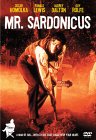
Mr. Sardonicus
The odd man out of William Castle horrors, Mr. Sardonicus is a somewhat lumpy gothic tale that builds slowly to one scary jolt that colors the whole film. Its uneven screenplay and poor production values prevent the good performances from adding up to much, and it finally becomes less than satisfying. But save yourself for that one big scare, and it may be one you'll never forget.
Ray Russell's original Playboy short story was an exercise in stuffy gothic mood, a kind of ribald tale where substituted cruelty for sex. Russell purposely affected his prose to make it seem as if it had been written in 1900. Without that sensibility, the basic story points play like 1930s movie clichés. Any film adaptation requires a fine visual edge to create the right mood, a vital factor which William Castle's meagre budget doesn't even attempt.
Shot back-to back with Homicidal, Mr. Sardonicus does the story by the numbers and very, very cheaply. Of Castle's later horror tales, this is his first period piece, and the under-produced sets look more like Gower Gulch than Moldavian baroque. The walls are blank, the lighting flat; exteriors have the look of sagebrush piled up against a badly painted sky backdrop. Stockshots are used to establish London.
To a degree, the actors compensate. Guy Rolfe (Ivanhoe, The Stranglers of Bombay) makes good use of his voice. Audrey Dalton (The Monster that Challenged the World) is betrayed by a script that gives her no worthwhile dialogue, and makes her behave toward the hero in a loving manner one moment, only to say oblique mysterious lines the next. Ronald Lewis (Scream of Fear) does a good job of not appearing too unflappably dull. The script is an obvious stack of stock situations and conventions without much depth or point.
Top-billed Oscar Homolka's Krull character at least has a character with some potential surprises, gleefully sticking leeches onto Lorna Hanson's face. The torture scenes are a little silly, with Krull a closet De Sade who enjoys verbally tormenting his victim. His dialogue crudely suggests he'll put the bloodsuckers on Hanson's various private parts, a detail that adds an infantile sickness to the whole irrelevant subplot.
As in The Fly, the hero spends a lot of boring screen time waiting patiently to hear the mystery behind Sardonicus' mask. When the flashback comes, it's so welcome that it plays better than it should. It at least has some mist in the air and dark scenes to keep one on edge. The young Sardonicus, then a peasant named Malik, unearths his father's grave, only to .... well, it's almost worthy of a classic horror film.
There's a reveal in the flashback of the villain's terrifying face, that scared the living hell out of Savant when he first saw it on television in 1967 or so. I'd actually been traumatized by it long before, staring at a photo in Famous Monsters Magazine. I won't describe his face for fear of spoilers, but the rather impossible makeup is truly shocking at first glance. Like the whole story, it's a variation on the classic historical horror The Man Who Laughs, done as a silent film by Paul Leni with the great Conrad Veidt.
At the end, Mr. Sardonicus falls short for very basic story reasons. The Baron is given all kinds of nasty activities to convince us of his 'evil', but his character never makes much sense. Poor Malik was the victim of a shrewish wife, plain and simple, who seemed far too gentle to become a heartless monster. The story takes this for granted and never persuades us to feel one way or another. After the reveal of his face, interest goes downhill rapidly.
Why be so hard on Mr. Sardonicus? We fall all over ourselves praising its European contemporaries, like Mill of the Stone Women and The Horrible Dr. Hichcock, and their spoken scripts are just as hokey. The answer is that the European films carried on a Horror tradition that American movies by and large abandoned in the 1950s - visual style. Classic horror is about mood and ambience, and the better EuroHorrors evoke their chills by creative use of the camera. Hichcock is soaked in the morbid feeling of funerals and autopsy rooms. Stone Women uses soft pastel colors to make us think of Flemish painters, and then tells a creepy story of a ghoulish woman in an old mill full of mummified corpses. Dub Mr. Sardonicus into Italian and you'd still have a dull picture. Most of it looks like an episode of Leave it to Beaver, and it relies on its marketable details - the face, the leeches - to generate word of mouth and bring in the kiddies.
The William Castle gimmick this time around is something called The Punishment Poll, where audience members vote to decide whether Sardonicus will suffer at the end or go free. It probably worked nicely in first run theaters, but like all the other gimmicks (except 13 Ghosts, for which Columbia followed through with the ghost viewers), we kids in the sticks felt slighted because nobody had given us the little voting cards. 1 Savant's guess is that the cost and grief of coordinating the ghost viewers had sorely griped the Columbia front office, which responded to Castle's unique showmanship by clipping his wings. They probably made Castle do these two 1961 quickies for half the cost, with gags that could be more easily ignored in regular release. The next time out Castle's gimmick would be the flesh'n blood kind - Joan Crawford.
Unfortunately, even with his Punishment Poll, William Castle's story has nowhere to go once the story's central mystery is revealed. With these shock scenes the only real reason for the movie to exist, and the overall pace so slow, the show doesn't invite multiple viewings, as do The Tingler and House on Haunted Hill. Not only are they superior movies, but they revel in a sense of fun lacking in Mr. Sardonicus and Homicidal. The trick with Sardonicus is to see it once under good circumstances to find out if you're susceptible to its creepy central film-within a film.
Columbia TriStar's DVD of Mr. Sardonicus is their reliable solid transfer that renders Burnett Guffey's b&w photography in the best possible way. It has 16:9 enhancement, something we fear may become more rare at Columbia TriStar.
The extras are from producer Jeffrey Schwarz, a confirmed William Castle fan. His docu celebrates Castle's showmanship and draws attention to the best aspects of the film, like the detail of a grinning face in the decor that Savant had never noticed. The afectionate piece presents a Columbia executive as an 'authority', and latterday fan personalities as on-camera witnesses who can attest to little more than their own enthusiasm for the films when they were children. Typical of their non-academic stumbling is pointing out Oskar Homolka's overemphasized pawing of his mutilated eye, as a 'subtle gesture'. Also, as the very well-produced docu reveals all of the shock imagery, it's a potential Pit of Spoilers. Savant's grateful that the film's terror makeup is NOT used on the packaging or in the menu art.
On a scale of Excellent, Good, Fair, and Poor,
Mr. Sardonicus rates:
Movie: Fair +
Video: Excellent
Sound: Excellent
Supplements: Docu: "Taking the Punishment Poll"
Packaging: Amaray case
Reviewed: March 30, 2002
Footnote:
1. There's a dubbed line in Castle's opening Punishment Poll speech - he says, "I hope your nightmares are nice ones", to cover something else. Does anyone, perhaps a lip-reader, know what he might have said originally? It took some work to obliterate it, and anything that takes more than a minute of production time in a Castle film must have been important.
Return
| |
|



| Popular Reviews |
| Sponsored Links |
|
|
| Sponsored Links |
|
|
| Release List | Reviews | Shop | Newsletter | Forum | DVD Giveaways | Blu-Ray | Advertise |
|
Copyright 2024 DVDTalk.com All Rights Reserved. Legal Info, Privacy Policy, Terms of Use,
Manage Preferences,
Your Privacy Choices 
| |||||||