
| Reviews & Columns |
|
Reviews DVD TV on DVD Blu-ray 4K UHD International DVDs In Theaters Reviews by Studio Video Games Features Collector Series DVDs Easter Egg Database Interviews DVD Talk Radio Feature Articles Columns Anime Talk DVD Savant Horror DVDs The M.O.D. Squad Art House HD Talk Silent DVD
|
 DVD Talk Forum |
|
|
| Resources |
|
DVD Price Search Customer Service #'s RCE Info Links |
|
Columns
  



 
|
|
|
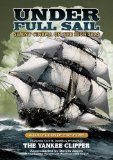
Under Full Sail: Silent Cinema on the High Seas
Flicker Alley // PG // April 14, 2009
List Price: $29.95 [Buy now and save at Amazon]
The Series:
One of the reasons that I enjoy silent films, aside from the artistry and wonderful stories that are exhibited in the best examples, is that it gives us a window to the past. They reveal details of how life was lived in the past that were so mundane that people didn't bother to record. Simple things, like what was kept in an ice box or how traffic were regulated in big cities are interesting facts that revel what American culture was like 80-100 years ago.
One DVD that presents that look into the past better than most is Flicker Alley's latest release Under Full Sail: Silent Cinema on the High Seas. This disc, compiled with the help of David Shepard's Blackhawk Films and Lobster Films in France, presents a feature and four shorts (including one excerpted sequence from a longer film) all dealing with life on board square-rigger sailboats, a type of ship that was quickly being replaced with motorized vessels as these films were made, and are virtually extinct today. These movies are a wonderful look back in time in addition to being entertaining film in their own right.
The Yankee Clipper (1927 - 81 mins.):
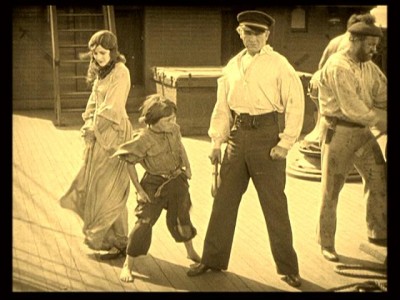 The
The Just before the race is about to start, Winslow is visited by Lady Jocelyn Huntington (Elinor Fair, at that time married to Boyd in real life) and her fiancée, the cowardly, selfish, and two-timing Richard (perpetual villain John Miljan). Winslow had saved the young lady from a mob of beggars (while Richard hid himself) and she wanted to wish him luck competing against her father's boat. Unfortunately the cannon that starts the race sounds while she's on board and so she's trapped on the ship.
Jocelyn soon learns to hate Winslow who for not stopping the ship and letting her get off and for the way he's rough with the sailors (who unbeknownst to the naïve girl are trying to have their way with her.) But when the Yankee Clipper is hit by a storm that misses the British ship and the crew's water runs out, it looks like there's little hope that the American will win.
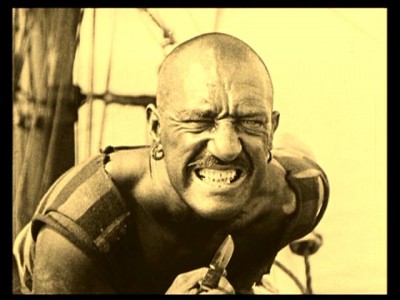 This was an impressive and exciting sea picture. With a violent storm, a mutiny, and a nail-biting finish (okay, I was never in doubt about who would win... but the end was still fun) it's a rollicking adventure. One of the things that makes this picture so impressive is that it was filmed on a real 160 foot wooden square-rigged sea vessel. The cast and crew filmed while the ship was at seas off the
 The movie was produced by Cecil B. DeMille who was supposed to direct it, but he was caught up with his film King of Kings and turned the direction over to Rupert Julian who had recently finished Phantom of the Opera with Lon Chaney. He correctly pegged that the real star of the picture is the ship and the sea and accents those aspects of the film with his direction. The love triangle between Winslow, Jocelyn, and Richard is still there, but it seems like an afterthought which is good. The film could have easily turned into a melodrama and Julian adeptly avoids falling into that trap (especially since melodramas were so popular at the time.)
The cast does a good job overall, but the script doesn't really give them a chance to shine. Boyd is rugged, manly, and upstanding, everything you want in a hero, but Fair seems to fade into the background a bit too easily. She never stands out and aside from her beauty it's hard to understand what Boyd sees in her. Frank Coghlan also appears as a very young stowaway. He's the comic relief for the film and does a great job lightening the mood. His constant statements that he hates women are very amusing (thought they're tinged with sadness; he's an orphan who was beaten by his aunt until he ran away) and the way he fits in with the captain and crew work much better than the romance plot.
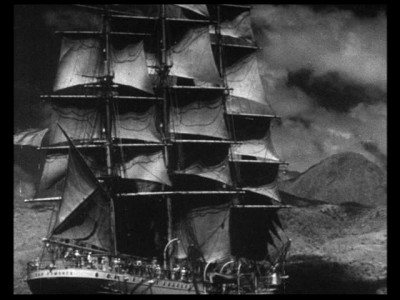 Ship Ahoy (1928 - 9 min.):
 This is an interesting short that details the transportation of a load of wood up the northern sea coast by a large schooner. As the opening titles attest, there were few jobs left for wind-powered boats at the time the film was made, and this (unnamed) vessel must have been one of the few still commercially transporting goods in the late 1920's. The film shows the loading of the cargo, sailing up the coast, and life on board the ship commanded by a grizzled old captain. A nice documentary.
The Square Rigger (1932 - 9 min.):
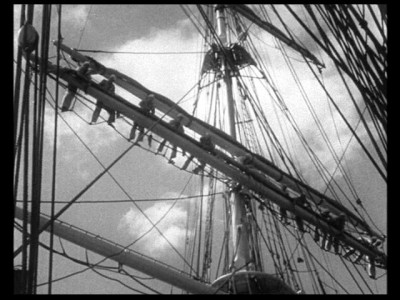 In the 1930's the polish Navy would train their officer candidates on an old sailing vessel to teach them both independence and teamwork (ironically.) This film was made for a Fox newsreel as part of their Magic Carpet series, and is a sound film, though there is no narration and title cards are present so that it could be shown in theaters that had not made the conversion to sound.
 It shows the Polish naval men performing all of the tasks needed to keep such a ship running and on course as well as at rest and play. It's interesting to note that they climb up into the rigging barefoot. One of the more amusing scenes shows the men crew singing "Anchor's Aweigh" in polish as they raise the anchor.
Around the Horn in a Square Rigger (1933 - 16 min.):
One of the last cargos that were still carried by sail vessels in the early 1930's was wool form Austrailia. It was bulky and its transport was not time sensitive so some square-riggers were still employed. This is a document of one of the last great sea races (though you really can't tell that it's a race from the film) when 16 ships set sail from Australia fully loaded headed for England by way of Cape Horn (the southern tip of South America.) The event was recorded by the ship's owner, one Alan Villers. He had hired a cinematographer to run the camera but when he fell from the rigging and died, Villers took over the role himself.
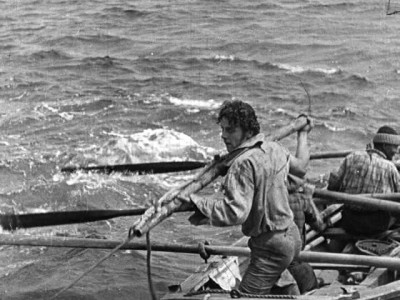 Down to the Sea in Ships (excerpt 1922 - 10 minutes):
 Made as an independent film by Elmer Clifton (who trained under D. W. Griffith and worked on many of the great director's films including Birth of a Nation and Intolerance) this feature captured the lives and culture of the last of the
While the sequence is very thrilling, they use hand-thrown harpoons to spear the whales in boats much smaller than the whale itself, there were segments that were obviously staged. That was the philosophy of 'documentaries' at the time; make the scenes as exciting and thrilling as possible, and reality be damned. That's too bad, but it doesn't distract too much from the sequence.
The DVD:
Audio:
All of these films are accompanied by original music created for this disc (with the exception of the sound short which has the original soundtrack.) Dennis James wrote a nice organ piece for the main feature that did a good job of capturing the action on screen while still having that 'old time' feeling. He also accompanied Down to the Sea in Ships while Eric Beheim played the organ during the shorts Around the Horn and Ship Ahoy. All were quality pieces of work.
Video:
This is a very nice looking disc. The Yankee Clipper was pieced together from several sources most of them 35mm by the look of it though there are a few brief sequences that appear to be taken from 16mm reduction prints. In any case I was impressed with the level of detail and amount of contrast that is present. The nicely tinted image is very clear and even small background details are strong. The lines are sharp and the blacks are deep without being crushed. There is a bit of aliasing in the backgrounds but it is minor.
The shorts were equally impressive. There were a few spots on a couple of them and a slight bit of blooming here and there, but overall the contrast was excellent and so was the level of detail. The only exception was Around the Horn in a Square Rigger which showed signs of deterioration. In addition it was much softer and had less contrast than the other films. It was still very watchable and an interesting log of one of the last great sail voyages. Overall quite an impressive looking disc.
Extras:
As if that wasn't enough, there's also an audio interview with Frank "Junior" Coghlan that was recorded in 2008 and lasts 7 minutes. He talks about getting his start in the movies (his father was an actor and they spotted him on the set one day and put him in a film) and then talks about the feature on this disc. He remembers a few details about the production and its fun to hear him reminisce.
Final Thoughts:
Filled with action, suspense, and just the right touch of comedy, The Yankee Clipper is a really good movie that is sure to appeal to silent film buffs, especially those who like to take a look into the past and see what life was like nearly a century ago. The shorts are a wonderful bonus and entertaining in their own right. Flicker Alley has released another excellent silent movie set that comes Highly Recommended.
|



| Popular Reviews |
| Sponsored Links |
|
|
| Sponsored Links |
|
|
| Release List | Reviews | Shop | Newsletter | Forum | DVD Giveaways | Blu-Ray | Advertise |
|
Copyright 2024 DVDTalk.com All Rights Reserved. Legal Info, Privacy Policy, Terms of Use,
Manage Preferences,
Your Privacy Choices 
| |||||||