
| Reviews & Columns |
|
Reviews DVD TV on DVD Blu-ray 4K UHD International DVDs In Theaters Reviews by Studio Video Games Features Collector Series DVDs Easter Egg Database Interviews DVD Talk Radio Feature Articles Columns Anime Talk DVD Savant Horror DVDs The M.O.D. Squad Art House HD Talk Silent DVD
|
 DVD Talk Forum |
|
|
| Resources |
|
DVD Price Search Customer Service #'s RCE Info Links |
|
Columns
  



 
|
|
|
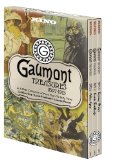
Gaumont Treasures: 1897-1913
Kino // Unrated // September 1, 2009
List Price: $79.95 [Buy now and save at Amazon]
The Collection:
One time the largest studio in the world, the influence that The Gaumont Film Company had in the early days of film is often forgotten today. Back in the late 1800's and through WWI however, they were an important force in world cinema. Kino has gone into the vaults of film archives to put together an important collection from the company: The Gaumont Treasures: 1897-1913. This three disc set has each DVD devoted to an important director that worked for the company: Alice Guy, Louis Feuillade, and Leonce Perret. These give an excellent overview of the work (or early work in some cases) of each director and also show the evolution of film language in the early days of cinema.
Disc One - Alice Guy:
Starting out as a secretary working for Leon Gaumont's still photography company in 1894, but by 1897 Alice Guy (Alice Guy-Blaché after she married in 1907) was head of production at Gaumont Films.
Guy not only directed films at Gaumont, making her the first female director, but she was also responsible for many innovations in the evolution of both story telling technique and film technology. Along with Edwin S. Porter, the Lumiere brothers, and others, Guy helped to create film 'language' and advanced the film narrative. The earliest films were just scenes of every day life. Trains entering a station, people eating lunch or going home from work, etc. Guy was among the first directors to see movies as a way to tell stories rather than just record life. She was behind the camera for the first (though some sources say it was the second) scripted fictional film (1896's Cabbage Fairy which is not included though 1900's remake The Cabbage Patch Fairy is in the set), and was one of the first to make a film more than one-reel in length. Technically Guy experimented with tinted film, sound movies as early as 1905 (several examples of both are included in this set) and color film with her movie The Fairy Spring (sadly not included on this disc.)
This collection presents more than 60 Guy films chronologically, including examples from 1897 -1907. Many of her earliest films are indistinguishable from other pre-1900 creations. She films kids playing in a stream (Bathing in a Stream (1897)) and a dancer performing her act (Serpentine Dance by Mme. Bob (!) Walter (1897).) She soon moves adds some Melies-like magic tricks to her catalog. The Disappearing Act (1898) has a man cover a lady with a cloth, turns her into an ape, and then causes the creature to vanish, and At the Hypnotist's (1989) is built around some quick-change effects.
These mainly one-minute early films include comedies (Wonderful Absinthe (1899)), war adventures (Surprise Attack on a House at Daybreak (1898), and fantasy films (The Cabbage Patch Fairy (1900).)
The set includes some nice examples of Guy's experimental work too. At the Floral Ball and Pierrette's Escapades (both 1900) are hand colored films, where each frame of a movie was pained by hand. The dress of one lady would be colored red, the other green, frame by frame, and this gave the illusion of a color movie. There are several "Phonoscene" films included too, an early attempt to match sound to film.
The centerpiece of this disc is Guy's 1906 film The Birth, the Life, and the Death of Christ. In it she tells the story Jesus from birth to resurrection in under 34 minutes. It's a large scale production with lots of extras, superimpositions, and 25 scenes. It is quite impressive for the time and very well done.
This set concludes with some of Guy's films from 1907. In that year she left
Disc Two - Louis Feuillade:
Feuillade got his start in movies by selling scripts to Gaumont in 1905, and soon found himself directing movies also. In 1907 when Alice Guy left for
Being a prolific director, Feuillade made many types of films and a good representation of them are included. There are comedies like A Very Fine Lady (1908) where men can't help but stare at a beautiful woman who walks by and causes a series of accidents, and dramas like The Heart and the Money (1912.) There's also a film that could be called a precursor to the grindhouse films of the 60's, The Roman Orgy (1911.) In this 8 minute film a decadent Roman ruler first approved the clothes that his mistresses will wear, and then throws a female slave to the lions after she makes a small mistake. (She's eaten off camera.) There's a banquet, and then the "ogry" which involves clothed women dancing. That is until there's a rebellion and lions come strolling in. The emperor comes to a bloody (well, actually it is bloodless) end when he's stabbed by his own guards. Not much in the way of plot, but I'm sure it got the blood racing in 1911.
One of the best offerings on this disc is the historical epic The Agony of Byzance (1913). This 29 minute film tells of the sack of
The only thing that was a little disappointing is that none of Feuillade's "Baby" or "Bout de Zan" films are included. From 1910 through 1913 he made 90 "Baby" movies (Napoleon, Baby, and the Cossacks, Baby and the Satyr, etc.) featuring a four-year-old infant and then changed to a new child in 1913 with his Bout de Zan series of 60 more films. I would have liked to have seen an example of this type of films that he produced so frequently.
Disc Three - Leonce Perret:
The final disc is devoted to Leonce Perret who is nearly unknown in the
Perret's background in the theater served him well. As a director he added a bit of flair to his productions by including low camera angles, close-ups, and even filming outdoors and on location. While there are only two films included on this disc (the running time for both totals close to three hours) they go a long way towards establishing Perret as an innovative and important director.
The Mystery of the Rocks of Kador (1912): This is a convoluted and a bit of an odd film. The main plot revolves around a woman, Suzanne de Lormel, who comes down with amnesia when she is falsely convinced that she has shot her lover, Captain Jean d'Erquy. To cure her of this condition, d'Erguy and a psychologist reenact the shooting and film it, then show the film to poor Suzanne in the hopes of curing her.
This film, written by Perret who also has a featured role in it, is a good amount of fun, though the premise is hard to swallow nowadays. It was great fun to see how they filmed the assault and there are even scenes in the lab where the negative is developed. There are extensive exterior shots and they even filmed on location at the beach. Because of this, the film has a more modern feel than most movies from the early teens. Even when compared to Feuillade's movies of the same time, Perret's style was superior.
The one thing that does hamper the film is the frequent intertitle cards. The plot is very twisted and in order for viewers to be able to follow what's going on there are frequent interruptions for dialog. It's a very wordy film, and that does slow the pace down more than it should.
The Child of
Things are bad for her there, where the other children taunt her and even the matron is cruel, taking away her doll. Marie-Laure is soon fed up with her treatment and runs away, only to be captured by an evil thief. Things go from bad to worse for her as the film progresses, and she eventually forced to work for a drunk and his hunchback assistant, Bosco. The latter falls in love with Marie-Laure, and when she's sold to a scoundrel, he goes after her to so he can protect the girl.
This is an interesting contrast to The Mystery of the Rocks of Kador. While the former had an interesting and complicated plot and frequent title cards, this movie has a very simple and straight forward story told with only occasional cards. It's almost hard to believe that Perret was responsible for both scripts.
What this film lacks in story though, it makes up for with style. The tinted movie was directed very well with the camera placed in interesting positions. One shot holds on a close up of the top of a wall and soon hands are seen and a head pops up. Perret also creates an interesting set for the drunk cobbler's house. It has the main room where most of the action takes place, and a small triangular sleeping area where Marie-Laure stays just too the side. Perret has the camera focus on the main area most of the time, but when Bosco puts the girl to bed, it pans over to follow the action. The technique works very well and was quite innovative for the time.
All in all I was quite impressed with these two films. Though the slightly over 2 hour running time for The Child of Paris is too long by about half an hour, both movies were exciting finds for me.
The DVD:
The scores that accompanied these films were all recorded recently and sounded fine with good fidelity.
The Alice Guy shorts had piano and various synthesized (at least that's what it sounded like) other instruments that weren't attributed, but her Christ feature had a nice piano score by Patrick Laviosa.
The second disc devoted to Louis Feuillade was accompanied by mainly piano music (there was some flute and violin sections) performed by Patrick Laviosa. These were nice and solid tracks that did a good job of accenting the action on screen.
Philippe Dubosson used a synthesizer for the Perret disc, and while he's a talented musician I didn't care for the electronically created sounds playing over movies that were created long before the synthesizer.
Video:
The image quality varies from film to film, but generally these looked outstanding. The Child of Paris was restored from the preserved negative and looks nearly prefect. On the other end of the spectrum some of the Guy shorts were a little rough, especially the hand colored reels that were scratchy and in worse shape. Over all however I was very impressed with the quality of these films.
Extras:
There are a couple of nice bonus featurettes included with this set. The second disc has a 10.5-minute documentary, Louis Feuillade Master of Many Forms that gives a nice overview of the director's career.
Disc two also includes a fragment of a 1912 educational film Gaumont produced entitled "Chiromancy," which attempted to give the scientific and rational explanation of palm reading, of all things.
The final disc includes a documentary on Perret entitled Leonce Perret: The Filmmaker's Filmmaker. It runs nearly 18-minutes in length and is a very nice introduction to the forgotten (in the
Final Thoughts:
This set is a wonderful overview of early French cinema. From Alice Guy's experiments in the 1890's through Perret's 1913 dramas, the techniques used and structure of films changed. Not only did the length increase, going from minute-long slices of life to a two-hour+ melodrama, but viewers can see a film language start to develop. The static medium shots of the early shorts evolve into a variety of camera angles and placements, as well as letting the camera move to convey the action more efficiently. All together this is a magnificent course on early European film.
Of course modern viewers not familiar with silent movies might find the collection a bit hard to get through. The ultra-short Guy films have no real plot and come across as rather avant-garde today, and some of the Feuillade films will appear slow and pointless. People just starting to discover silent film may want to explore other sets, but for aficionados of early cinema this set comes highly recommended.
|



| Popular Reviews |
| Sponsored Links |
|
|
| Sponsored Links |
|
|
| Release List | Reviews | Shop | Newsletter | Forum | DVD Giveaways | Blu-Ray | Advertise |
|
Copyright 2024 DVDTalk.com All Rights Reserved. Legal Info, Privacy Policy, Terms of Use,
Manage Preferences,
Your Privacy Choices 
| |||||||