
| Reviews & Columns |
|
Reviews DVD TV on DVD Blu-ray 4K UHD International DVDs In Theaters Reviews by Studio Video Games Features Collector Series DVDs Easter Egg Database Interviews DVD Talk Radio Feature Articles Columns Anime Talk DVD Savant Horror DVDs The M.O.D. Squad Art House HD Talk Silent DVD
|
 DVD Talk Forum |
|
|
| Resources |
|
DVD Price Search Customer Service #'s RCE Info Links |
|
Columns
  


 
|
|
|
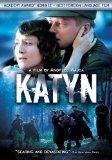
Katyn
Narrative films that take on a historical subject typically fall into one of two camps: those that amplify dramatic tension at the price of factual fidelity, and those that wind up dry or disjointed because they focus on nothing but the historic record. Katyn, by the Polish filmmaker Andrzej Wajda, is an important and even ingenious mosaic narrative that explores the repercussions of an infamous Soviet atrocity from World War II.
In September 1939, just after the outset of the war, while the Poles were busy fighting the German invasion in the west, the USSR took advantage of the weakness in the east and launched their own invasion. The Germans and Russians ended up dividing Poland between them. The Russians imprisoned the Polish military units remaining in their territory. They wound up releasing many of them, but held onto many thousands of officers. Along with these military men were imprisoned Polish intellectuals and civic leaders. The Russian leadership viewed them all as ideological threats to the Soviet system: should their power be reconstituted at some point in the future, they'd pose a challenge to the USSR. Therefore, sometime in 1940, Stalin had about 22,000 of them executed in and around the Katyn Forest.
It's hard to describe what happens in Katyn because it's such a delicate, thoughtfully put together film, and putting its specific action into words would ruin Wajda's special approach to historical narrative. As in many of his older films, Wajda's deep sense of the past pulls together a mosaic of characters whose inter-connected experiences show us a range of effects and consequences of the central historical events depicted. Think of Francesco Rosi's Salvatore Giuliano or Gillo Pontecorvo's The Battle of Algiers. These films employ an investigative approach that is somewhat mirrored here (although Wajda's earlier films predate them both and have a similar feel, so the influence may be in reverse). However, what's even more salient about them in terms of Katyn is that they utilize an immediacy that foregoes the kind of intrusive exposition common in historical narrative films. Instead of spoon-feeding the viewer facts and data through contrived dialogue, Wajda constructs a loose narrative in which the connections between scenes and characters become increasingly clear as the film progresses, and in this way the slow accretion of information reflects back on earlier moments, illuminating the film as a whole by the time it's ended. It's a very tricky accomplishment that is carried off with invisible panache.
The main characters in Katyn are fictional composites, and represent a cross-section of Polish society: the wife of an imprisoned lieutenant; his mother; his friend who survives imprisonment by turning to the Soviet side; the wife of an executed general; her daughter. The disparate experiences of these well-written characters serve to illustrate different bits of the historical record. The performances are admirable. The actors are simultaneously charged with portraying historical abstractions and individual personalities. Wajda's direction keeps them grounded in the reality of the film's world, while his screenplay and editing trims the sail of historical perspective.
We follow these characters from the initial imprisonment of officers and intellectuals, through the initial public reports of the massacre, and into the aftermath of the post-war Soviet occupation of Poland. When the Nazis learn of the massacre in the midst of the war, they fire all engines in blaming the Russians and propagating anti-Soviet sentiment among the Polish populace. After the war's end, the Russians blame the Germans, and persecute those who suggest Russian culpability. As Wajda states in the bonus features, the film deals with both Katyn as a crime, and Katyn as a lie.
Production values are high; the photography is exquisite and extremely well-lit. The beautifully eerie music is by the legendary composer Krzysztof Penderecki; the credits say "Music by," but I was unable to ascertain for sure whether the score is original or whether Wajda selected pieces from his existing body of work.
The DVD
The Video
The transfer is presented anamorphically at a 1.85:1 aspect ratio. IMDB.com has this film at 2.35:1, but this transfer doesn't look cropped to me. Framing feels comfortable and natural. The crisp, high-contrast visuals are evenly replicated, with a cold color palette favoring blues and grays. Blacks are deep and steady. The highly detailed costumes and sets are done a great service, too, in this excellent transfer from Koch Lorber.
The Audio
The original Polish soundtrack is available in Dolby Digital 5.1 and 2.0. Both tracks are quite strong, with a wide soundstage and well-selected surround effects. English subtitles are provided, of course. However, when German and Russian characters speak in their native tongues, we have to contend with burned-in Polish subtitles at the bottom of the frame and English subtitles at the top of the frame. This happens occasionally throughout the film and results in a cluttered screen.
The Extras
The limited extras are of extremely high quality. A very thoughtful and illuminating interview with director Andrzej Wajda runs nearly an hour, and is not to be missed. A 20-minute making-of featurette also contains much useful information.
Final Thoughts
A truly rare experience, Katyn provides valuable historical perspective on a contentious, controversial event that affected millions of lives. It also shows that history is a function of conquering powers' ability to shape the "truth" as it is experienced by the conquered - something that no society can afford to overlook. Highly recommended.
|



| Popular Reviews |
| Sponsored Links |
|
|
| Sponsored Links |
|
|
| Release List | Reviews | Shop | Newsletter | Forum | DVD Giveaways | Blu-Ray | Advertise |
|
Copyright 2024 DVDTalk.com All Rights Reserved. Legal Info, Privacy Policy, Terms of Use,
Manage Preferences,
Your Privacy Choices 
| |||||||