
| Reviews & Columns |
|
Reviews DVD TV on DVD Blu-ray 4K UHD International DVDs In Theaters Reviews by Studio Video Games Features Collector Series DVDs Easter Egg Database Interviews DVD Talk Radio Feature Articles Columns Anime Talk DVD Savant Horror DVDs The M.O.D. Squad Art House HD Talk Silent DVD
|
 DVD Talk Forum |
|
|
| Resources |
|
DVD Price Search Customer Service #'s RCE Info Links |
|
Columns

|
|
|
Trumbo
There is a time-honored debate that has taken place in classrooms, dormitories, and coffeehouses for generations. It is the old "form versus content" question, posed and re-posed over and over again for time immemorial by rabid humanities students who feel convinced that there is one true answer and that they are on the cusp of identifying it. It's a conversation that is both useful and ultimately futile. For artists, there is a reason to figure out an answer to it in terms of one's own work - but for observers and critics, the debate's utility lies in identifying how one values, processes, and comprehends art; in other words, it's an exercise in self-discovery. Because I am a writer (and one who plies his craft beyond the scope of movie reviews), I apply writerly values in my work for DVDTalk - and when it comes to a documentary film about a writer, that viewpoint will be even more pronounced.
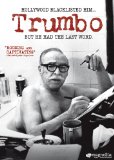
At the risk of sounding like one of those self-important undergraduates myself, this long-winded introduction is meant to provide context for my opinion that the documentary format is not an ideal one for the content - specifically the dramatized letters - contained in Trumbo, directed by Peter Askin from Christopher Trumbo's play of the same title. The play and the film recount the life of blacklisted Oscar-winning screenwriter Dalton Trumbo, mainly through his letters. Screen time is divided between typical docu-style interviews and archival footage, and dramatic readings of Trumbo's letters by the likes of Michael Douglas, Liam Neeson, Paul Giamatti, and Joan Allen. The juxtaposition of these two elements - documentary film and dramatic readings - doesn't really gel, and results in a less-than-complete view of this fascinating man's life and work.
Dalton Trumbo makes for a rich documentary subject. As a member of the Hollywood Ten - the justly famous group of "uncooperative" witnesses who refused to name suspected or actual Communists in their midst before the House Un-American Activities Committee - and as the writer of Spartacus, Papillion, A Guy Named Joe, and the novel and film of Johnny Got His Gun, Trumbo's highs and lows illustrate a colorful and frightening time in American history. Beyond his Hollywood profession, Trumbo was an accomplished novelist, and a dedicated and loving family man.
This film focuses upon the period of the blacklist, for in many ways this was the defining crisis of Trumbo's life. During the period that followed his imprisonment for contempt of Congress, Trumbo's family (along with the families of three colleagues who shared Trumbo's fate) went into exile in Mexico for a few years, where they had to re-make their writing careers from scratch. Mostly, this meant obtaining work from sympathetic producers who were nonetheless forced to credit "fronts" instead of the blacklisted writers themselves.
Most of the letters here deal directly or indirectly with the blacklist as well, and they serve as an indispensible chronicle of Trumbo's life. I plan to seek out the published letters; I can tell from this film's sampling that they must make essential reading. While I understand that the play upon which this film is based was entirely comprised of readings of the letters, I have doubts as to whether they should be "performed" at all. Trumbo practiced the art of letter writing as a very specific form of communication, one that depended upon expressing his particular voice through the printed word. Just like the most brilliant authors of prose, who often botch oral presentation of their work at the 92nd Street Y or the local Borders, letter-writers don't have a live audience in mind. For this reason, there is something mildly artificial about the readings in Trumbo - even though these fine actors offer up thoughtful, heartfelt interpretations of Trumbo's voice. But even David Strathairn, who I place in the first tier of living American actors, can't make a "performed" letter feel authentic.
The focus on the era of the blacklist, along with the lengthy letter-readings, crowds out other elements of his life. For example, we learning nothing of what drove him as a writer, nothing of his process, or how he approached novels versus screenplays. The man was, after all, a writer, and I presume he would prefer to be remembered as one. The film's treatment of Trumbo primarily as a victim of political persecution seems unfair - the man won an Oscar and a National Book Award. Johnny Got His Gun remains a high school reading list mainstay. I'm not suggesting that the blacklist and its effect on Trumbo shouldn't be remembered - but this could easily have been a two-hour film that included additional information about Trumbo's writing career.
In all, Trumbo feels jumbled, and I question the presentation of the letters. The letters deserve inclusion, but perhaps should have been read by a single actor in voice-over. Trumbo's own voice is well-represented in the film through footage of numerous interviews; it serves as a spry, witty, articulate narrator. For that reason, and others, I feel like Trumbo's letters - wonderful though they are - are meant to be experienced on the page.
The DVD
The Video
Magnolia Home Entertainment provides a very nice enhanced 1.85:1 transfer. Blacks are deep, flesh tones are captured realistically. Archival footage is generally framed to retain its original square aspect ratio, although occasionally clips are zoomed, which is too bad. Generally, this is strong, artifact-free transfer.
The Audio
Two Dolby Digital tracks are included - one in 5.1 surround, and one in 2.0 stereo. Both are excellent tracks, although I'm not sure why the surround track was included. I suppose I can't complain, but very few surrounds are utilized - and there's nothing shocking about that, since this is a documentary. Both tracks are balanced and clear.
The Extras
A couple of deleted scenes are all we have - a letter read by Giamatti, along with one read by Danny Glover, who didn't make it into the final cut. There is also a selection of trailers.
Final Thoughts
Although the approach is muddled, Trumbo is still an interesting film. The man himself was a towering figure - as an artist, but also as an American who stood up for his rights and did his part to hold fascism at bay when it was a very real threat in this country. Reservations aside, I still say Trumbo is recommended.
|



| Popular Reviews |
| Sponsored Links |
|
|
| Sponsored Links |
|
|
| Release List | Reviews | Shop | Newsletter | Forum | DVD Giveaways | Blu-Ray | Advertise |
|
Copyright 2024 DVDTalk.com All Rights Reserved. Legal Info, Privacy Policy, Terms of Use,
Manage Preferences,
Your Privacy Choices 
| |||||||