
| Reviews & Columns |
|
Reviews DVD TV on DVD Blu-ray 4K UHD International DVDs In Theaters Reviews by Studio Video Games Features Collector Series DVDs Easter Egg Database Interviews DVD Talk Radio Feature Articles Columns Anime Talk DVD Savant Horror DVDs The M.O.D. Squad Art House HD Talk Silent DVD
|
 DVD Talk Forum |
|
|
| Resources |
|
DVD Price Search Customer Service #'s RCE Info Links |
|
Columns
  


 
|
|
|
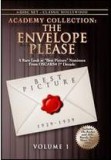
Academy Collection: Envelope Please
Infinity Entertainment Company // Unrated // February 23, 2010
List Price: $24.98 [Buy now and save at Amazon]
The Movies:
Hollywood Select Video and Infinity Entertainment have come up with an absolutely brilliant idea: why not release a series of DVDs featuring movies that were nominated for a Best Picture Academy Award, but didn't win? Sure, the winners are the movies that everyone remembers (usually) but the other nominees are just about always top-notch productions that are just as enjoyable today as they were all those years ago. If you look back far enough, you'll be able to find several films that have lapsed into the public domain, meaning you won't have to buy the rights too. That's exactly what The Envelope Please Volume One is, a collection of 8 films on 4 DVDs that were nominated, but didn't win, a Best Picture Oscar. Spanning from 1928 to 1939, this set includes an incredible group of rarely seen films, all of which are excellent. The only rub is that they're in the public domain, which means that no one has spent the money to restore them. The audio and video quality is mixed, and the only thing that keeps me from giving this collection a higher recommendation.
This set includes:
The Racket (1928):
Nominated for the first Academy Awards for "Best Picture, Production" (which would be combined the following year with "Best Picture, Unique and Artistic Production" into a single "Best Picture" category, their first big mistake) this film lost out to Wings. Though largely forgotten now, it's a great gangster film that would influence the genre for decades.
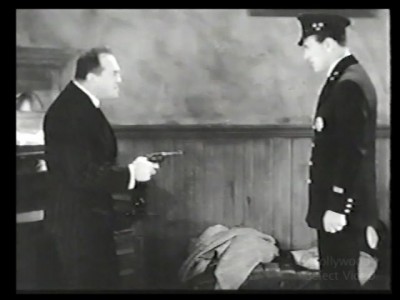
Nick Scarsi (played by Louis Wolheim and obviously modeled on Al "Scarface" Capone) is the head of the
When Scarsi isn't able to scare McQuigg off, he has his transferred out to the country, but even that doesn't stop the crusading cop. When Scarsi's younger brother Joe (George E. Stone) gets into a hit-and-run accident McQuigg sees his opening to put the crime boss behind bars for good.
This was a great cop-vs.-criminal film that had all of the hallmarks that Warners would use in their Gangster movies of the 30's and 40's. The police officer and mobster have a grudging respect for each other, there's a lot of violence, and even a dumb mol who is actually tough as nails on the inside. This last is played by Marie Provost, the tragic actress who starved to death after failing to make the transition to sound films.
The acting was excellent across the board, and the directing by Lewis Milestone was excellent. It's easy to see why this film was nominated when watching the gang battle at the beginning of the film.
This silent movie is accompanied by a rather generic piano score credited to Penny Harville. Please note that the film has been restored, but this is NOT the restored version. It's a very old 16mm blow up that is lacking detail and in generally poor condition.
Alibi (1929):
I'm sorry, but this movie is unwatchable. I was very interested in screening it, but the image is blurry and the hiss from the soundtrack is louder than the dialog making it almost impossible to hear what is being said. I gave up after 15 minutes.
The Front Page (1931):
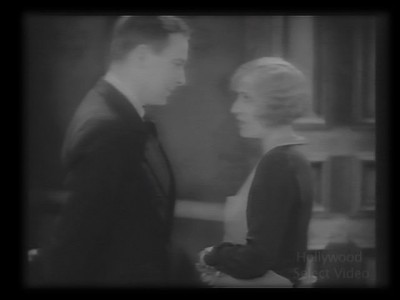
One of the most famous screenwriters of the last century was Ben Hecht. He worked as a reporter in
In the rough and tumble world of crime reporting in corrupt
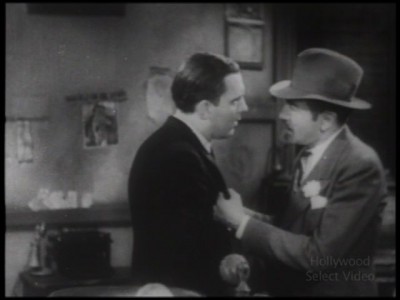
Mr. Burns doesn't want to see his star reporter go, so through a series of tricks and deceitful acts convinces Hildy to cover one more story before leaving on the midnight train to NYC: the Earl Williams (George E. Stone) execution. Williams was an out of work man who shot and killed a policeman. There are questions about his sanity, but the Mayor and the Chief of Police have timed the execution right before the election in order to shore up their 'tough on crime' campaigns.
When Williams manages to escape, Hildy uses the money he's saved for his honeymoon to bribe a guard to get the whole story. Things get even more interesting when he then manages to capture the criminal and hides him in another reporter's desk. It's up to Hildy and Burns to hide the criminal until they can break the story that the Tribune captured the killer that the police couldn't. Oh yeah, and isn't Hildy supposed to be on a train pretty soon?
This is a riotous comedy that works extraordinarily well from beginning to end. I have to admit that Adolphe Menjou is no Cary Grant, but he does a great job as the dastardly editor who'll do anything for a good headline. Pat O'Brien gives a great performance too. He starts out mousey and a bit timid, but as the movie progresses he turns into a top notch reporter and you can see that it's in his blood. Hilarious, suspenseful, and intriguing, this is a great film. (Though I prefer His Girl Friday which is even better.)
A Farewell to Arms (1932):
Based on the Ernest Hemingway novel, this film stars Gary Cooper at the peak of his career. He plays Lieutenant Frederic Henry, an ambulance driver during WWI, who falls in love with a nurse, Catherine Barkley (Helen Hayes). It's an excellent meditation on war and fighting, and Cooper does a magnificent job. Helen Hayes is fine, but she doesn't have a lot of chemistry with Cooper. I could go on and on about the film, but suffice to say that it's a very well executed piece that is worth watching.

The Private Life of Henry the VIII (1933):
This tongue-in-cheek drama (the ad copy promoting the film read "He gave his wives a pain in the neck, and did his necking with an axe.") features the wonderful Charles Laughton in his most remembered role as the King with a taste for the ladies. Starting just before the death of Anne Bolyn, Henry's 2nd wife, it charts the course of his other marriages, up until he maries #6.
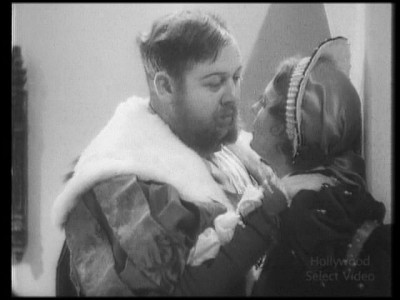
While a bit plodding in parts, the performances are magnificent. Laughton has an incredible amount of screen presence and steals every scene he's in. The movie also features Laughton's real-life wife, Elsa Lanchester (Bride of Frankenstein) as Anne of Cleves, Henry's fourth bride.
This movie has also been released by Criterion as part of their "Alexander Korda's Private Lives" collection. The image quality in that set is very much superior to what is offered here.
A Star is Born (1937):
Nominated for seven Oscars, this film would only win one (Best Writing, Original Story). This is the Janet Gaynor version, which is just as good, and arguably better, than the more well-know Judy Garland version from 1954 (which would be nominated for 6 Academy Awards and not win any of them).
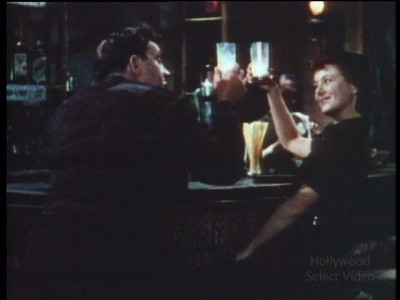
This is the story of Esther Victoria Blodgett (Janet Gaynor) who arrives in
This movie is simply wonderful. March really does a magnificent job, giving a vulnerable, touching performance. Gaynor is great too, playing the wide-eyed farm girl to perfection, but it's really March's film. This story of love, devotion, and how fleeting fame can be is a must-see.
Pygmalion (1938):
This is the first time that George Bernard Shaw's famous play was brought to the silver screen. It didn't win the Best Picture Oscar, but it would be remade in 1964 as My Fair Lady and that film would sweep the Academy Awards with 8 wins.
This version was wonderfully co-directed by Anthony Asquith (The Importance of Being Earnest, The Browning Version) and star Leslie Howard and features Wendy Hiller as Eliza Doolittle.
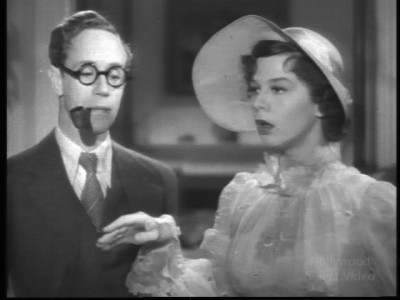
Professor Henry Higgins (Leslie Howard) has spent his life studying dialect and the way people pronounce words. He impresses people on the street by telling them where they were born after only hearing them speak. He wants a greater challenge though, and wagers with a friend that he can take a poor young lady with a strong Cockney accent and pass her off as a noble woman, just by teaching her to speak proper English. He finds the perfect candidate in Eliza Doolittle, who would like, more than anything, to speak like a lady. Higgins sets about teaching her, hour after hour, day after day, and soon she learns to speak "real proper like" but the Professor learns something about people too.
Another great film. Though I had trouble not comparing it to the superior My Fair Lady, this is a wonderfully funny and charming film, even if the musical numbers are missing. There were some changes from its more famous remake, and surprisingly not all for the better. Though I love the horse racing scene in My Fair Lady in this movie Higgins takes Doolittle to a tea party at his mother's house as her 'test.' There she speaks with the proper intonation and accent, but the topic of her conversation, how much her father drinks and how her grandmother's straw hat was stolen after she mysteriously died of the flu, was anything but gentile. It's a very comic scene that fits right in with the rest of this funny and touching movie.
Love Affair (1939):
This movie would seem like a shoe-in for the Best Picture award. This romantic dramedy was co-written and directed by Leo McCarey who knew both comedy (he directed the Marx Brothers in their best film, Duck Soup,) and touching drama (he was behind the camera and credited with the story for the wonderful The Bells of St. Mary's). This film also starts Irene Dunne in what she would later describe as her favorite of her movies. Dunne was nominated for an Academy Award for Best Actress, and the film garnered an impressive six nominations all together.
The only problem was that it was nominated in 1939, the year that is almost universally acknowledged among film fans as the best year for movies. Ever. It went up against Frank Capra's Mr. Smith Goes to Washington staring Jimmy Stewart, Stagecoach a movie that not only made John Wayne but reinvented the Western, William Wyler's Wuthering Heights with Laurence Olivier and David Niven, and Of Mice and Men based on the John Steinbeck play. The real competition however was from The Wizard of Oz and Gone with the Wind (which won Best Picture that year, along with many other awards.) What difficult, competition. It was a year when it really was an honor just to be nominated alongside such movies that would become towering classics. But I digress...
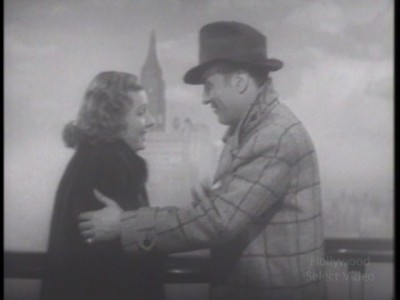
It comes as no surprise that movie itself is excellent. Irene Dunne stars as Terry, a one-time lounge singer who has been around the block a few times. She managed to charm a rich man businessman and she is now in his employ, as well as being his lover and fiancé. Returning from a business trip in
The two spend some time together on the ship, trading witty banter and drinking pink champagne, and end up surprising themselves by doing something that neither of them planned or wanted: they fell in love. With neither having any means of support, Michel even announces that he's never worked a day in his life, they decide to see if they can make it on their own. The pair agrees to break off their engagements and earn their own livings for six months. If after that time they decide that they're willing to live like ordinary people, and are willing to give up the furs, jewels, and luxury apartments they'll meet on a designated date at 5 pm on the roof of the
They both work hard but their love for each other gives them strength, and at the appointed day and time Michel is on the roof, with Terry rushing to meet him. A tragedy occurs however that makes it impossible for Terry to keep their date, and Michel assumes that she wasn't able to give up the soft life for something as simple as love.
This is an excellent film that would have made a much bigger splash had it been released a few years later. (As a matter of fact, Leo McCarey did remake it in 1957 as An Affair to Remember with Cary Grant and Deborah Kerr.) The story is much more sophisticated than the typical romance movie of the time. The movie presents Terry and Michel as world-weary and jaded at the beginning without making their characters either dull or unappealing. Face it, it's hard to make a woman who is marrying for money sympathetic, but McCarey manages to do it in this film.
The movie is also very surprising in its execution, and that's a good thing. It starts out as a typical romantic comedy but manages to reveal the main player's characters expertly through a short excursion to meet Michel's grandmother. The tragic turn in takes about half way through is very unexpected too, and places a realistic yet seemingly insurmountable obstacle between the two lovers. This builds to a tear-jerker ending that's not sappy in the least bit, just heartfelt and well done.
In addition to the great script and Dunne's bravura performance, this movie has some lovely cinematography and some impressive shots that you wouldn't expect to find in a romantic comedy. One of my favorites is when Terry is reading a folded newspaper the contains the shocking headline "Marnay Heiress Wed" only to turn the paper over to reveal the rest of the announcement "...ding Off!"
The only aspect of the film that didn't quite work for me was Charles Boyer. He wasn't quite charming enough to fully convince me that women were falling in love with him left and right, and he didn't have much screen chemistry with Irene Dunne. He pulls off the role, but just barely and not with the style and grace that Cary Grant would show nearly 20 year later.
The DVD:
These eight movies arrive on four discs in a double width keepcase.
Audio:
Just about all of these are in mono, and being public domain offerings the quality varies but rarely reaches the 'average' mark. There's frequent background noise, pops, and some distortion in most of these films. It's often hard to hear soft dialog and in a few films you really have to concentrate to catch everything. Just about every audio flaw you can think of appears somewhere at some point in this set, but in general they are all acceptable (unless noted above.)
Video:
Like the audio, the full frame image quality is a mixed bag but it's generally not too good. The images are very soft as a rule and scratches and spots are frequent. None of these look great, which is why it's so surprising that the entire set includes a soft water mark in the lower right hand corner. I can't imagine anyone actually wanting to copy films of this quality, and if they do, so what? Just about all of these are available from one source or another. If the image quality was better this would get a much higher rating.
Extras:
The only extras are a set of trailers from other Oscar nominated films sprinkled across the discs. Unfortunately each disc's offerings are run together on one reel so you can pick and choose which one you want to see. There's not even a list of trailers, which is a shame.
Final Thoughts:
This could have been one of the best releases of the year, but instead it's just good. While all of the films are great, I'd be hard pressed to name another collection with 8 movies this good, the low quality of the audio and video really knocks it down a few notches. Still, the set is worth picking up, all of the pictures are great, just don't set your expectations too high. Recommended.
|



| Popular Reviews |
| Sponsored Links |
|
|
| Sponsored Links |
|
|
| Release List | Reviews | Shop | Newsletter | Forum | DVD Giveaways | Blu-Ray | Advertise |
|
Copyright 2024 DVDTalk.com All Rights Reserved. Legal Info, Privacy Policy, Terms of Use,
Manage Preferences,
Your Privacy Choices 
| |||||||