
| Reviews & Columns |
|
Reviews DVD TV on DVD Blu-ray 4K UHD International DVDs In Theaters Reviews by Studio Video Games Features Collector Series DVDs Easter Egg Database Interviews DVD Talk Radio Feature Articles Columns Anime Talk DVD Savant Horror DVDs The M.O.D. Squad Art House HD Talk Silent DVD
|
 DVD Talk Forum |
|
|
| Resources |
|
DVD Price Search Customer Service #'s RCE Info Links |
|
Columns


 
|
|
|
Doctor Who: The Horns of Nimon
BBC Worldwide // Unrated // July 6, 2010
List Price: $24.98 [Buy now and save at Amazon]
The Show:
Though Tom Baker's tenure as The Doctor is fondly remembered by most fans, not every story he was in is great. Case in point: The Horns of Nimon. This 4-part episode that wrapped up season 17 had an interesting plot and some very nice touches, but the actor playing the villain was too much of a ham and the humor lacked the necessary subtle touch that would have made the show fun without being silly. Though fans deride this serial, with some justification, it's not nearly as bad as I remember it being and has some worthwhile elements.
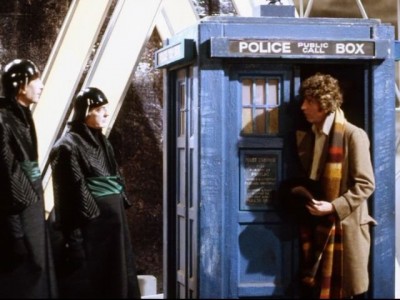
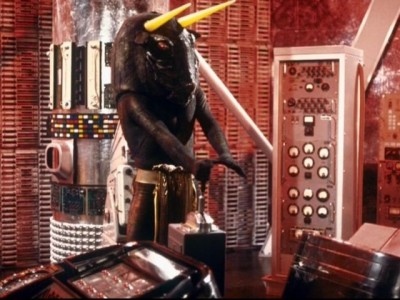
In this retelling of the legend of Theseus and the Minotaur, the Doctor (Tom Baker) and his Time Lord companion Romana (Lalla Ward) accidently crash land on an old spaceship. It's carrying a tribute, six teenagers, to the planet of Skonnos for their living god, the Nimon. This bull-headed creature lives at the center of an ever-changing maze, and only his high priest, Soldeed (Graham Crowden), can navigate it. The Nimon has promised to revive the Skonno Empire by providing Soldeed with advanced technology that will allow him to create an unstoppable armada of space-faring battleships.
After an episode long subplot involving the Doctor and Romana repairing the space craft they've landed on and matching wits with the conniving captain of the ship, the whole crew arrives on Skonnos and gets thrown into the maze as an offering. But just what is the Nimon up to, and why does he need sacrifices? Is Soldeed really playing the Nimon for a fool or is it the other way around? The Doctor discovers the insidious plot that the Nimon is hatching, but is it too late to stop?
While I enjoyed this story over all, I'll be the first to admit that it has some huge flaws. The first one that springs to mind is Graham Crowden's over the top acting. He chews the scenery every time he's on camera, shouting his lines and running through a series of ludicrous facial expressions. The last scene that he's in is painful to watch it's so overblown.
Not all of the blame can be laid at Crowden's feet though. Based on the rest of the story, I think that hammy acting was what the director, Kenny McBain, was trying to get out of the actor. The whole serial has broad comic touches that fail miserably. When the Doctor is trying to fix the TARDIS, a small explosion occurs which is overdubbed with sound effects you'd expect in a Bugs Bunny cartoon including a particularly unfunny *SPROINGGG* at the end. Doctor Who is at its most hilarious when the jokes are subtle and underplayed, and none of the gags in this story can claim that distinction. The fact that the story ends with The Doctor and Romana laughing as a race is totally annihilated is a little awkward too.
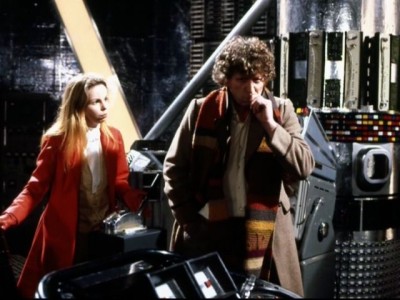
That's not to say that the story has no redeeming qualities. With a gentler hand at the helm, it could have been very good. First off Romana really plays an important part in this story. She's a Time Lord too, and this is one of the stories where she actually acts like the Doctor's equal. She comes up with ideas and gets some useful information and it's nice to see a pair of Time Lords working together.
Then there's the story itself, which isn't too bad at all. The Minotaur myth is an exciting tale (it has already been done once on Doctor Who, in The Time Monster) and this adaptation has a lot of potential. The story is nicely paced, and the ultimate origin of the Nimon was good, though not totally unexpected. There are some nice touches included in the plot that desperately try to overcome the bad acting, and nearly do. I particularly liked the explanation that the maze was a huge circuit that changes when it's in use, and the subplot with two of the tributes, Teka and Seth, was one of the most interesting, and amusing, parts of the story. Basically Seth had told a lie or two and it spiraled out of control until he found himself on the ship to Skonnos with Teka believing that he was a royal prince who was brave, strong, and resourceful who had a plan to kill the Nimon and free his planet from the constant threat of Skonnos. He was none of those things in reality, but the love-struck Teka kept interpreting everything he did as a heroic feat. If only the rest of the story could have been played in a lower key, this would have been a decent adventure.
The DVD:
Audio:
The mono soundtrack has been cleaned up and is very good. It is nice and clear with no hiss or background noise to take away from the story. Being a mono track, there's really not much more to say about it.
Video:
The full frame video has been cleaned up by the Restoration Team and it looks good. The original cinematography wasn't that impressive, there's a few spots where whites bloom and the color design is very drab, but the disc reproduces that well. The whole serial was recorded on sets so videotape was used throughout and the picture isn't as sharp as it would have been with film. The colors are solid though and the level of detail is decent. This is an average looking Doctor Who disc.
Extras:
While it wasn't the best story, there are some entertaining and informative bonus features. There's a commentary track featuring actors Lalla Ward, Graham Crowden and Janet Ellis along with script writer Anthony Read. Lalla Ward especially seemed to be having a good time and gently poked fun as some aspects of the story. Anthony Read gets his own featurette, Read the Writer (6 min) where he talks about his script, script editor Douglas Adams, and points out what went wrong with the serial. (He mainly blames the director for letting the actors ham it up too much.)
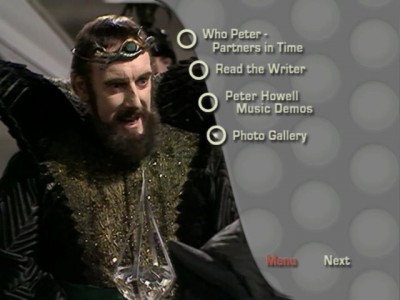
My favorite bonus item was Who Peter--Partners in Time a half-hour look at the classic Doctor Who series and it's promotion on the kid's show Blue Peter. The reason that many important clips from 'lost' Who episodes are still around (Hartnell's transformation sequence for example) is because they were shown on Blue Peter and that series was preserved. This apparent made-for-TV special looks back at the various stories and interviews that were done on the show, including several segments on 'how to make a Dalek.' The segments were cute and this special is well worth watching.
There is also an 'info-text' option for each story. This is something that the other Who releases have and I'm a big fan of them. This pop-up text options allows viewers to read about the shooting schedule, changes between various story incarnations and the final version and learn about the history of the supporting actors. It's well worth watching, though it can be distracting so watch the story without it once.
The extras are wrapped up with a three minute Radiophonic Workshop music demo, a photo gallery, and the usual Radio Times listings.
Final Thoughts:
While the Horns of Nimon will never be considered a
|



| Popular Reviews |
| Sponsored Links |
|
|
| Sponsored Links |
|
|
| Release List | Reviews | Shop | Newsletter | Forum | DVD Giveaways | Blu-Ray | Advertise |
|
Copyright 2024 DVDTalk.com All Rights Reserved. Legal Info, Privacy Policy, Terms of Use,
Manage Preferences,
Your Privacy Choices 
| |||||||