
| Reviews & Columns |
|
Reviews DVD TV on DVD Blu-ray 4K UHD International DVDs In Theaters Reviews by Studio Video Games Features Collector Series DVDs Easter Egg Database Interviews DVD Talk Radio Feature Articles Columns Anime Talk DVD Savant Horror DVDs The M.O.D. Squad Art House HD Talk Silent DVD
|
 DVD Talk Forum |
|
|
| Resources |
|
DVD Price Search Customer Service #'s RCE Info Links |
|
Columns
  



 
|
|
|
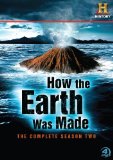
How the Earth Was Made: Complete Season 2
Did you ever take Rocks For Jocks in school hoping for an easy physical sciences credit, but instead discovered an exciting topic filled with wonders and amazement? Yeah, me neither. However, if The History Channel has anything to say about it, geology is brimming with awesomeness and worthy of a two season series.
How the Earth Was Made: Season 2 is a 4 disc set containing the following 13 episodes:
- Grand Canyon
- Vesuvius
- Birth of the Earth
- Sahara
- Yosemite
- The Rockies
- Ring of Fire
- Everest
- Death Valley
- Mt. St. Helens
- Earth's Deadliest Eruption
- America's Ice Age
- America's Gold
The second season of How The Earth Was Made covers a wide variety of topics that range in time from the actual formation of the Earth, 4 billion years ago, to the 1980 eruption of Mt. St. Helens. Because this series originally aired on American television, it is fitting that about half of the episodes focus on American geological topics such as the Grand Canyon, the Rocky Mountains, and Death Valley.
Earth's Deadliest Eruption stands as one of the most interesting episodes in the set. 250 million years ago, an ancient Siberian supervolcano erupted causing a huge climate disaster that choked out 95% of life on Earth. The episode describes in great detail the mechanisms that caused the extinction event to snowball and wipe out most of Earth's life. This episode highlighted how incredibly versatile life is and how remarkable it is that life has survived so many catastrophes such as this supervolcano eruption and the asteroid strike that killed off the dinosaurs.
Some of the subjects included in this season are inherently interesting--pretty much anything having do with volcanic eruptions is always cool. Conversely, only geology nuts can fully appreciate a few of the episodes. Namely, America's Ice Age stands as the driest episode of the bunch. Yes, the fact that North America is periodically covered a giant glacier that shapes our continent is amazing. The dramatized computer animations help somewhat, but nothing can make slow moving ice compelling enough to encompass an entire episode. Similarly, the fact that the Sahara cycles from grassland to desert every 20,000 years is truly remarkable, but not for an entire episode. Again, these are interesting topics, it just felt as if the producers really had to stretch to fill an entire episode.
With those few episodes aside, How the Earth Was Made does an exceptional job at making seemingly dull subjects watchable and even exciting at times. A prime example is America's Gold. After watching the Ice Age episode, I feared the worst with this next one. Gold, simply put, is way cooler than I could have ever imagined and I am tempted to horde it for more reasons than just fear of the next Great Depression. Gold was created in supernovas and is found everywhere on Earth, but only in extremely small quantities. Gold found in mines results from tectonic forces pushing superheated fluid through the rocks causing minute gold particles to collect into the nuggets we treasure. The history of America's gold rushes and the methods used to extract gold today is just as fascinating as the story of how it was created.
Another unexpectedly interesting episode is Death Valley. How interesting could a desert valley with nothing in it be? As it turns out, it's very interesting. Death Valley is one of the lowest areas of dry land on Earth and it is contantly getting lower. The show describes just how Death Valley is sinking and what makes it so dry. The experts in that episode did a great job of making the topic engaging. While they explained the mechanisms that cause rocks in the valley to move on their own, I was disappointed that they did not catch any rocks trudging through the valley on camera--a feat that has still yet to be accomplished.
The timelines presented in this series are sometimes inconsistent. This is the result of the errors that inevitably arise when rounding with millions of years. In the Earth's Deadliest Eruption, the show claims that 250 million years ago 95% of all species die off after an ancient Siberian super volcano erupted. In contrast, the Yosemite episode claims that dinosaurs roamed the land 250 million years ago. Depending on how far the scientists round the timeframes, this is technically correct as the great extinction event about 248 million years ago was followed by the rise of the dinosaurs a few million years later. However, the stated timeframes should have been made uniform throughout the series; it's distracting and it just sounds bad to have one episode claim to that most life died off at the same exact time that another episode claims that dinosaurs roamed the world. These episodes are presented under the banner of one series, not self-contained documentaries. Every effort should have been made to ensure the dates and other numbers are consistent across all episodes.
The most helpful feature, and one that I would like to see included in more educational series, is the use of quick summaries at the commercial breaks. Each break features a set of still images with narration that highlights what was just covered in the last segment. The end of each episode gives a quick, high-level recap of the main ideas and the geological evidence that supports them. This feature really helps to reinforce the theories and subjects with the viewer, especially those not intimately familiar with the science of geology.
The DVD
Audio: The set is presented in 2.0 stereo sound. The documentaries are primarily interviews and voice-overs and the audio is very clear. There are special effects and computer animation sequences to show eruptions, explosions, and other geological events. They all sound good and clear. No complaints except for the lack of a 5.1 mix which may have spiced up some of these special effects.
Video: Why does the History Channel continue to release these sets in non-anamorphic widescreen? With the widespread adoption of 16:9 HDTV's, it makes no sense for these sets to be non-anamorphic. Regardless, the image quality is still decent, sporting good clarity for a DVD release with only minor compression artifacts.
Extras: None.
Final Thoughts: The second season of How the Earth Was Made is a mixed bag of both fascinating episodes full of interesting facts as well as subjects too dull to ever make good television. That said, all of the episodes are interesting in at least some parts. Most topics are worthy of at least an episode--Birth of the Earth, Earth's Deadliest Eruption, and America's Gold stand out as the most exciting episodes in the second season. Geology fans will love the entire set. Others, who have a passing interest in science, will find most of the episodes compelling, however a select few are excruciatingly bland. Geology rocks! Well, for the most part anyway. Recommended.
Bobby is a programmer by trade and a wannabe writer. Check out his other reviews here. You can also check out his blog about harmless nonsense or follow him on Twitter
|



| Popular Reviews |
| Sponsored Links |
|
|
| Sponsored Links |
|
|
| Release List | Reviews | Shop | Newsletter | Forum | DVD Giveaways | Blu-Ray | Advertise |
|
Copyright 2024 DVDTalk.com All Rights Reserved. Legal Info, Privacy Policy, Terms of Use,
Manage Preferences,
Your Privacy Choices 
| |||||||