
| Reviews & Columns |
|
Reviews DVD TV on DVD Blu-ray 4K UHD International DVDs In Theaters Reviews by Studio Video Games Features Collector Series DVDs Easter Egg Database Interviews DVD Talk Radio Feature Articles Columns Anime Talk DVD Savant Horror DVDs The M.O.D. Squad Art House HD Talk Silent DVD
|
 DVD Talk Forum |
|
|
| Resources |
|
DVD Price Search Customer Service #'s RCE Info Links |
|
Columns
  


 
|
|
|
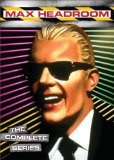
Max Headroom: The Complete Series
Shout Factory // Unrated // August 10, 2010
List Price: $49.97 [Buy now and save at Amazon]
The Show:
People under the age of 30 or so probably don't know who Max Headroom is, but those of us who are just a bit older are certain to recall the ubiquitous New Coke commercials in the 80's featuring the faux-computer generated wise-cracking pitchman. He also stared in a wonderfully subversive TV show starting in 1987 that has developed a cult of followers. Now, at long last, The Max Headroom Show: The Complete Series arrives on DVD thanks to Shout! Factory. Though it was made on a shoestring budget and aspects are a little dated now, it's still an interesting show that was way ahead of its time.
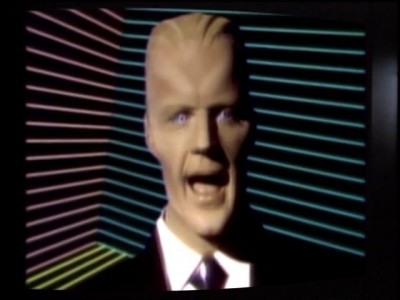
Max Headroom was originally conceived as the host of a music video TV show. At the time MTV was all the rage, and a new British Network, Channel 4 was looking for programming. As the idea of who Max was and how he came about became more developed, the concept evolved into an hour long TV movie, which aired in the
Finally ABC gave the green light to for a Max Headroom drama, which hit the airwaves in 1987 as, simply, Max Headroom. Though it lasted only 13 episodes (though 14 were filmed... the unaired show is included) it's fondly remembered today as a unique and creative show. It is that program that has finally made its way to DVD.
Set "20 minutes in the future" this series takes place in dystopian future where TV is king. Homeless people live in vacant lots yet have TV sets and riots break out in overcrowded cities when popular shows are preempted or cancelled. Churches give the most desperately poor time to watch television rather than warm meals and even elections are conducted via television: voters watch the channel that a candidate is associated with and the ratings determine the winner.
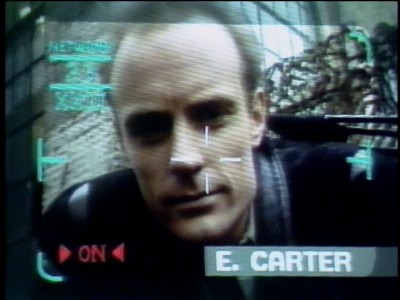
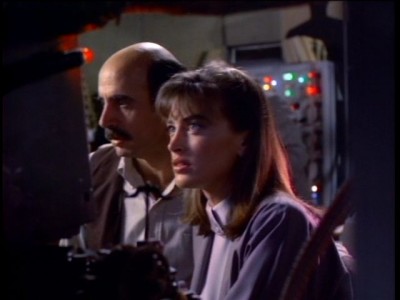
One of the most popular shows around the world is Network 23's investigative news show featuring Edison Carter (Matt Frewer). Like all reporters, he's ferried to the site of a story by helicopter and also acts as his own cameraman. He stays in contact with the station through his camera, and is helped out of tough situation by his controller, Theora Jones (Amanda Pays) back at base and his producer Murray (Jeffrey Tambor).
While on a particularly hot story Carter is chased by a gang of thugs and tries to escape on a motorcycle. Unfortunately a ramp is raised at just the wrong time and Carter is thrown through the air where he hits his head on a sign warning of "Max Headroom."
In a coma and dying,
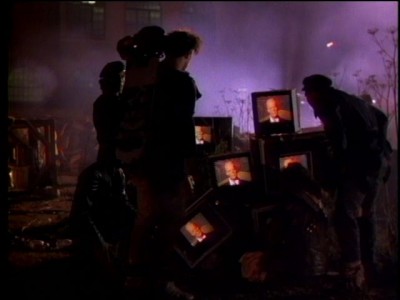
The shows are fairly episodic, with
One episode that illustrates this best was the last one broadcast, Lessons. In this story
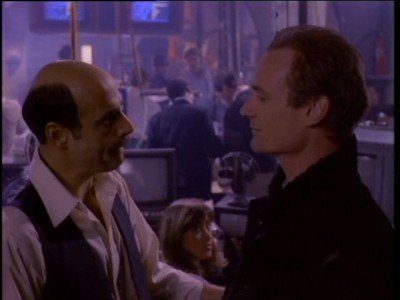
The dystopian future the show portrays is interesting and complex, and they do a good job of creating that world with a very limited budget. Ironically the backgrounds would be made by computers today, but they used what they could get. Viewed today the effects and the sets are dated. Even Max Headroom, a supposedly CGI creation was made by filming actor Matt Frewer with prosthetic makeup pieces and a fiberglass suit and putting him in front of a cel-animated background. That's easy to overlook however as the show makes up for a lack of impressive effects with an ever evolving world that grows more complex with each episode.
The one problem that the show continues to wrestle with is just what role Max should play. He sometimes helps out my infiltrating a villain's computer system or something like that, but he doesn't really fit in with the rest of the show. He's the yin to
The DVD:
Audio:
The discs come with a DD stereo track and optional English subtitles. It sounds okay, with not noticeable defects but the dialog isn't a crisp as a recent show. The dialog is easy to discern so I don't have any real complaints.
Video:
The full frame image hasn't been restored but it generally looks fine. There picture is soft and the details aren't as strong as I was hoping. The colors are muted too, and some of the flesh tones are a bit on the red side of things. There are a few spots and specks occasionally but the show isn't really marred by that. Overall the image is fine with no really large flaws.
Extras:
There are some great extras included with this set (all on the fifth disc), and an omission or two that keeps this set from getting five stars.
First what they have: The extras start out with an hour long look at the genesis of the show, Live on Network 23: The Story of Max Headroom the creators, writers, and producers relate the history of the show and how it came about, including how Max got his distinctive look. It's a very interesting story, and there's a lot of interesting information such as why Max Headroom is an American. Be sure to watch until the end to hear a pitch for the 2011 version of Max Headroom. That's a show I'd watch.
The next bonus is Looking Back At The Future, a 35 minute roundtable discussion with Amanda Pays, Jeffrey Tambor, Concetta Tomei and Chris Young, moderated by Javier Grillo-Marxuach (creator of The Middleman). Notably missing is Matt Frewer who really leaves a gap in the discussion. In any case, this was the first time that the cast was reunited since the series ended, and it's a lot of fun to listen to them reminisce. The Big-Time Blanks is an interview with the two 'blanks' of the series Morgan Sheppard (who is brilliant in his role as Blank Reg) and Concetta Tomei. They talk about their roles and real-life friendship.
The Science Behind the Fiction is a twelve-minute talk with Max Headroom co-creator George Stone who discusses his thoughts on intelligence and computers. Next up is Producing Dystopia where series producer Brian Frankish reveals the trials and tribulations that took place behind the scenes. The disc wraps up with The Writers Remember which features Executive Story Editor Steve Roberts and Story Editor Michael Cassutt reminiscing about their role in the show.
I was really hoping that they'd include a few things that are not found in this set. A New Coke commercial would have been wonderful, but it's understandably missing due to rights issues. Similarly having one of Max's British music video shows would have been a welcome addition, even if they didn't include the actual videos themselves. The item I'm most disappointed about however is that the original British movie is no where to be found. The first episode of the series basically retells the story, but there were several cast changes and I would have really enjoyed seeing the original version.
Final Thoughts:
I had a lot of fun revisiting this show. I only saw a few episodes during the initial run, but the show has held up well even if the special effects haven't. A subversive and entertaining show that was way before its time, Max Headroom comes Highly Recommended.
|



| Popular Reviews |
| Sponsored Links |
|
|
| Sponsored Links |
|
|
| Release List | Reviews | Shop | Newsletter | Forum | DVD Giveaways | Blu-Ray | Advertise |
|
Copyright 2024 DVDTalk.com All Rights Reserved. Legal Info, Privacy Policy, Terms of Use,
Manage Preferences,
Your Privacy Choices 
| |||||||