
| Reviews & Columns |
|
Reviews DVD TV on DVD Blu-ray 4K UHD International DVDs In Theaters Reviews by Studio Features Collector Series DVDs Easter Egg Database Interviews Feature Articles Columns Anime Talk DVD Savant Horror DVDs The M.O.D. Squad Art House HD Talk Silent DVD
|
 DVD Talk Forum |
|
|
|
Columns
  

 
|
|
|
Gates, The
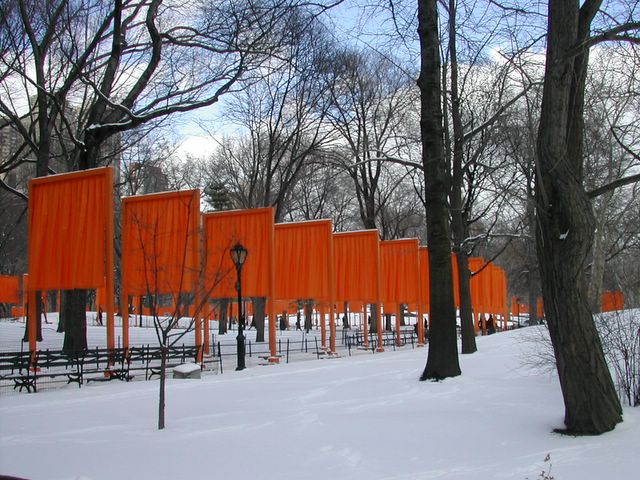
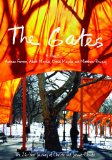
Like a lot of people, I have mixed feelings about The Gates - both as an art project and as a film. Generally speaking, I am a fan of Christo and Jeanne-Claude's work. I like the scale of it, the concepts behind it, and the temporary nature of it. I like that you can be "in" their work by virtue of being surrounded by their projects' acreage. While The Gates is ambitious and laudable as an involving piece of public art, I don't think it matches other Christo projects, at least not in terms of the relative appropriateness of place, materials, and scale. This documentary, which ably traces the development of the project over the quarter century between its conceptualization and execution, is only able to retain viewer interest in proportion to that viewer's reaction to the work itself. However, the film's first third is undeniably fascinating.
This film utilizes footage shot over a twenty-five year period, beginning with a very involving half-hour. Christo and Jeanne-Claude first approached New York City with The Gates project in 1979. We see their original meetings with lawyers, city officials, and a variety of citizens' and neighborhood groups. The initial conversations with the city go quite well. The artists receive support from the New York City Parks Department, as well as a prominent African-American social psychologist, who the pair, working with savvy city officials, intends to use as a wedge to gain the favor of Harlem residents. Despite the support of key city officials and other community leaders, the project is ultimately rejected following public meeting at which certain very vocal New Yorkers loudly oppose the project on a number of bases: the park is itself a work of art, which The Gates would deface; the stanchions will obscure the park's natural beauty; park wildlife will be adversely affected. There was no particularly convincing case made against The Gates at these meetings. The long and short of it is that New Yorkers don't want anyone touching their stuff. But it was enough for the Parks Commissioner to ultimately reject the project.
This important first segment of the documentary was expertly shot by Albert Maysles, who uses film to place you right in the middle of these conversations and debates, and it's a funny thing to watch 30-year-old arguments over an art project that was just recently, finally, finished. I don't think attitudes have fundamentally changed since then. What's valuable here is the inside look at the intra-city politics, departmental bureaucracy, and behind-the-scenes ego-smoothing that go into positioning a major public project.
We jump forward a couple of decades to Mayor Michael Bloomberg finally green-lighting The Gates just a few years ago. Christo and Jeanne-Claude leap into production mode, overseeing the fabrication of the steel stanchions and the gathered fabric rectangles that form the gates themselves. They also get very busy selling paintings and sketches depicting the in-progress project (this being one their key methods of fund-raising for The Gates, which they apparently paid for themselves).
The last two-thirds of the film were shot by other filmmakers, and their footage doesn't have the crisp immediacy and clarity of Maysles' work. It looks like it was shot on video, lending a cheaper "TV" look to the image. Beyond that, it just doesn't have the characteristic confidence of Maysles' eye, which always knew where the camera should be placed and how to move it. Once The Gates is actually unveiled, the film's final 35 minutes are spent "touring" the project and picking up vox populi commentary. This goes on for far too long.
The documentary ends on an uncomfortably smug note. After a series of reactions from New Yorkers and tourists alike, the final comments come from a black man dressed in denim, who offers his own concise, thoughtful remarks on The Gates. The camera then pulls back to reveal that he is a Central Park hot dog vendor, as he says, "I liked their umbrellas better, but this was okay." Would these words have been worth citing had they come the mouth of a well-dressed white person? Probably not. A considered opinion coming from the mouth of a working class black man is "funny"? The way his words are positioned reveals grotesque snobbery on the part of the filmmakers.
The DVD
Image
As I suggested in the body of the review, the filmed portions by Albert Maysles look wonderful, while the more recent DV footage looks cheap. The DVD is presented in an enhanced 1.78:1 frame, and generally looks good, despite the stark differences between the older footage and the new. The saffron color of the gates themselves is appropriately startling amid the wintry backdrop of Central Park in February.
Sound
The stereo soundtrack is good. The filmmakers did a good job with mike placement, capturing key participants in community meetings without a hiccup.
Bonus Content
The only extra content is a few text-based features on the filmmakers, the artists, and the history of the project.
Final Thoughts
A promising first third or so gives way to a pretty staid look at the construction and unveiling of Christo's mega-project. The disconnect between the different filmmaking styles at work here couldn't be more obvious, with Maysles putting you in the center of the action in 1979 and the other contributors slapping together a an overly self-conscious look at the recent execution of The Gates. Christo and Jeanne-Claude come off as likable people in any event, and on balance the documentary is certainly worth a look. Rent it.
|



| Popular Reviews |
| Sponsored Links |
|
|
| Sponsored Links |
|
|
| Release List | Reviews | Forum | Blu-Ray | Advertise | |||
|
Copyright 2026 DVDTalk.com All Rights Reserved. Legal Info, Privacy Policy, Terms of Use,
Manage Preferences,
Your Privacy Choices 
| |||||||