
| Reviews & Columns |
|
Reviews DVD TV on DVD Blu-ray 4K UHD International DVDs In Theaters Reviews by Studio Video Games Features Collector Series DVDs Easter Egg Database Interviews DVD Talk Radio Feature Articles Columns Anime Talk DVD Savant Horror DVDs The M.O.D. Squad Art House HD Talk Silent DVD
|
 DVD Talk Forum |
|
|
| Resources |
|
DVD Price Search Customer Service #'s RCE Info Links |
|
Columns


 
|
|
|
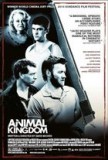
Animal Kingdom
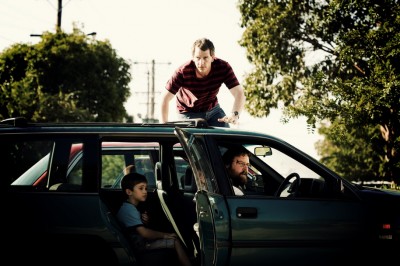
Writer-director David Michôd's first theatrical feature is a startlingly harsh and morally uncompromising portrait of an unrelievedly creepy family of Australian criminals. Shot in washed-out widescreen, these delusional, paranoid characters guide us through the slow but persistent breakdown of their small, sad criminal empire. Michôd's great strength is his emotional detachment as a storyteller, which affords a strong sense of realism and obviates the operatics of Scarface or an ending that offers redemption to one or more anti-heroes. Instead, convincing detail is utilized to illustrate not only how a criminal gang may be brought to its knees - but how it may also, through its most insidious tendencies, be made to survive.
Animal Kingdom opens with a stone-faced teenager idly watching television while not more than three feet away, paramedics attempt to save his dying mother from a heroin overdose. The teenager is the shell-shocked Josh "J" Cody (James Frecheville), and he is shortly taken under the wing of his grandmother Janine (Jacki Weaver), an evilly sweet matriarch who keeps a close watch over her brood of three crooked sons: Craig (Sullivan Stapleton) is manic and drug-addled; the youngest, Darren (Luke Ford), is barely his own man and has trouble navigating the muddy waters of the criminal enterprise; and the oldest, Andrew, AKA "Pope" (Ben Mendelsohn), is ambitious and dangerously unbalanced. Their partner and the only mature adult among them, Barry "Baz" Brown (Joel Edgerton), is trying to sort out an exit from The Life; he even advises Pope to invest in the stock market. Baz is also the only person providing any kind of real guidance to J. When Baz is murdered, it is the beginning of the end for the Codys. One killing begets another, and the police start to close in, led by Detective Leckie (Guy Pearce). J is forced to determine where his loyalties - and his safety - lie, and this quandary drives the clammy tension of the film's second half.
Michôd's resolute fidelity to his characters makes Animal Kingdom a crime picture with rare commitment to both organic storytelling and journalistic realism. As the title suggests, the Codys are like wild beasts trapped in a corner, driven to desperate and horrible acts. As the brothers edge closer to self-destruction, Janine maintains a chilling cool throughout, the confident leader of her miscreant litter. Her awful stoicism leaves no doubt that she would eat her young in order to survive. In the role, Weaver exudes a grotesque "love" for her sons that is little more than an instinct for self-preservation; her talent for control is primarily expressed through uncomfortably affectionate kisses.
Special mention must be made of the performance by James Frecheville, who, as J, has by far the most screen time of any cast member. Only 17 at the time of the film's production, this is Frecheville's first role and it's nothing short of remarkable. We are constantly reminded of J's youth and inexperience, and during a number of sequences, Frecheville is called upon to express a violent, elemental fear. It's a compelling, restrained performance that does double-duty as the audience's pivotal entry point into the story.
As Pope, the senior brother and de facto leader of the family after Baz's murder, Mendelsohn makes flesh crawl like no other screen creep. His horribleness emerges not so much from overt acts of terror, but instead oozes from glances, a few oddly-chosen words here and there, and the awful sense of what he is capable of. Only once in the film does he do something outright nasty, and it is the quiet fulfillment of the character's strangely gentle capacity for the unspeakable.
This brings me to a point about Michôd's technique here, which generally eschews blunt or graphic violence (with a couple of key exceptions) in favor of character-driven tension that is carefully cranked up as the stakes of the Codys' situation change. When J begins talking to Detective Leckie, we know that he is putting himself in enormous danger - but it's difficult to tell just how much J knows about the Codys' criminal activity, and whether he will actually tell everything he knows. J's growth as a character is uncertain - we suspect he may be looking for a way out. But the outcome of his "arc" is more surprising, more realistic, and more chilling than what we've come to expect from the crime genre. Animal Kingdom is a remarkable debut for both Michôd and Frecheville, and it brings a new level of mature, psychological investigation to the crime picture.
|



| Popular Reviews |
| Sponsored Links |
|
|
| Sponsored Links |
|
|
| Release List | Reviews | Shop | Newsletter | Forum | DVD Giveaways | Blu-Ray | Advertise |
|
Copyright 2024 DVDTalk.com All Rights Reserved. Legal Info, Privacy Policy, Terms of Use,
Manage Preferences,
Your Privacy Choices 
| |||||||