
| Reviews & Columns |
|
Reviews DVD TV on DVD Blu-ray 4K UHD International DVDs In Theaters Reviews by Studio Features Collector Series DVDs Easter Egg Database Interviews Feature Articles Columns Anime Talk DVD Savant Horror DVDs The M.O.D. Squad Art House HD Talk Silent DVD
|
 DVD Talk Forum |
|
|
|
Columns
  

 
|
|
|
Orlando
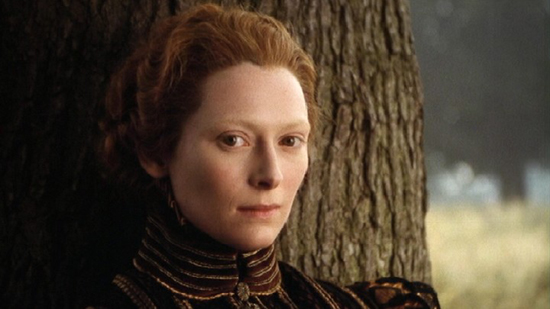
A deserving but unlikely candidate for a new "special edition" treatment on DVD - but, strangely, not Blu-ray - Sally Potter's 1992 art-house favorite remains one of the most direct and honest statements about gender ever put on film. Its reputation as a film that explores multiple permutations of gender roles throughout history is well-deserved, but Orlando is also remarkable because it positions its challenging themes gently, in visually lovely settings, and without the kind of political dogmatism that one might expect from a film that drives head-on into such sensitive and unsettled thematic territory. Orlando moves swiftly and pauses just long enough on each of the many eras it touches upon to provide us with a tantalizing glimpse into how and why gender roles have changed over time.
Working from a novel by Virginia Woolf, Potter's film casts Tilda Swinton as Orlando, born as a man during England's Elizabethan era to wealth and privilege. A meeting with the elderly Queen Elizabeth (Quentin Crisp) proves fateful when she asks Orlando to never age. Flashing forward to the year 1610, we see Orlando inheriting his parents' huge estate and courting a Russian ambassador's daughter who ultimately rebuffs him. Now convinced that women are untrustworthy and fickle beyond comprehension, the film begins to take 50-year leaps, each segment showing Orlando in a new situation. He tries his hand as a poet, and fails. Next, in 1700, he travels to the east as an ambassador to a Muslim sultan. Upon his return, Orlando discovers he has turned into a woman. He is nonplussed by the transformation, and claims to feel no different.
As a woman in the 19th century, however, Orlando finds herself sued several times over; the chief accusation is that she was always a woman and therefore had no right to inherit property. Orlando weathers these years, however, with the help of an American suitor (Billy Zane) who proves as unreliable as everyone else she's come into contact with throughout her lifetime. Ultimately, Orlando makes it to the end of the 20th century, with a child, and regains her right to own property once again.
Potter's single most brilliant storytelling maneuver is extending the central concept of Woolf's novel, thereby making social change the main concern of the film. Watching the effects of these changes through the eyes of a single character is a powerful conceit, and it highlights the often arbitrary nature of the fluctuation of law, governance, and social norms.
Swinton's performance is remarkably rich, restrained, and commanding. As Orlando the man, she adopts a very male walk and directness of speech. As Orlando the woman, the transformation is not physical but attitudinal; here, Orlando experiences a gradual awakening as to her predicament and the odd poetic justice of having had the tables turned. Given all that she has seen over 400 years, she faces her transformation with equanimity.
Potter's visual achievement in Orlando is as lush and memorable as the best costume drama, making particularly striking use of icy winter scenery during the film's second segment. Footmen move about on skates, conveying their attendees on sledges, and nighttime performances take place in the middle of frozen lakes.
Orlando is a fully-realized film that is never weighed down by potentially unwieldy themes. Sally Potter shows and never tells us what is important and why - and her unconventional narrative is buoyed by Tilda Swinton's brilliant lead performance.
The DVD
Image
Sony presents Orlando in a brand-new enhanced transfer that showcases the moody production design and photography of the film without abandoning a very film-like look. Grain is ever-present, but detail remains very strong. This is an excellent transfer of a film that depends greatly upon a solid visual presentation.
Sound
The stereo soundtrack is very effective, especially for one that is limited to two channels. The sound stage remains broad throughout, giving the movie's ample music and sound effects room to stretch out. Potter herself collaborated on the unconventional score with David Motion, and its use of electric instruments is fittingly anachronistic.
Bonus Content
Sony has included a surprisingly thorough slate of extras here. First up are Select Scenes with Commentary by Sally Potter (10:18), which is disappointingly short, given Potter's insightful remarks here. I would have liked to have heard much more from her as to the film's production, but some of this kind of information is covered in the other extras. Orlando Goes to Russia (32:57) is a fascinating documentary piece that details the challenges of shooting in that country during the final years of the Soviet Union; there's just as much information here about recent political history here as there is production detail. Orlando in Uzbekistan (51:54) is a video diary that takes a broader view of the production, and includes interviews with all the key players. Jimmy Was an Angel (8:04) looks at putting the final shots of the film together. Venice Film Festival Press Conference (23:21) and Interview with Sally Potter (13:21) date from the film's world premiere in 1992. The film's Theatrical Trailer wraps up the extras.
Final Thoughts
Orlando is a beautifully mounted film that raises enormous philosophical questions with admirable cinematic economy. Tilda Swinton's confident, graceful performance is the film's keystone, but Potter's vision overrides everything with its mixture of formality and whimsy. Highly Recommended.
|



| Popular Reviews |
| Sponsored Links |
|
|
| Sponsored Links |
|
|
| Release List | Reviews | Forum | Blu-Ray | Advertise | |||
|
Copyright 2026 DVDTalk.com All Rights Reserved. Legal Info, Privacy Policy, Terms of Use,
Manage Preferences,
Your Privacy Choices 
| |||||||