
| Reviews & Columns |
|
Reviews DVD TV on DVD Blu-ray 4K UHD International DVDs In Theaters Reviews by Studio Video Games Features Collector Series DVDs Easter Egg Database Interviews DVD Talk Radio Feature Articles Columns Anime Talk DVD Savant Horror DVDs The M.O.D. Squad Art House HD Talk Silent DVD
|
 DVD Talk Forum |
|
|
| Resources |
|
DVD Price Search Customer Service #'s RCE Info Links |
|
Columns
  



 
|
|
|
Law, The
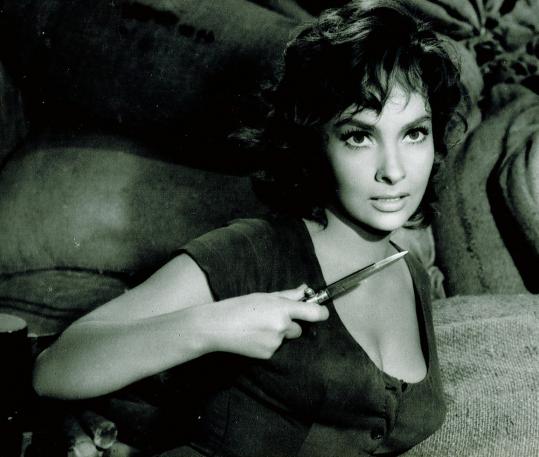
Jules Dassin's The Law is a mildly ribald, occasionally funny, often meandering tribute to Gina Lollobrigida's cleavage. Although such a tribute is surely well-deserved, the film doesn't work hard enough to deserve our involvement in it. Dassin assembles a variety of colorful characters (portrayed by an admittedly stellar cast) in a musical-comedy setting, but doesn't have the gumption to truly turn them loose. They are mostly caricatures, operating within the imagined boundaries of Dassin's conceptualization of a European sex comedy; as an American expatriate, Dassin doesn't appear to have any special understanding of the milieu he is depicting. Dassin's lack of sufficient cultural understanding here is not helped by the fact that this Franco-Italian co-production is set in a small Italian fishing village, with mostly Italian actors, but is performed (or dubbed) in French.
Dassin rests the film's credibility upon the deployment of an eponymous southern Italian drinking game, which, I learned from the DVD's extra features, is alleged to have its roots in ancient Rome. A strange iteration of role-playing, "the law" is a miniature version of the body politic, with one participant being designated "the boss" and another designated his or her deputy. These two then conspire to manipulate the behavior of all the players, with the chief object of interest being access to booze, which is controlled by the boss. The game is depicted in The Law's first half hour, and the participants, as per the norm, are all male.
But the film is dominated by a female character named Mariette, played by Gina Lollobrigida as a willful skank who, along with her mother and two sisters, is employed by the town's de facto leader, Don Cesare. It is implied that Don Cesare enjoys carnal relations with each of his female "support staff," and although Mariette harbors a kind of affection for him, she dreams of leaving the town and enjoying a more respectable existence. Enter a character known only as "the agronomist," played by Marcello Mastroianni, an urbane professional from the north of Italy who has arrived in the area to drain the marshes and thereby rid the town of endemic malaria. Mastroianni looks askance at the entire town, Mariette included, despite her flirtatious advances. Thenceforward, we are asked to see Mariette as a "boss" of sorts, manipulating her friends and neighbors to carry out her wishes in an effort to achieve her own private ends.
Surrounding this central plot are a group of loosely connected subplots, involving a sleazy power-hungry quasi-gangster played by a sneering Yves Montand, the dalliances of the town's sheriff, and the troubled affair between the judge's wife (Melina Mercouri) and the Montand character's son. These subplots suggest that Dassin wanted to create a portrait of the town on a broad canvas, using an approach similar to what Robert Altman would later become known for. This ambition is betrayed by a lack of character development, a reliance on stereotypes and clichés, and unearned emotional crescendos that ring hollow.
The movie has its share of humor and melodrama, and Lollobrigida has enough sex appeal for ten women - or ten movies. The local color is interesting if not totally credible, and it's fun to watch Mastroianni and Montand in early-ish roles. Dassin specialized in taut narratives driven by characters overwhelmed by anxiety; the leisurely pacing of The Law and its lighter, somewhat nebulous tone seems to have gotten the best of him here. Too many characters and a lack of a focal point prevent this otherwise breezy film from leaving a lasting mark.
The DVD
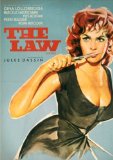
The work of Oscilloscope Laboratories deserves an aside here. Founded by the Beastie Boys' Adam Yauch as the band's recording studio, Oscilloscope has recently become a leading distributor of independent films in theaters and on disc. Their selections are varied, idiosyncratic, and generally of high quality. The DVD package for The Law reflects a considered, thoughtful approach to releasing movies on disc. A well-designed card slipcase, adorned with wonderful vintage (or vintage-inspired) poster art houses a digipack containing two discs. While The Criterion Collection currently remains the standard bearer for these kinds of classic releases, it looks like Oscilloscope is the only other distributor even in the running as far as restoration, bonus content, and presentation.
Image
The full-screen black-and-white image is excellent. Good contrast and detail suggest a full image restoration, although I am unsure to what extent Oscilloscope is responsible for the image quality. However it may be attributed, the image is very good for its age, with no evidence of print damage or compression problems.
Sound
The mono soundtrack is clear as a bell. As I mentioned, there is some visual/aural confusion, given that the setting is Italy and the spoken language is French. Mastroianni's dubbed voice is particularly hard to take, since it is so different from his natural one. However, that aside, the condition of the track itself is fine if unflashy.
Bonus Content
Oscilloscope has put together a handful of high-quality bonus features. On the first disc is a commentary track featuring film writer David Fear. It's a decent track, if a bit lacking in terms of the depth of Fear's observations. The second disc includes a nice selection of video-based content. First up is an extended Alternate Ending (5:30) that incorporates a short scene showing Mariette taking revenge upon her abusive sisters. Next is an episode of the French film program Cinepanorama (13:25) that includes on-set interviews with most of the principals. Roger Vailland, the author of the film's source novel, is showcased next in a 1957 interview from the French televsion show Lectures pour tous (12:35). Most interesting of all is a recent documentary called L'ultima Osteria (40:45) that documents the history and continued practice of the feature's titular game.
Final Thoughts
Entertaining and occasionally inventive, The Law gets by on its good performances and Lollobrigida's appeal. It's not a particularly coherent or satisfying movie, but Oscilloscope Laboratories has gone the distance in terms of technical presentation, art direction, and bonus content. I look forward to their future releases. Recommended.
|



| Popular Reviews |
| Sponsored Links |
|
|
| Sponsored Links |
|
|
| Release List | Reviews | Shop | Newsletter | Forum | DVD Giveaways | Blu-Ray | Advertise |
|
Copyright 2024 DVDTalk.com All Rights Reserved. Legal Info, Privacy Policy, Terms of Use,
Manage Preferences,
Your Privacy Choices 
| |||||||