
| Reviews & Columns |
|
Reviews DVD TV on DVD Blu-ray 4K UHD International DVDs In Theaters Reviews by Studio Video Games Features Collector Series DVDs Easter Egg Database Interviews DVD Talk Radio Feature Articles Columns Anime Talk DVD Savant Horror DVDs The M.O.D. Squad Art House HD Talk Silent DVD
|
 DVD Talk Forum |
|
|
| Resources |
|
DVD Price Search Customer Service #'s RCE Info Links |
|
Columns
  



 
|
|
|
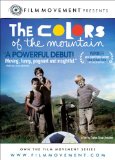
Colors of the Mountain, The
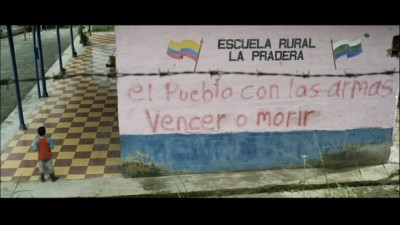
The Colors of the Mountain is a gripping drama and an often humorous comedy at the same time. Director Carlos Cesar Arbelaez has delivered an incredibly powerful debut fiction film (the filmmaker has made many documentaries over the years). The story takes place during a time of unrest in Colombia. The central characters consist of a young boy named Manuel, his family, and his friends. The film often feels like a slice-of-life approach to storytelling and yet the story also considers the way in which war and politics has an effect on family and community without ever making this story become a political film itself. This is a film that is unabashedly more concerned with telling a moving tale, one that can move and inspire others, than it is something that aims to fuel scathing debates. These qualities increase the wonders of the filmmaking the even greater heights.
Manuel is a normal kid and all he wants to do with his free time is to play soccer with his friends and to have a normal life. His friends are likewise just as concerned with the sport and they are always eager to play a game of soccer with Manuel. Unfortunately, the harsh life that surrounds them often brings many cruel hardships that will affect them in ways they can't fully understand at such a young age.
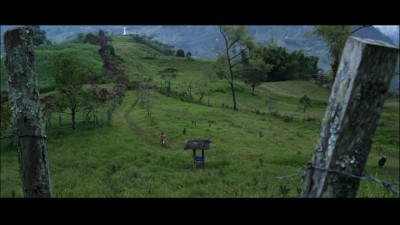
Manuel's father is afraid of joining in on political meetings that could lead to him being enlisted as a soldier in the war. We learn as an audience that part of this fear comes from what happened to his father - which was in all likeliness death. Another reason why he is likely afraid of the possibilities is that he doesn't want to leave his wife and children behind. Yet he is a stubborn man and one who refuses to leave the country for his family's safety. His love for the land and the home where he was raised and lived in all these years is so powerful as to prevent him from looking to these alternative solutions. So he instead hides from forces that could lead to his death but at the same time he must also avoid the rebels who are creating havoc in the land. His wife faces equally great fears - for the safety of her children, her husband, and herself. These are scary times in Columbia. The countryside is a beautiful image of lush green color and beauty but there is much hardship at the same time.
The story eventually leads to Manuel losing a new soccer ball he received as a birthday gift. What happened to it? It landed, astonishingly, around a mine field that was placed in the soccer field where all the children played their sport. The adults speculate that the rebels placed the mines to try and explode helicopters that used to land in the area. The safety is uncertain for everyone in the area by this point.
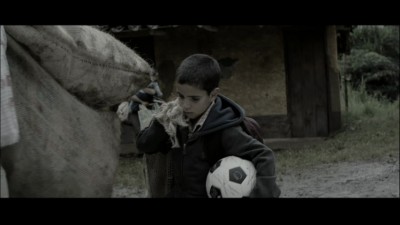

Manuel enlists the help of his closest friends Julian and Poca Luz to try and retrieve his soccer ball - the only thing that seems to bring him real happiness amidst all the sadness surrounding his family's well-being. All three of the young boys want to get the soccer ball back so that they can just have some fun. This paints an interested contrast between these kids who simply wish to play together and the adults who seem to be at war with each other and for what ultimate purpose? Tragedy seems to be the only sure result.
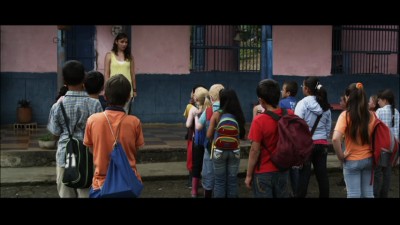
The children of the countryside all attend a school to learn and develop the way all children should. Education is one of the most important things in this world, and no child should be deprived of one. This school is barren though... and the supplies are running out. They have a teacher who helps guide them despite all of the surrounding dangers of the area, but with little aid and opportunity it doesn't seem to paint a pretty picture of the additional hardships facing the youth. In one pivotal scene we see that Manuel is more concerned with painting pictures than with working on a math equation. Yet there is actually some beauty in that idea. Manuel is the kind of child who may want to become an artist someday. He shows a great deal of interest in art and there are many moments in the film where he seems to look at the sky and wonder about the types of things that go on beyond the mountains. Can this boy still grow up to be an artist despite all of the hardships he has faced? One can certainly hope so and the film does present this as a thematic question on some level. This particular viewer would love the idea of Manuel living a life where art is a key element to happiness being found for both himself and for others.
The most surprising element of the film is the way in which it blends comedic elements into this otherwise dark and often hard to watch film. The young children don't seem to always understand what is happening around them and as they attempt to retrieve the soccer ball left in a mine-field it doesn't seem to fully click how dangerous it actually is to try and get the ball back at all. These moments often play on humor and the fear of danger facing the children at the same time. It takes a special kind of skill as a director to pull of something like that. Manuel, Julian, and Poca Luz are young and carefree but the world is standing in their way of the simple pleasure of a game of soccer and the smiles of youth.
The Colors of the Mountain is an eloquently scripted and directed film and one of the best and most surprising films of the year. Don't overlook it! This is a rare cinematic gem that will stay with audiences for hours after experiencing its quiet wonders. The Colors of the Mountain features some truly remarkable cinematography by Oscar Jimenez (which is so splendidly filmed that most audiences will be surprised by the independent nature of the production) and score music that is simple, graceful, and emotionally resonant all at once. Make this a must see film and one to share with others. It's that powerful as an experience.
The DVD:
Video:
Film Movement presents The Colors of the Mountain (a Columbian production) in its original theatrical aspect ratio of 2:35:1 with anamorphic widescreen enhancement. The transfer is noticeably rich in color - one can definitely experience the greens of the countryside quite well on this release. Black levels are even noteworthy and much stronger than on previous releases from Film Movement. There is good clarity and sharpness as well. The biggest flaw of the DVD is some aliasing and interlacing issues but these seem like minor issues which don't prevent the film from being such a beautiful film to behold. The cinematography is definitely properly maintained with this impressive release.
Audio:
The audio for the The Colors of the Mountain is not in the same league as the video, and this is mostly due to the limitations of only being presented with a 2.0 audio track. There are some scenes in which the music and ambiance could have been a bit more enveloping but the dialogue is easy to understand and that is of the upmost importance with this kind of film. The Colors of the Mountain is presented in Spanish with English language subtitles. The subtitles are free from spelling or grammar errors and are easy to follow.
Extras:
The primary extra included on this Film Movement release is the monthly short film (as the company always includes one short film with each feature-length effort per DVD release). The Swimmers, as directed by Carlos Lechuga, is an approximately 15 minute long story of a eccentric swimming instructor who faces difficult finances (he can't afford to keep the pool filled with water) but is determined to find a way to still teach his students how to swim for their upcoming match. The short aims to be quite humorous and offbeat but its eccentricity doesn't entirely translate as one might hope. This short film barely features any dialogue or music (which wouldn't be so bad) but it tries to provide laughs with its offbeat style and yet it can seem unsure of its intentions at times. The effort is appreciated but it doesn't equally match the mastery on display with The Colors of the Mountain.
Final Thoughts:
The Colors of the Mountain shouldn't be overlooked as it is one of the most surprisingly delightful and important films to come out of the foreign and independent filmmaking community in 2010. Director Carlos Cesar Arbelaez has made an astonishingly strong, authentic, and moving fiction debut. Highly Recommended.
Neil Lumbard is a lifelong fan of cinema. He aspires to make movies and has written two screenplays on spec. He loves writing, and currently does in Texas.
|



| Popular Reviews |
| Sponsored Links |
|
|
| Sponsored Links |
|
|
| Release List | Reviews | Shop | Newsletter | Forum | DVD Giveaways | Blu-Ray | Advertise |
|
Copyright 2024 DVDTalk.com All Rights Reserved. Legal Info, Privacy Policy, Terms of Use,
Manage Preferences,
Your Privacy Choices 
| |||||||